







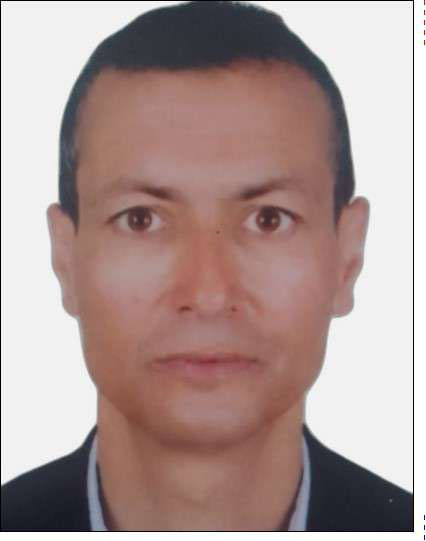
By Deepak Joshi Pokhrel
It appears that incumbent Prime Minister Balendra Shah, popularly known as Balen, has critics both internally and externally.
Externally, Indian traders operating along the Nepal border, particularly in Raxaul, Rupadiya, and Sunauli, have been staging protests. The reason is that their businesses have suffered significantly after the Balen-led government enforced strict customs regulations on goods worth over NRs 100 imported from India. These traders are now demanding Balen’s resignation.
Internally, the opposition has been criticising the Prime Minister for repeatedly skipping parliamentary deliberations.
To recall, former mayor and current Prime Minister Balen Shah rose to prominence on an anti-corruption agenda. While campaigning for election as Mayor of Kathmandu Metropolitan City, he did not make lofty or unrealistic promises. His agenda was simple: he pledged to give a facelift to the Kathmandu Valley, which had long suffered from dust, waste, and pollution.
This message resonated with Kathmanduites who were frustrated with unmanaged garbage and poor urban conditions. As a result, he won the Kathmandu Metropolitan election.
Soon after assuming office, he translated his promises into action, and Kathmandu began to witness noticeable changes. Not only did he focus on urban cleanliness, but he also made the bold decision to demolish illegal structures that had encroached upon public property.
Likewise, the relocation of street vendors, whose presence had created inconvenience for commuters, was also regarded as a commendable move during his tenure as mayor.
These actions endeared him to the masses and laid the foundation for his rise to national leadership.
However, soon after assuming higher office, he was bombarded with criticism and challenges. Many accused him of being arrogant, stubborn, and displaying autocratic tendencies reminiscent of the former monarchy. Others argued that he is not sufficiently accountable to the people, contrary to what had initially been projected. Some even described him as an opportunist constantly seeking avenues to consolidate power.
The latest wave of criticism against Balen emerged last week during parliamentary deliberations. Media reports indicate that a heated political dispute erupted in the House of Representatives after Prime Minister Balendra Shah repeatedly skipped deliberations on the government’s annual policies and programmes.
The controversy began after Prime Minister Shah authorised Finance Minister Swarnim Wagle to respond to lawmakers during the debate on the government’s agenda for the upcoming fiscal year. This angered the opposition.
The chairman of the Shram Shakti Party and former mayor of Dharan, Harka Sampang, walked out of the deliberations midway as a sign of protest. More surprisingly, his supporters in Dharan reportedly staged protests demanding Balen’s resignation.
Critics argue that Balen’s refusal to attend Parliament and participate in deliberations on government policies and programmes demonstrates a lack of accountability to the people. Likewise, they claim that his unwillingness to directly respond to lawmakers amounts to a devaluation of the parliamentary system.
However, such criticism requires stronger explanation. In any functioning democracy, people certainly have the right to protest if they believe an action to be anti-democratic or unconstitutional. This is, in fact, part of democratic culture. But critics must clearly explain how his absence from parliamentary deliberations automatically devalues the parliamentary system.
It is important to note that Nepal’s new House, formed after the March 5 election, is currently functioning under the House Regulation 2022.
Rule 38 of the regulation states that the Speaker may consult either the Prime Minister or a minister designated by him while scheduling discussions on the President’s address and the government’s policies and programmes. Furthermore, the same provision permits the designated minister to answer questions raised during the debate.
This may be seen as a departure from established practice. However, if lawmakers genuinely believe that the Prime Minister, while exercising authority granted under House regulations, has failed to remain accountable to Parliament, Rule 56 provides them with a legal mechanism to directly question the Prime Minister.
Yet they appear unwilling to do so. The reason seems simple: their protest is more about creating controversy and misleading the public than about defending parliamentary accountability.
Beyond this parliamentary controversy, Balen also faces criticism from certain sections of society who argue that his conduct is weakening Nepal’s long-standing bilateral relations with countries such as India and the United States.
These concerns gained traction after reports that he refrained from meeting foreign officials below the rank of minister. In addition, he reportedly declined meetings with US Assistant Secretary of State Samir Paul Kapur and US President’s special envoy for South and Central Asia, Sergio Gor, who also serves as the US ambassador to India.
Unlike many former prime ministers, the incumbent appears to follow diplomatic protocol more strictly by avoiding meetings with lower-ranking foreign officials.
In the past, almost any foreign representative could easily gain access to the Prime Minister, often at the expense of diplomatic protocol. Such easy access occasionally undermined Nepal’s image and created the impression that its leadership lacked diplomatic discipline.
Ever since coming to power, Balen has remained a central figure in the media spotlight. His leadership style and behaviour have frequently become subjects of debate.
Many political observers portray him as arrogant, egoistic, and lacking accountability. On the other hand, others believe Balen is simply introverted and naturally reserved.
It is important to understand that his quiet and introverted personality should not automatically be mistaken for arrogance or egoism.
Through this article, I am not suggesting that Balen is flawless. My argument is simply that he appears more capable than many current politicians, regardless of party affiliation.
He possesses vision, knowledge, and, most importantly, a commitment to transforming the nation.
And when he makes mistakes, he too can and should be held accountable.

Login to add a comment