







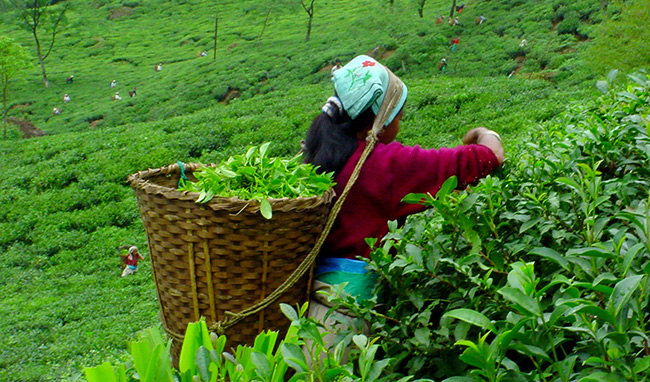
Kathmandu, May 8: Nepal’s tea industry has plunged into a fresh crisis after India introduced stricter new rules on tea imports from Nepal, effectively bringing exports to a standstill. Because apparently South Asia cannot let a cup of tea remain just a cup of tea. It must become a bureaucratic endurance sport.
Tea entrepreneurs say the Indian Tea Board abruptly changed the long-standing export process by issuing a new Standard Operating Procedure (SOP), effective from May 1, requiring mandatory laboratory testing for every truck and every shipment of tea entering India.
Under the new rules, each tea consignment from Nepal must undergo separate testing at Indian government-approved laboratories. India says the tighter regulations aim to prevent adulteration risks amid rising tea imports and to protect consumer health and the reputation of Indian tea.
Previously, a single test report remained valid for 15 days or up to 10 truckloads. Now, exporters must pay INR 11,120 for testing every truck separately and wait at least two weeks for the report.
Once tea enters India, samples will be sent to nationally accredited laboratories. The labs must upload test reports online within 14 days of receiving the samples.
Until the tea receives a clearance certificate confirming it meets all standards, importers cannot sell it in the Indian market or re-export it to third countries. The consignments must remain stored separately until the final report arrives.
Tea failing to meet the required standards will not receive clearance under any circumstances, and importers will immediately receive an alert notification. Importers dissatisfied with the initial result may request retesting using a reserve sample stored by the Tea Board.
However, the retesting process is expensive. Importers must apply online within 48 hours of receiving the failed report and bear all costs themselves. The retest fee stands at INR 15,000 per sample, excluding GST.
Nepal exports large quantities of CTC and orthodox tea to India every year. Industry representatives say the new measures have sharply increased pressure on Nepali exporters to meet Indian food safety standards.
“An Undeclared Blockade”
According to Shiv Kumar Gupta, India has not formally halted tea imports but has made exports practically impossible through the new procedures.
“Exports have not officially stopped, but after the Indian Tea Board introduced the new policy, no trader has loaded goods,” Gupta told Onlinekhabar. “Exports continued until April 30, but problems began once the new rules came into effect on May 1.”
He said mandatory testing for every truck has made the process highly complicated.
“Now every vehicle requires separate sampling, and reports take at least seven to 14 days,” he said. “The testing fee alone costs nearly NPR 18,000 per sample.”
Gupta also complained that India’s Panitanki customs point lacks proper storage facilities for tea-laden trucks held for up to 10 days.
“Keeping tea in trucks or under open skies affects its quality,” he said. “In this situation, neither can we send tea nor are Indian buyers willing to purchase it.”
According to him, the new rules have discouraged Indian buyers as well.
“Indian buyers are now in a wait-and-watch situation,” Gupta said. “They won’t make payments until the reports arrive, and if the tea fails testing, they risk having to return or destroy the shipment. No buyer wants to take that level of risk.”
The disruption has also affected market prices. Tea exported to India had been selling at around INR 100 to 105 per kilogram. In Nepal’s domestic market, depending on quality, tea sells for NPR 200 to 250 per kilogram.
The premium “second flush” tea has yet to be exported this season.
Diplomatic Initiative Needed
The National Tea and Coffee Development Board says it has already submitted a written report to the concerned ministry after consulting stakeholders about the serious impact of India’s new rules.
Agriculture Development Officer Indra Prasad Adhikari said the issue goes beyond technical or administrative concerns and requires government-to-government diplomatic intervention.
“We have already forwarded all written information collected from stakeholders to the ministry through our central office,” Adhikari said. “This is a matter between two governments. Diplomatic efforts are underway, and there is no alternative to resolving such a serious issue through diplomatic dialogue quickly.”
People’s News Monitoring Service

Login to add a comment