








By Meera Rajbhandari Amatya
It has been many years since Govind Dangol of Jai Bageshwari “Dathu Twa” locality has lost sleep at night and hunger during the day. His small old house, built in old traditional Newah: architecture and built on just two annas, is the only option that hides the heads of his 10-member family. He remembers that his ancestors told him that including himself has lived for 14 generations on this land which was given to him as a share by his ancestors. In the past, when he was young, he had a lot of land in front of that house, later, after the property was divided, he has the pain to limit himself to a small house. In addition to that, in the past, “Lagan Lachhi” in the Pashupati temple area and the ancient Housing area of “Bhakun Twa” (Bhakun Tole) where they lived, was taken by the Pashupati Area Development Trust under the 2053 B.S. (1997A.D) of the Conceptual Master Plan of Pashupati Area in Bhubaneswari sub-area of Consonant area, 119 houses were displaced, the confusion and despair of the residents including him has continued even now after the Trust used the Police Administrative Force and dozer.
Those days he played around the “Pacha Twa“ and each community complex with his childhood mischief, and rejoiced in the Jatra festival, but now he is bored, and quote. While maintaining his religion and cultural tradition since ancient times, he is 50 years old and asks “Where did this Trust come from?”
“We Newah:s have been maintaining the cultural tradition of this region for centuries, now our culture and religion have also been affected if we do not participate in our Guthi, Bhajan (devotional songs ) Jatra Festival, who will continue it?”, he questions. He is worried more about losing his religion and culture than losing his home. Dangol is not the only character who is worried about the master plan of the Pashupati Development Trust, the displaced community of 119 houses of “Bakun Twa” and the people of 2 thousand 100 houses of Goala, Ward No. 8 is a matter of general concern. The state government and PADT do not seem serious about this matter.
The reality that must be understood is that if we are not aware of this matter in time, it will directly affect the religious culture and traditions of the local people, and it is certain that it will also hurt the traditionally prevalent religious culture of Pashupati Temple and Pashupati Area.
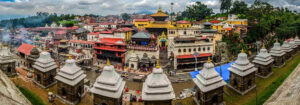
Devapattan, Gwala or Suvarnapur settlement under the Pashupati Area is a settlement with ancient characteristics of nine clans Newah:s, nine gates, nine Ganesh (Gandyo – lord Shree Ganesh) etc. Historians say that this ancient settlement had a very strong administrative hold on the valley in the past. The religious and cultural values of this region are fundamental not only for Nepal but for the whole world. Historical events must some extent affect the originality of the Newah: culture, festivals, and religious traditions. The traditional cultural festivals and religious traditions held in this cultural and religious settlement with the history of the Gopal dynasty continued to be added and modified over time.
The local elders say that in the past, the Newah: civilization’s Guru Purohit Rajopadhyaya (The religious practitioners) have modified the tradition of performing daily Puja Acharna by a South Indian Brahmin Pandit as Mul Bhatt. This is confirmed by the fact that Rajopadhyaya is still the main priest in the Pashupati Temple and Guru Dakshinamurthy. Whatever their popular tradition and belief, the work of giving continuity to their own original tradition was continued in the puja archana and Jatra, Mela festivals of their idols Pashupati, Jai Bagheswari, Vatsaleshwari, Bhuvaneshwari etc. Still, the tradition of Hindu Vedic and Tantric worship in Pashupati continues.
The Pashupati Temple area and its religious and cultural festivals have become an example of unparallel modern religious harmony of Nepal Dharma (Newa Dharma), Hindu, Tantric and Buddhist religions. After the establishment of the PADT, land acquisition has become a matter of concern for the residents due to encroachment on original traditions and culture. On one hand, its master plan has displaced the population of nine surnames or clan of Newah: an indigenous civilization who have been living in primitive land for thousands of years, and on the other hand, the residents complain that they have encroached on religious institutions based on original traditions and culture. The work of following and continuing any religion, culture and tradition requires the participation of the residents and communities of that area, in the sense that after those communities are displaced from that place, the originality of those rituals and traditions and their continuation will be in crisis. In this sense, the Jatra Parva of the Pashupati area, which is managed by Newah:s of nine main castes (Gugu Khala:) including Rajopadhyay, Rajbhandari (Bhandari), Vaidya, Kamarcharya, Manandhar, Dangol, Kapali, Sangat, etc have become difficult in recent days. There are many examples that we have come across. In the past, after displacing the settlements of nine native Newah:s, including Dangol and Maharjan etc around “Bhakun Twa”, “Lagan Lachhi” ”Bankali” and “Bhubaneswari”, there is a decrease in the number of participants in the activities of carrying “Khat”, playing slow instruments, etc. for Deshoddwar pooja, Jatras, Vatsaleswori Jatra, Machitiya Jatra (Trishul Jatra) and Nagicha Pyakhan (The Shiva Parwati Jatra) performed under the management of Shakya Civilization from Newah:). If the settlements like “Dathu Twa, Pacha Twa” etc. which are in the queue of B4 area of the PADT are removed, it is certain that the Jatra festival will disappear. In the festival of the Pashupati area, the responsibility and workload of each of the Newah: communities of the nine main castes is also different. Conducting poojas (conducting way of worship) inside the Pashupati temple, helping the devotees, guarding the gold and silver offerings, cooking Maha Bhog for Pashupati, carrying food, arranging flower prasad, stocking vegetables for the offering, offering sacrifices during the Jatra festival, Every community of “Naumule Newah:” (Nine main clan or civilization of Newah:) has its own responsibility and equal participation in different activities including weaving of blankets required for pooja.
Historical background of Newah: settlement in Gwala or Devpattan and Pashupati region and then and now situation of Newah: civilization:
Gwala or Devpattan and Pashupati region and location of Newah:s of nine main types Gwala or Devpattan – Deupatan) is an ancient settlement located within the Pashupati Area and 48 km northeast of the main city of Kathmandu. Goala or Devattatan settlement, which is dominated by nine clans of the Newah: civilization listed as 27 among the tribal communities of Nepal, has its own original tradition and religious culture. In the past, the native land of nine clans (Guta Mu: Newah: or Nau Mule Newah:) Newah:s have been sold off by the local people over time, and the migration of other castes has increased. To enter this settlement, nine gates (Dwars) had been established in the immediate situation, nine Ganesha temples had been established as nine guardians for the protection of the settlement. Among them, the remains of nine ancient gates ( Mu: Dhwakha) are the white gate of Shifal, the north-west gate of Chavel (Cha: Bahi Gandyo:) Ganesh Mandir (currently changed), the white gate near Gauri Ghat Bridge in the north-east (currently removed) and the gate at Til Ganga, which is now a tourist center (currently changed). At one time there were nine entrances to enter Gwala, but at present, we find only 4 gates. The notification published in the gazette by the Ministry for Youths, Sports and Culture of the then Government of Nepal on 23 Kartik 2055 B.S. (November 1998), mentioned the borders of the Pashupati area. Under north border, 184 feet of Guheswori temple, towards east, from Bagmati river’s north bank to south around Shivapuri Baba’s Ashram, Kathmandu Metropolis Ward No.8’s plot Number 1’s total forest, from Airport to Til Ganga Ring road exit unpaved road, in the west, Kathmandu Metropolitan City Ward No. 7, including Bhagwansthan, the area of Rato Pul Circular Path, up to the exit of Gaushala Chowk. In the north, the area including Kathmandu Ward No. 7 in the south, from Rato Pool Bridge to Gaushala Chowk entrance crossroad, including Ward No. 8 of Kathmandu Metropolitan City, from Gaushala Chowk to Airport including unpaved road is mentioned in the gazette.
It is claimed that a round stone located in the west-south of Jai Bagheshwari temple, which is still worshipped, is named after that stone. Gwala, which is located between these areas, is known as the base of the nine main civilizations of Newah:s in ancient times. How the name of this ancient settlement came to be Goala can be the subject of research. According to the argument of the local residents, there is a round stone located in the west-south from the Jai Bageshwari temple, which is worshipped, but it is claimed that the name of the settlement has been given to that stone. On the other hand, the word Gwala was used to refer to the name of a special settlement in the state system of the Lichhavi period. However, since the word Gwala was used in the Lichhavi period records, it can be assumed that this word was used before the Lichhavi period regime. In the Newah: civilization, there is still a trend of calling Devpattan the Gwala.
Unparallel example of religious harmony:
Under the management of Rajopadhyay, Rajbhandari, Vaidya, Karmacharya, Biset, Shakya, Manandhar, Kapali, and other Newahj:s of nine main clans perform daily puja and festivals in all the temples of this region including Pashupati Nath. According to the varna system of the time, the religious and cultural system of the Pashupati area with the combination and cooperation of Brahmins, Kshetris, Vaishyas and Shudras can be considered the best example of racial and religious harmony. In which the Rajopadhyayas give initiation/Dikchhya or Dekha to the Bhattas including the Main Bhattas, the Rajbhandaris assist the Bhattas for worship, the Karmacharyas worship Unmatta Bhairab, Bhuvaneswori and Guheshwori including tantric methods and, the Vaidyas attend to the sick, manage the cremation (Ghat), the Manandhars on the day of Bala Chaturdashi, sow seeds, Dangols carrying khat during Jatra festivals, singing songs Dafa bhajans, assist in preparing food to God Maha Bhog, giving bath to diety Mahasnan etc., Kapali cleaning the temple premises, playing the musical instruments perform their duties according to their respective responsibilities based on the division of labour, which is still the practice. Shri Pingala Mai (Bajreswari) is a unique example of caste harmony. Deshoddwar Puja and other Jatra festivals have been conducted with the equal participation of Brahmins, Chhetri Vaishya Shudras.
Similarly, in Tikincha Jatra, there is also a tradition of taking a Cloth Buddha stupa (crown) in procession to Gwal or Devpattan and placing it on Pashupati Nath idol’s head, watching the shadow, which proves that Hinduism and Buddhism are respected equally in Nepal.
As a unique example of caste harmony, in the Jatra of Sri Pingala Mai (Bajreswari), according to the then caste system, Deshoddwar Puja and other Jatra festivals have been conducted with the equal participation of Brahmins, Chhetri Vaishya Shudras.
The operation of the Pashupati area has its own basic rules. Rajbhandaris and Bisets are forbidden to give birth outside the four forts of Pashupati. According to the legend, babies born outside the four forts will be taken inside the Pashupatinath temple for puja work, and this practice is still in place. In the context of Puja Archana, daily pujas and other Jatra festivals are conducted inside and outside the temple of Pashupati Nath using Newa Dharma (Nepal Djarma), Hindu Vedic and Tantric methods. Morning puja is done according to the Vedic method and in the evening under the rule and culture of Newah: civilization eighty-four dishes including Samaye Baji, dal and rice are offered in the temple. On every full moon day (Purnima Day), a Maha Bhog with eighty-four dishes is held in the southern part of the Pashupatinath temple, in which the dishes are accompanied by Samaye Baji, the main ritual and cultural-based food set of Newah: food, according to the Newah: tradition.
Jatra festival of Pashupati region and its significance:
Jatras are celebrated in the Pashupati region based on original traditions and are different from the Jatra festivals of other regions of Kathmandu Valley. Every Jatra festival of Kathmandu Valley starts from here. It has been a tradition that the festival of Matrika goddesses and gods and of the Kathmandu Valley, who are worshipped by Tantric method, is started by worshipping on New Moon Day of Chaitra (March/April) Chipalu (invitation). As Vatsaleshwari Goddess/Mata is the senior power of Female Power, Matrika Shakti, only after the initiation of Vatsaleshwari Jatra, it has been a tradition to perform Jatra of other Goddesses and Gods of Matrika Shakti in Kathmandu Valley. Out of major Jatra/festivals in this area, some are Dudu Chaya Chyai Invitation Journey, Deshoddwar Puja, Kumari Puja at Shri Pingalamai’s (Bajreshwari) Dunya Puja of Shri Pingalamai‘s (Bajreshwari), Jatra, puja of Deshoddwar (country’s upliftment)in Shri Vatsaleshwari Temple, Wish of Deshoddwar, including fox howling, are Jatra/festivals based on the original culture here. Similarly, festivals such as Ganga Mai Jatra, Trishul Jatra, Ropain Jatra, Khadag Jatra, Shivratri etc. are the major festivals of this region. Especially from Chaitra to Baisakh (March to April-full year) every month special festival Jatra is a speciality.
Jatra festivals, financial resources, and tourism of Pashupati region:
In the economic and tourism fields of Nepal, Pashupati region, Jatra festivals and religious rituals have a special meaning. The daily average of one lakh rupees of donations from the devotees is collected from Dakshina (donation) and the income from the tourism in Pashupati area is also impressive. In the month of Baisakh, 9,829 tourists visited this area. Especially during Chaitra Baisakh (March/ April) and Ashoj (August), there is a season of tourists and those tourists come to Pashupati to observe social and cultural events including death and cremation according to Nepal Dharma (Newah: Dharma) and Hindu customs.
Displacement of nine Newah: Clan or Civilization and Religious Culture in Crisis:
The religious culture and tradition of the Pashupati area is based on its own original philosophy. From the law of worship to every Jatra festival conducted here, it has its own originality and is based on the philosophy of Nepal Dharma (Newah: Dharma). The Pashupati area is a holy place of pilgrimage for Hindus, Budhists and others all over the world. So, with the aim of its development and upliftment, the then government of Nepal established the PADT Act in the year 2044 B.S. (1987) with former queen Aishwarya as the president. The aim was to preserve ancient historical, religious, cultural and national architectural and natural heritage, and customary law Guthis including Raj Guthi and to conduct traditional religious rituals and pujas. In this sense, the dignity and responsibility of the Trust must be appreciated.
The religious culture and tradition of the Pashupati area is based on its own original philosophy. From the law of worship to every Jatra festival conducted here, it has its own originality and philosophy. Pashupati area is a holy place of pilgrimage for Nepal Dharma or Newah: Dharma of Newah: Civilization, Hindus, Budhists, and others all over the world.
However, the residents of the Pashupati area complain that the festivals and religious rituals of this region, which are a center of religious tolerance and harmony, are gradually falling into crisis in recent days. In the past, under the division of labour, there was a rule that when the Kapalis offered Maha Bhog to Pashupati, only after taking out the golden idol placed inside the Maha Bhog, others could touch the Maha Bhog. Similarly, they used to have rights over the materials offered in the Navagraha, now the Kapalis have not only been deprived of that right by PADT, but also they have not been given any financial support from the treasury. There are many examples of such religious and cultural encroachment on local residents. On the other hand, after the beginning of the crisis period/emergency in Mangsir 11, 2058 B.S. (November 2001), in the year 2059 B.S., the residents of Bhakuntol Lagan Lachhi Twa (Tole) indigenous Newah: residentials were forced to evacuate the local residence in a very short period. Ram Krishna Dangol, Acting President of Jypu Pooch Pashupati, and former Vice President of Sirjancil Youth Club, has the experience. According to him, after the establishment of the PADT, there has been no significant achievement except for the removal of the Newah: settlements. Whereas, the monasteries, temples, houses and physical structures of ancient settlements of archaeological importance, including the Pashupati area, are listed in the World Heritage List, indicating that they may be listed as a danger to the World Heritage, to encourage the reconstruction of the architectural environment of those structures in the old original framework, dated Ashad 3, 2055 B.S. (17 June 1998 A.D.) by the Ministry of Youths, Sports and Culture. The comment was approved. But the PADT has destroyed the original culture of the Pashupati area by acquiring the Guthi lands, which are listed as the World Heritage Site, and the houses of the Newah: civilization there, according to Jalad Vaidya, a local resident and former central member of the Youth Association.
International Human Rights, Rights of Indigenous Peoples and Constitutional System:
To respect the inherent dignity, equality, and rights of human beings all over the world, Article 2 of the Universal Declaration of Human Rights guarantees the right to freely use social property, including race, sex, language, and religion. On this basis, Convention No.169 of the International Labour Organization and the Convention on Indigenous Peoples and Tribes, 1989 based on the provisions of the Universal Declaration of Human Rights, the International Declaration on Economic, Social and Cultural Rights, the International Declaration on Civil and Political Rights and the provisions of many international instruments related to the prevention of discrimination. The indigenous people have been guaranteed the right to control their institutions, lifestyles, and economic development within the structure of the states where they live, maintain their identities, languages and religions, and development.
Based on the provisions of many international documents, tribal tribes have been guaranteed the right to control their institutions, lifestyle, and economic development within the structure of the states where they live, and maintain their identity, language, and religion.
In addition, each article of the Mahasandhi (Great Treaty) states that the state should protect the social, cultural, religious, and spiritual values, laws, and customs of the indigenous people, promote the full implementation of their social, economic and cultural rights while respecting the social and cultural identity, traditions, customs and institutions. The rights of the concerned people including institutions, property, labour, culture and environment and special measures will be passed as appropriate for the safety of individuals. In the event that Nepal has passed the Convention and the Constitution of Nepal 2072 (2016) also provides for the continuation of the culture, religion and tradition of the indigenous tribal communities of Nepal, the past constitutions, and the current Constitution of Nepal, Article 32, Clause 3 and Article 51 of the State’s Policy Directive Principles of Social Justice and Inclusion Policy Part 8 has ensured the policy of protecting and promoting the cultural traditions of the indigenous people. In this sense, despite all the shortcomings and weaknesses in the past, the state is determined to maintain the originality and dignity of the Pashupati region, which is listed in the heritage of the whole nation and the world and establish the rights of the indigenous peoples of the region, including the land and religious culture, to live a peaceful life and practice religion and culture in their traditional land. It is necessary to adopt the policy.
Conclusion:
Religion, culture and tradition are the identity of the nation. Religion specially created for the development and identity of human civilization are not only the property of culture and tradition but also the identity of the nation. Jatra festivals, rituals, and rituals any one class community but of the nation. The operation of which requires human resources. The establishment of a settlement is not only for human living, but the area also continues to maintain the related religion, culture, values, and lifestyle.
The establishment of a settlement is not only for human living, but the area also continues to maintain the related religion, culture, values, and lifestyle. Since religious culture is practised by the human community, as the inhabitants of such ancient settlements are displaced, there is a great possibility that those religious cultures will gradually become extinct, which threatens to destroy the pride, dignity, and identity of the nation.
Since the practice of religion and culture is from the human community, as the inhabitants of such ancient settlements are displaced, there is a great possibility that those religious cultures will gradually become extinct, which will not only destroy the pride, dignity, and identity of the nation, but also the economic, cultural and tourism business of the country is directly affected as a whole. On the other hand, it is also necessary to follow the policies and practices of other countries of the world, which have continued the pioneering initiatives of development while ensuring the rights of the indigenous peoples. There is an example in the world that the indigenous tribes of the Sami race of the European continent, including Norway, and Finland, have permitted them to freely exercise their political and cultural practices, even to practice of the Sami Parliament. In this sense, the land use and structural master plan made by the PADT must adhere to International Human Rights, the Rights of Indigenous People, and Article 26 of the Constitution of the Democratic Republic of Nepal 2072 (2015) and the rights guaranteed by the State Policy Directive Principles. For this, it is necessary to have a large discussion and debate in the initiative of the Fund for the necessary prequalification for the land use and structural master plan to be made soon, involving the Newah: civilization of the local Newah: clan or nine Newah: clan, the indigenous civilizations related to the Pashupati area, experts and thinktanks from Neah:, the Nayos of Guthis (the presidents of Guthis) of Pashupati region, the rights and advocacy groups or organizations of Neah: civilization like Newah: De Dabu, Jyapu Maha Guthi, Kendriya Mamandhar Sangh, Syo Syo Samaj (Newa De Dabu) and all of the NGOs from Newah Civilization and the communication sector as well.
<amatyameera@gmail.com>
The views expressed in this article are the author’s own and do not necessarily reflect People’s Review’s editorial stance.

Login to add a comment