








By Deepak Joshi Pokhrel
At present, there is only one topic of discussion whereever one goes. And the topic of discussion is no other than Sri Lanka’s economic crises and its effects in day to day life of the local people. We also talk whether we will face similar situation in days ahead. Amidst this paradoxical stage, we forget to discuss about how well are prepared to take on the challenges if we face it.
Being pearl of the Indian Ocean, Sri Lanka is a splendor of nature with vast number of tourist attraction. It was once the richest and the most advanced country in entire South Asia. Sri Lanka’s 2019 HDI of 0.782 is above the average of 0.753 for countries in the high human development group and above average of 0.641 for countries in South Asia. From South Asia, Sri Lanka is compared with India and Pakistan which have HDIs ranked 131 and 154 respectively. Despite its immense internal potential to embark on the path of prosperity, this island nation is now facing economic woes.
People are struggling for mere survival. There is shortage of essential commodities including rice, sugar, fuel and life saving drugs. The people have to stand in serpentine queue to get everyday goods whose prices have skyrocketed. If media reports are any guide, the government could not conduct the school examination in a lack of budget to buy the papers. It is also reported that foreign reserves have shrunken and government has no foreign currency even to pay back the interest on foreign currency. Amidst the increasing economic crises, 26 cabinet ministers resigned en-mass inviting political crises as well.
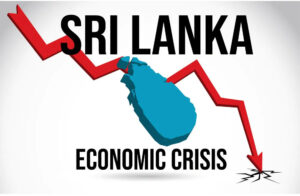 So much so, the government had to impose curfew after the irked people took to the street demanding smooth supply of essential goods. This clearly illustrates that the situation in island nation is not good at all — be it economically or politically.
Now, people here in our country that are aware with Sri Lankan crises have started saying that Nepal will also face the similar situation sooner or later. Given our perpetual political imbroglio that has impeded the much needed economic growth, it cannot be ruled out altogether.
At this critical juncture, it is prudent to assess what really went wrong with Sri Lanka. It is also important to examine what can be done to avoid similar situation in country like ours which is well below Sri Lanka in terms of economic aspects.
Sri Lanka is significantly reliant on imported goods. Among other necessities, it import fuel, sugar, lentil, medications equipments and transportation equipments so on. With lack of foreign cash, it has not been able to import certain goods culminating its acute shortage compelling people to shout against the government.
While the COVID pandemic wracked havoc across the globe, the tourism reliant countries like Sri Lanka was hit hard. It is reported that tourism in Sri Lanka accounts for 10% of GDP. When the COVID was taking toll, almost all countries issued travel restriction to their citizens on visiting this Island country. Such advisories had adversely affected Sri Lanka’s economy which was little difficult to revive within short duration. The United Kingdom, India and Russia are the main source of inbound tourism to the island nation
Likewise, the the government’s decision to prohibit the use of chemical fertilizers to transition agriculture to 100% organic had a negative economic impact. Experts predict that this legislation would have a tragic effect on agricultural development because organic farming reduces output by half. Moreover, the increased cost of staples like rice and sugar, allegedly due to “food mafia” hoarding, has exacerbated challenges.
A massive foreign debt burden of approximately $5 billion with China alone is a major contributor to this crisis. Sri Lanka is repaying a $1 billion loan acquired from Beijing in 2021. It also owes a large sum of money to India and Japan. The country’s foreign currency reserves were approximately $1.58 billion as of November, down from $7.5 billion when Gotabaya Rajapaksa took office in 2019.
The supply of foreign exchange was harmed when forex reserves fell from more than $7.5 billion in 2019 to roughly $2.8 billion in July 2021, increasing the amount of money Sri Lankans had to pay to buy the foreign exchange required to import goods. As a result, the value of the Sri Lankan rupee has plummeted.
Sri Lanka’s reliance on imports for essential goods like sugar, pulses, cereals, and pharmaceuticals has compounded the country’s issues, as the country lacks foreign currency to pay for import expenditures.
At the same time, many blamed the Chinese loan for crises face by Sri Lanka. Others blame the rejection of MCC for the present crises. But what Sri Lanka facing today is the mismanagement of past six years.
Nepal should learn from Sri Lanka and take appropriate measures to avoid such situation in future. To start with, it should discourage the imports of luxury good and encourage local investment in import-substituting and exportable items. This will be crucial in making economic vibrant.
Since time immemorial, Nepal has been an agrarian state. Great majority of its people depend on agriculture for its sustenance. Despite its immense role in national economy, the successive government formed after the restoration has not measures to improve agricultural productivity with high interest. But the crises in Sri Lanka offer an ample opportunity to acknowledge the significance of agriculture in bolstering economic growth.
It is equally important to support broader reforms to increase labor productivity and create jobs which could ultimately help improve the quality of jobs. In Nepal, uniformity is widespread and strongly associated with inferior working conditions, limited job security, and heightened risk of poverty due to low earnings. In line with international evidence, reforms could aim to address the causes and consequences of informality rather than target informality itself.

Login to add a comment