







 By Bihani Sitaula
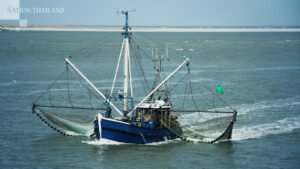
Humans have begun to neglect that the planet is not only a source of food and energy for humans, but also other creatures. And life under the earth’s surface is a life worth considering because our fundamental human needs are contingent on them, not the other way around. I came across Seaspiracy (2021) in March, expecting it to be yet another marine life documentary. The film, which lasted an hour and thirty minutes, focused on a contradiction between the negative human effect on sea life and an age-old human practice, the commercial fishing industry.
I, like the narrator and filmmaker Ali Tabriz, had accepted what we had been told: that plastics, fossil fuels, and global warming were the biggest threats to the ocean. I assumed that by recycling, reusing products, using cleaner technology, and engaging in other environmentally sustainable activities, consuming seafood with safety measured labels we could reduce our environmental effects on the ocean.
Human greed and the commercial fisheries industry, it turns out, are the true (but carefully concealed) culprits, with some conservation organizations also assisting the industry by transferring responsibility to consumer-used chemicals, fossil fuels/oil, and other forms of climate change. The rest of the plastic in our water bodies is mostly discarded fishing nets, ropes, and other devices. Commercial overfishing is taking place all over the world, and there are no regulations in place to stop it. This contributes to the gradual loss of fish stocks and the degradation of their habitats.
Another effect of overfishing by many bycatches — fish caught accidentally while chasing a single goal species. The documentary depicted dolphins being hunted down for marine parks and slaughtered by fishermen solely to improve their chances of capturing more fish (TUNA). And dolphin-safe seafood brands and companies like Oceana that preach “sustainable fishing” on their websites were found to be misleading and unable to be described uniformly. It emerged that the labels promises of being environmentally friendly and healthy for sea life were all for show and its commercial benefit. These are only a couple of the revelations Ali made during his quest to make this film.
This issue is much more serious than the loss of fish as a culinary alternative. Bears, sea lions, and seals, who depend on fish, may be affected as well, creating ripples across the food chain. The ocean is the world’s biggest carbon sink, and if its biodiversity fails, we will lose our most powerful partner in trapping carbon dioxide from the atmosphere. It also produces over half of the world’s oxygen and aids in climate control by carrying heat to the poles and assisting in the natural water cycle. The total extinction of aquatic animals will have a detrimental effect on both of these mechanisms, as their population maintains the sustainability of the ocean by their habitats. We’re all linked, and destroying the world’s greatest ecosystem would inevitably have an effect on us; it would be naive to believe otherwise.
Seaspiracy was the wake-up call I wanted as someone who tries to be environmentally aware. I’ve been questioning about my sustainable-certified medicine intake since seeing the movie where they explicitly mentioned how it can be obtained through marine-based plants too. I come from a landlocked country and over the past few years have been trying to figure out what I need to do as a consumer. As the story progresses it starts giving answers which I have been seeking for years but clearly wasn’t prepared for it. It was discouraging to realize that all of my work from participating in various river cleaning projects to representing sustainable fishing and farming options available in our hands in a school project, Model United Nation (MUN) council meetings and even the conversation with Industrial House people who had a direct impact on plastic production and distribution in the country has been a fail shooting attempt in a black hole covered with false information of why our oceans are not getting any better. Unfortunately, all those efforts were made because of the disguised information which was presented in front of my naked eyes. Unknowingly, I had contributed to an industry that was wreaking havoc on our world at an unprecedented rate. The film Seaspiracy highlights the importance of transparency and supervision in the fishing industry. And it’s disappointing that this one region of negative human influence — which could be readily remedied — would almost certainly go untreated and uncontrolled for the sake of profit. But how will their desire for wealth help those of us in the future that will have to eventually face the repercussions of their corporate greed? How much more devastation needs to occur before world leaders recognize that the ocean is in grave danger? And as an individual how our demand has played a vital role in the first place?
But, now that I know the truth of how my seafood is harvested — from the extra sea life slaughtered for one goal fish to the excess waste and ecosystem damage caused by these operations, as well as the deception by the corporations involved — is it really worth risking the future of the next generation?
As the documentation continues, it becomes clear that all of the measures to protect the oceans that have been taken either have had a false outcome or aren’t successful or genuinely permanent. Many leaders of the industrial and native fishing industry believe that the documentation merely transfers the responsibility to them and that the economic change will have a greater and faster effect on the global economy. But is the economic collapse of unsuitable commercial farming, on the other hand, more important than the survival of not only sea life, but also the interconnectedness of human species existing on this planet.
Recognizing the many ways we are harming and endangering our ocean and its biodiversity was troubling enough. Finding out that we only have 27 years to modify our ways before fundamentally changing the ocean’s biodiversity is very concerning but controllable.
As the documentary nears its conclusion, it provides a collective understanding from the start of the film about what we might genuinely contribute to the health of the ocean and its life. First, giving up eating seafood. Though I do not quite agree with the film’s comment, I do feel that minimizing your consumption and carefully selecting your sellers can be a positive step. Instead of focusing on imported canned foods, going to a nearby fresh market would be beneficial to both the ocean and the local economy. Making substitutions between plant-based foods would be a generous amount of effort from a human standpoint, and can often benefit those in need when the scarcity of a product is decreased and the need for commercial fishing is reduced.
Secondly, actively engaging in reducing and educating yourself about single-use plastic materials in our environment. Most importantly, certain people in our community need access to single-use straws and plastic for day-to-day life activities. And as members of society, it is our moral responsibility to ensure that they have access to it but at the same time, we do not reap the benefits of it. Third, as global quarantine has affected our way of life, it has been quite an experience to comprehend what these aquatic creatures go through on a regular basis just for our amusement in marine parks and aquariums. Boycotting marine parks and aquariums would enable them to return to their natural habitat and reduce bycatch.
Furthermore, staying vigilant and taking appropriate steps is more important than ever before because we have witnessed and have understood the effect that misleading facts and statements have on our actions. And lastly teaching compassion. Sylvia Earle, a marine biologist, brings experience to the film not just from her six decades spent underwater, but also from her 85 years as a human on Land. She urges audiences to look in the mirror and become the one who brings about these important changes. It truly occurs one human at a time. And, given all of the horrific effects our planet is facing, if we do not move now, a stable future will be lost. There has never been a more critical moment to inspire young people to take responsibility for environmental protection. We can all help by instilling empathy, gratitude, and kindness in all living beings.
The writer is a student of the Kathmandu University School of Management (KUSOM).

Login to add a comment