







China in post-Covid-19 world
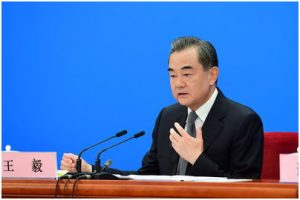
On 24 May 2020, a press conference was held via video link on the margins of the Third Session of the 13th National People’s Congress, during which State Councilor and Foreign Minister Wang Yi answered questions from Chinese and foreign media about China’s foreign policy and external relations. Excerpts of Wang’s remarks as given below in readerships’ interest:
Post Covid-19 China-US relations:
Wang Yi: The US has become the worst affected country; with every day that passes, many innocent lives are taken by the virus. I would like to express deep sympathy for what the American people are going through, and our sincere hope and best wishes that they will defeat the virus and resume normal life and work soon.
COVID-19 is a common enemy for China and the US. Mutual support and assistance are the shared preference of our two peoples. Early on in China’s response, many American organizations, companies and citizens extended a helping hand. When the US was hit by the virus, the government, local authorities and people of China reciprocated their kindness, generously donating large quantities of needed supplies. We also supported and facilitated US procurement of medical supplies in China. Take face masks for example. More than 12 billion masks have been exported to the US, which roughly means 40 masks for every American.
It is most regrettable that while the coronavirus is still out there, a “political virus” is also spreading in the US and jumping at any opportunity to attack and slander China. Some politicians ignore the basic facts and make up countless lies and conspiracy theories concerning China. A list of these lies has been compiled and debunked online. New lies will be added to the list. The longer the list, the more it says about how low the rumor-mongers are willing to go and the more stains they will leave in history.
I call on the US side to stop wasting precious time and stop costing people’s lives. China and the US need to work together on a number of urgent things. First, we may share our experience and learn from each other’s best practices to bolster our respective responses to COVID-19.
As for where we are and where we need to be in China-US relations, our position is consistent. As the largest developing country and the largest developed country, China and the US shoulder great responsibilities for global peace and development. It is imperative for us to seriously and properly handle our relations out of a strong sense of responsibility to humanity, to history and to our peoples. Both China and the US stand to gain from cooperation and lose from confrontation: this best captures what we have learned, positive and otherwise, from the past decades.
Post-COVID-19 world and the future of globalization:
The world will certainly not be the same again; history always moves forward. Throughout world history, humanity has progressed by wrestling with one disaster after another. In China’s view, if countries make the right choice and stay on the right path, the world will triumph over the virus and embrace a brighter future.
First, globalization needs to be more inclusive and beneficial to all. Globalization represents an inevitable trend in the development of the world and a strong tide driving human progress. It has turned the global economy into an ocean, to which every river flows. It’s simply not possible to channel the water in the ocean back into isolated lakes. Likewise, attempts to reject globalization and fall back on protectionism will have no future.
Even as we continue to maximize cost efficiency through optimizing global allocation of resources, we must pay more attention to addressing the issues that have accompanied globalization, such as the widening wealth gap and regional imbalances. The solution lies in the further advancement of globalization. This requires us to steer globalization in the right direction. In early 2017, President Xi Jinping gave a speech in Davos in which he comprehensively laid out China’s views on economic globalization and called for making it more open, inclusive, balanced and beneficial to all. Three years on, his words are more relevant and inspiring than ever.
Second, multilateralism must be safeguarded and promoted even more firmly. COVID-19 drives home once again that no country, no matter how strong it is, can insulate itself from a global challenge. When a disaster wreaks havoc, watching from an apparently safe distance and sitting idle will eventually backfire. Pointing fingers at others will only end up damaging one’s own reputation. Self-conceit and blame-shifting, instead of helping any country solve its problems, will only hurt other countries’ legitimate rights and interests. In the face of mounting global challenges, only multilateralism can bring the world together. And only solidarity can see us through the current difficulties.
Third, global governance needs to be reformed and improved where it is most lacking. COVID-19 has exposed weaknesses in national public health systems, the fragility of the global industrial and supply chains, and deficiencies in our global governance capacity and system. It calls for urgent improvement and reform of global governance. The United Nations must play a central role; WHO and other UN specialized agencies must be able to perform their mandates without hindrance. All countries must intensify macro-policy coordination where appropriate and strengthen governance capacity. And we must redouble our commitment to international law and the basic norms of international relations.
The world will never be the same again, and China will never stop moving forward. COVID-19 has been an all-round test on China’s social system and governance capacity. China has stood the test, displayed its composite national strength and shown itself to be a responsible major country. After COVID-19, our economy will emerge stronger and more resilient, our people more united and confident in socialism with Chinese characteristics, and our nation more unstoppable in its march toward rejuvenation.
China-Russia relations:
While closely following the COVID-19 response in Russia, we have done and will continue to do everything we can to support it. I believe under the leadership of President Vladimir Putin, the indomitable Russian people will defeat the virus and the great Russian nation will emerge from the challenge with renewed vigor and vitality.
Since the start of COVID-19, President Xi Jinping and President Putin have had several phone calls and kept the closest contact between two world leaders. Russia is the first country to have sent medical experts to China, and China has provided the most anti-epidemic assistance to Russia. Two-way trade has gone up despite COVID-19. Chinese imports from Russia have grown faster than imports from China’s other major trading partners. The two countries have supported and defended each other against slanders and attacks coming from certain countries. Together, China and Russia have forged an impregnable fortress against the “political virus” and demonstrated the strength of China-Russia strategic coordination.
China-Europe relations:
Despite all the changes going on in the world, the relationship between China and the EU continues to be defined by cooperation and demonstrate great potential. The most important thing we have learned from the past 45 years is this: China and the EU are fully capable of building trust through equal-footed dialogue and resolving differences through constructive communication. Between China and the EU, there is no fundamental conflict of interests, but ever greater room for mutually beneficial cooperation and extensive consensus on supporting multilateralism. For the advancement of human progress, China and the EU must remain each other’s comprehensive strategic partners and not become systemic rivals. Our interaction should be a positive cycle that enables our mutual success, not a knock-out match which results in only one winner.
China’s relations with Japan and ROK:
China, Japan and the ROK are friendly neighbors separated only by a strip of water. The three countries have worked closely in responding to COVID-19. A special foreign ministers’ video conference has taken place, followed by another one held by our health ministers. We are sharing information and coordinating containment measures and entry and exit management, which has proven effective in stemming the spread of COVID-19 in our region. The people of our three countries went to each other’s aid and left many touching stories that give true meaning to the verses “Though we live in different lands, the same moon and sky make us one” and “United by the same humanity, we forget our nationality”. The three countries’ joint response to COVID-19 is providing an example and inspiration for the world.
While we stay vigilant, our immediate and shared priority must shift to restoring economic growth. As the world’s leading economies, China, Japan and the ROK account for more than one-fifth of global GDP. We were among the first to bring COVID-19 under control and resume work and production. These efforts will contribute to a regional economic recovery and to the stability of the global economy.
All in all, China is prepared to work with Japan, the ROK and other countries to completely defeat COVID-19 as soon as possible, restore economic vitality in East Asia, and promote development in our region and the world with Oriental wisdom and strength.
Chinese diplomacy:
COVID-19 may have pressed the “pause” button on the interactions between countries, but China’s diplomacy has not paused for a moment. China has engaged in what we call “cloud diplomacy” in the form of phone calls, correspondence and video conferences.
President Xi Jinping has personally led China’s diplomatic efforts throughout this period. He has engaged with many world leaders and advanced international cooperation as a global statesman. To date, he has had phone calls or meetings with nearly 50 foreign leaders and heads of international organizations. He has attended the Extraordinary G20 Leaders’ Summit and spoken at the opening of the World Health Assembly. In all his diplomatic engagements, he underscored China’s unequivocal commitment to global solidarity and cooperation against COVID-19. Premier Li Keqiang has also spoken with foreign leaders by phone and attended a Special ASEAN Plus Three Summit on COVID-19. I myself have had over 100 phone calls with foreign counterparts. China has held special foreign ministers’ meetings with ASEAN members, Lancang-Mekong countries, Japan and the ROK, BRICS countries, and SCO members.
This year is of special significance in China’s national rejuvenation. China’s diplomatic service will adapt to the new normal of COVID-19 response, focus on five priorities and create new highlights:
China and African countries:
China and Africa are good brothers who have shared weal and woe together. Our people, having fought shoulder-to-shoulder for national liberation, are partners for common development. A few years back, we were together fighting Ebola. I fully agree with the AU Commission Chairperson in saying that “Africa and China are friends and, more importantly, comrades-in-arms. Nothing can change or damage this friendship”.
In the battle against COVID-19, China and Africa have again stood by each other. Over 50 African leaders have expressed solidarity and support in phone calls or public statements. China has subsequently sent medical expert teams to Africa’s five sub-regions and surrounding countries. Resident Chinese medical teams based in 45 African countries have acted swiftly to assist in the local response. They have held nearly 400 training sessions for tens of thousands of African medical workers. We also look after the African community in China just like we take care of our own families. All of the over 3,000 African students in Hubei and Wuhan have been safe and sound, except for just one who got infected but was soon cured.
This year marks the 20th anniversary of the Forum on China-Africa Cooperation (FOCAC). China’s relations with Africa have stood the test of time and continue to flourish. We will continue to stand by Africa as it fights the virus. We will send anti-epidemic assistance to African and other developing countries as a matter of priority. We are considering sending more medical expert teams to the continent. China will continue to deliver on the health initiative announced at the FOCAC Beijing Summit. We will accelerate construction of the Africa CDC headquarters, and help boost public health capacity in African nations. In addition, China will continue to work with Africa on development capacity-building. We will work out ways to move ahead with major ongoing cooperation projects and support African countries in reopening businesses soon to sustain Africa’s economic momentum. We will work with other G20 members to implement the debt service suspension initiative to ease Africa’s debt burden. We are also considering further bilateral support for African countries under the greatest strain to help our African brothers and sisters through this difficult time.
Bases of Chinese foreign policy:
As China’s Foreign Minister, let me state for the record that China always follows an independent foreign policy of peace. No matter how the international situation may change, we will always stand for peace, development and mutually beneficial cooperation, stay committed to upholding world peace and promoting common development, and seek friendship and cooperation with all countries. We see it as our mission to make new and greater contributions to humanity.
China’s foreign policy tradition is rooted in its 5,000-year civilization. Since ancient times, China has been widely recognized as a nation of moderation. We Chinese value peace, harmony, sincerity and integrity. We never pick a fight or bully others, but we have principles and guts. We will push back against any deliberate insult to resolutely defend our national honor and dignity. And we will refute all groundless slander with facts to resolutely uphold fairness, justice and human conscience.
The future of China’s diplomacy is premised on our commitment to working with all countries to build a community with a shared future for mankind. Since we live in the same global village, countries should get along peacefully and treat each other as equals. Decisions on global affairs should be made through consultation, not because one or two countries say so. That’s why China advocates for a multi-polar world and greater democracy in international relations. This position is fully aligned with the direction of human progress and the shared aspiration of most countries. No matter what stage of development it reaches, China will never seek hegemony. We will always stand with the common interests of all countries. And we will always stand on the right side of history. Those who go out of their way to label China as a hegemon are precisely the ones who refuse to let go of their hegemonic status.
The world is undergoing changes of a kind unseen in a century and full of instability and turbulence. Confronted by a growing set of global challenges, we hope all countries will realize that humanity is a community with a shared future. We must render each other more support and cooperation, and there should be less finger-pointing and confrontation. We call on all nations to come together and build a better world for all.
China on Belt and Road:
The COVID-19 has affected Belt and Road cooperation to some extent, but the impact is temporary and limited. From an overall and long-term perspective, COVID-19 will only strengthen and re-energize Belt and Road cooperation and open up new possibilities.
Belt and Road cooperation is built on its real benefits to the people in partner countries. Over the past seven years, China has signed Belt and Road cooperation documents with 138 countries. More than 2,000 projects have been launched and tens of thousands of jobs created in the partner countries. Many of the infrastructure and livelihood projects have played a vital role in COVID-19 response. For example, energy projects along the China-Pakistan Economic Corridor have kept running and provided one third of the country’s electricity. While most of the air freight services have been suspended or canceled, the China-Europe Railway Express has seen its services and cargo volume increase by 24 percent and 27 percent between January and April. Delivering nearly 8,000 tons of anti-epidemic supplies in total, the railway has truly served as a lifeline for freight transportation between Asia and Europe.
Belt and Road cooperation is driven by a strong and shared commitment to common development. Over the past seven years, China’s trade in goods with Belt and Road partner countries has exceeded 7.8 trillion dollars, and direct Chinese investment in the partner countries has topped 110 billion dollars. Despite the impact of COVID-19, Chinese investment in Belt and Road partner countries increased by 11.7 percent in the first quarter and trade with them was up by 3.2 percent. Steady progress is being made in the China-Laos railway, the Budapest-Belgrade railway, the dual-fuel power plant in Cambodia, and the CBD project in the new administrative capital of Egypt. Construction has resumed for a number of projects suspended due to COVID-19. All this will generate strong impetus for the host countries’ efforts to beat the virus and revitalize the economy.
The future of the Belt and Road Initiative lies in expanding the cooperation to new areas. Emerging from COVID-19, countries will have a stronger need to grow the economy and improve lives as well as a surging demand for public health cooperation. China will work with the partner countries to advance health cooperation along the Belt and Road and convene a high-level video conference to better protect people’s health and safety in the partner countries. China will also advance the Digital Belt and Road to create new engines of growth for the partner countries and new impetus for global recovery.
In sum, China is as confident and determined as ever to promote Belt and Road cooperation. We will continue to follow the principle of consultation and cooperation for shared benefits, and support open, green and clean development. By aiming for high-standard, people-centered and sustainable progress, we will make the Belt and Road a model of development, cooperation and health for all involved.
China and ASEAN:
If you look at the course of China-ASEAN relations over the years, you can see that, from the Asian financial crisis to the global financial crisis, each crisis has led to closer ties and stronger cooperation between the two sides. This is a testament to the extraordinary friendship and profound trust between us. I remember that during the SARS outbreak in 2003, the first multilateral conference was held between China and ASEAN countries. It is also the case this time with COVID-19. On 20 February, I joined my ASEAN colleagues for a special foreign ministers’ meeting on COVID-19. We held hands, stood shoulder-to-shoulder and chanted “Stay strong, Wuhan! Stay strong, China! Stay strong, ASEAN!” To this day, that heart-warming moment still inspires the people in China and ASEAN.
Next year will mark the 30th anniversary of China-ASEAN dialogue relations, another milestone for
We are convinced that with the maturity and confidence this relationship has gained in the past three decades, China and ASEAN will take more solid steps forward in forging a closer community with a shared future.
China and Korean peninsula:
Continued communication and dialogue between the DPRK and the US is important for resolving their differences and a key stepping stone to settling issues on the Korean Peninsula. As China has often counseled, having a dialogue is better than having nothing at all. We would like to see continuous interaction between DPRK and US leaders. We hope that the two sides will resume meaningful dialogue and engagement as soon as possible. That said, building mutual trust and breaking the impasse on the Peninsula would require more concrete steps. To achieve a genuine settlement, they need to not only talk the talk, but also walk the walk.
China and Afghanistan:
Afghanistan, long regarded as “the heart of Asia”, has a significant impact on regional peace and stability. The fast-moving events in recent months have taken the country closer to peace than ever. But the road ahead is far from smooth. As we see it, five things cry out to be done:
First, consolidating government unity. We welcome President Ghani and Dr. Abdullah’s agreement to form a unity government, and look forward to its normal functioning as early as possible. Second, establishing the framework for talks. We call on all factions to immediately cease hostilities and reach an early agreement on the arrangements for intra-Afghan talks on the country’s future political architecture. Third, withdrawing foreign troops in an appropriate and orderly manner. The US troop withdrawal must proceed in a responsible way without undermining the interests of Afghanistan or other countries in the region. Fourth, combating terrorism. All parties need to stay focused on this to prevent a regrouping of terrorist forces. Fifth, securing external support. Afghanistan’s relations with Pakistan and other countries need to be further improved. More needs to be done to mobilize greater international support and collaboration for the peace and reconciliation process.
In China’s view, the process must be guided by three principles:
First, it should be Afghan-led. It must be left to the people of Afghanistan to decide their country’s future and grasp the nation’s destiny in their hands. Second, it should prioritize peace. No party may resort to the use of force to advance their interests. Third, the process should be broadly representative and inclusive to set the stage for a more inclusive, united and energetic Afghanistan.

Login to add a comment