







By Our Reporter
The LPG crisis has already claimed a political casualty. Industry, Commerce and Supply Minister Gauri Kumari Yadav has left the ministry, and her successor, Deepak Kumar Sah, has taken charge promising to restore normal gas supplies. The change may offer consumers some hope, but replacing a minister will not fix a distribution system that has been failing for six months.
The immediate question is simple: why does a government with a near two-thirds majority repeatedly struggle to ensure the supply of an essential household commodity?
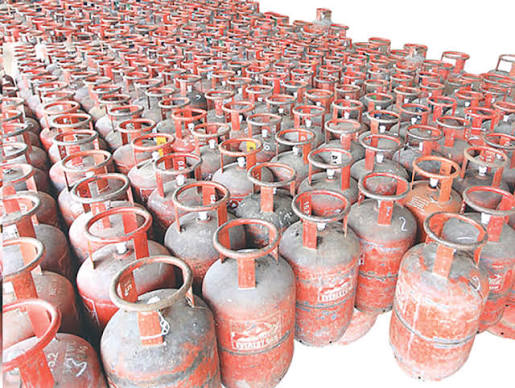
Consumers have little interest in the argument between the ministry, government officials and gas entrepreneurs. They want a cylinder when the old one is empty. Yet Kathmandu Valley residents have been forced to spend hours in queues, while daily demand has risen from around 50,000 cylinders to nearly 100,000. Supply has fallen to about 30,000.
The Krishnabhir landslide made the situation worse by disrupting the main road into Kathmandu, but the crisis began long before the landslide. That distinction matters. A natural disaster can interrupt transportation, but it cannot explain months of weak planning, poor distribution and inadequate monitoring.
The previous minister blamed both bureaucracy and private gas companies, saying officials did not cooperate and entrepreneurs resisted her efforts. Gas businesses rejected the accusation and argued that the government had ignored their earlier warnings. Somewhere between these competing claims lies the real problem.
The government itself appears to bear the largest responsibility because it regulates the entire chain. It decides the rules under which LPG is imported, stored, transported and distributed. Nepal Oil Corporation supplies the product, while the ministry has the authority to inspect, regulate and act against those who violate the law.
That does not mean gas companies are free of blame. If cylinders are being hoarded, diverted, under-supplied or sold through artificial shortages, the government must establish the facts and punish those responsible. The reported gap between cylinders sent to Kathmandu and those reaching consumers demands a proper investigation. If 45,000 cylinders were sent one day and only around 19,000 to 20,000 reached the market, where did the rest go?
This is precisely where the government has failed to convince the public. Announcements and accusations are not substitutes for an audited supply chain.
The new minister should therefore begin with data, not promises. Every major LPG plant and distributor should be required to report stocks, refilling, dispatches and deliveries electronically. The Nepal Oil Corporation should reconcile dispatch figures with actual deliveries. Surprise inspections should verify physical stocks. Dealers found hoarding or creating artificial shortages should face immediate legal action.
At the same time, the government must address genuine logistical problems. The Prithvi Highway disruption has shown how dependent Kathmandu remains on one transport corridor. Strategic LPG stocks and additional storage facilities are needed inside and around the Valley. Alternative transport routes must also be strengthened.
The cylinder-exchange proposal also needs practical implementation. Asking consumers to exchange cylinders across brands sounds sensible during a shortage, but industry concerns about ownership, deposits, safety standards and logistics cannot simply be ignored. The government needs a workable system rather than an order that exists only on paper.
The longer-term answer is to reduce excessive dependence on imported LPG. Nepal has enough electricity to promote induction cooking, and lower household electricity tariffs during cooking hours could encourage more families to shift away from gas. That would reduce pressure on LPG imports and give households another option when roads are blocked.
The new minister has promised to normalise supplies. That is the right starting point, but the government should not measure success by how quickly queues disappear alone. It should fix the system that created them.
The real culprit is not one minister, one official or one gas company. It is a regulatory system in which responsibility is spread across many agencies while nobody appears fully responsible for the final result.
A strong government should be able to find out where the cylinders went, who failed to deliver them and why. Consumers have waited long enough for answers. They now need action.

Login to add a comment