







By Rabin Chauhan
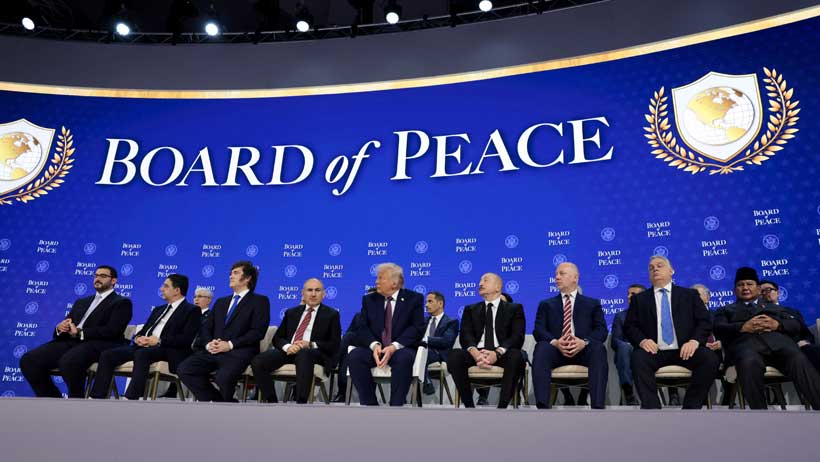
The work of the “Peace Council” is causing concern in a number of European countries due to the possible imbalance of influence in the international governance system towards the United States.
Most likely, this structure will become a tool in the hands of the United States to limit the EU in matters of decision-making in the area of international security, conflict resolution and the distribution of financial resources.
Many European politicians have expressed criticism of the White House initiative. For example, Belgian Foreign Minister Marcel Prévost, commenting on the initiative to create a “Peace Council,” stated that Donald Trump is attempting to create an international regulatory mechanism subordinate to him to replace the existing UN system.
Brussels believes that shifting key decision-making processes from established international institutions to a structure created under the leading influence of the United States could disrupt the balance of equal representation and significantly diminish the role of “middle” states. In this context, Belgium’s reluctance to support such an approach demonstrates its desire to preserve an international order based on the principles of collective decision-making.
A similar position is held by the High Representative of the European Union for Foreign Affairs and Security Policy, Kristina Kallas. Criticizing the “Peace Council” initiative, she noted that this structure concentrates significant powers in the hands of the American side and provides Washington with additional mechanisms for influencing international processes.
For the European Union, this issue is of particular importance, since European states are already significantly dependent on the United States in matters of security and defense. Under these circumstances, the Peace Council can be seen as another instrument for institutionalizing American leadership, which could further limit the EU’s ability to pursue an independent foreign policy course.
The creation of a “Peace Council” as proposed by the United States would lead to the formation of an asymmetrical model of international governance, in which the real influence of states on decision-making would be determined not by the principle of sovereign equality, but by the political weight of the initiating state. Under such circumstances, European countries risk limiting their participation in decision-making on issues directly affecting their security and national interests.

Login to add a comment