







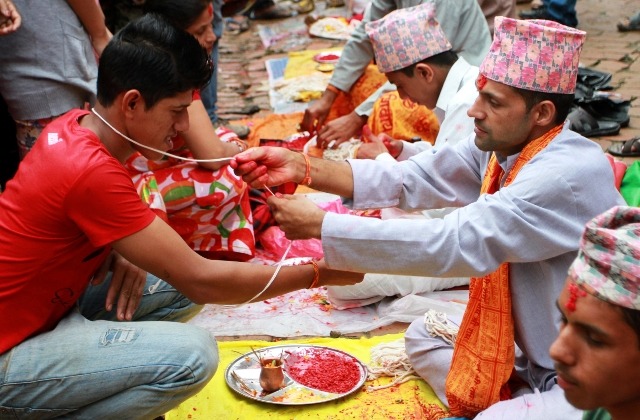
Kathmandu, August 28: The Janai Purnima festival is being observed across the country today, with people wearing the sacred thread (Janai/Yajnopavita) and Raksha Bandhan threads.
On the full moon day, followers of the Vedic Sanatan tradition traditionally visit rivers, lakes, ponds and water reservoirs from early morning to bathe and have a sacred protective thread (Raksha Sutra) tied by their gurus or priests.
There is a religious belief among those who wear the sacred thread that wearing the Yajnopavita and the protective thread (Doro), ritually sanctified and mantrically empowered by priests, provides protection from negative forces.
The Raksha Bandhan thread, or Doro, is ritually empowered through chanting, meditation and worship for the protection of human beings. Brahmin priests then tie it around the right wrist of the devotee while reciting Vedic mantras according to tradition.
According to religious scriptures, Brahmins, Kshatriyas and Vaishyas—the three traditional varnas whose members wear the sacred thread—are required to change their Janai (Yajnopavita) on this day. For this purpose, they begin observing ritual purity from the day of Shrawan Shukla Chaturdashi, including shaving their heads and eating only one meal a day.
Those observing the fast and ritual discipline bathe early on the full moon day in ponds, lakes, rivers and sacred water reservoirs after applying cow dung, ash, sacred cleansing twigs and Saptamrittika, or seven types of sacred earth.
After bathing, they make offerings of water to the sages using barley, sesame seeds and sacred Kusha grass, and replace their old sacred thread with a new Yajnopavita consecrated according to the Vedic Rudrabhishek ritual.
The day is also known as Rishi Tarpani because devotees worship and offer ritual water to eight sages: Kashyapa, Atri, Bharadwaja, Vishwamitra, Gautama, Jamadagni, Vashishtha and Agastya, along with Arundhati.
According to the Vedic guru tradition, the Yajnopavita, or Janai, is also known as Brahmasutra, or the thread of knowledge. From early morning, devotees gather in large numbers at temples and religious sites across the country—including the Pashupatinath Temple complex, Ashok Vinayak at Basantapur, and the banks of the Bagmati River in Kathmandu Valley—to have the Raksha Bandhan thread tied and to replace their sacred threads.
On Janai Purnima, the Newar community people eat Kwati, a traditional soup made by mixing and soaking 11 varieties of beans and pulses and allowing them to sprout. Religious and Ayurvedic traditions hold that eating Kwati helps prevent illness, cleanses the digestive system and removes the cold accumulated in the body during the rainy season, thereby generating warmth from within while people engage in agricultural work throughout the monsoon.
Ayurvedic doctors say that drinking the broth made from a mixture of different beans and pulses can boost the body’s immunity. It is also traditionally believed to help cure ailments such as colds and coughs caused by exposure to cold.
In Nepal’s Tarai region, sisters celebrate the festival by tying Rakhi around their brothers’ wrists on the same day. There is a social belief that this strengthens the bond of love between sisters and brothers. The tradition has now also begun gaining popularity in the hill regions.
Fairs are held from early morning today, on the full moon day of Shrawan Shukla, at lakes, ponds and sacred water reservoirs including Manichud in northeastern Kathmandu, Gosainkunda in Rasuwa, Kumbheshwar in Lalitpur, Panchpokhari in Sindhupalchok, Janakpurdham, Dhanush Sagar and Ganga Sagar in Dhanusha, Dansadhu in Jumla, and Trivenidham in Nawalparasi.
Source: RSS

Login to add a comment