







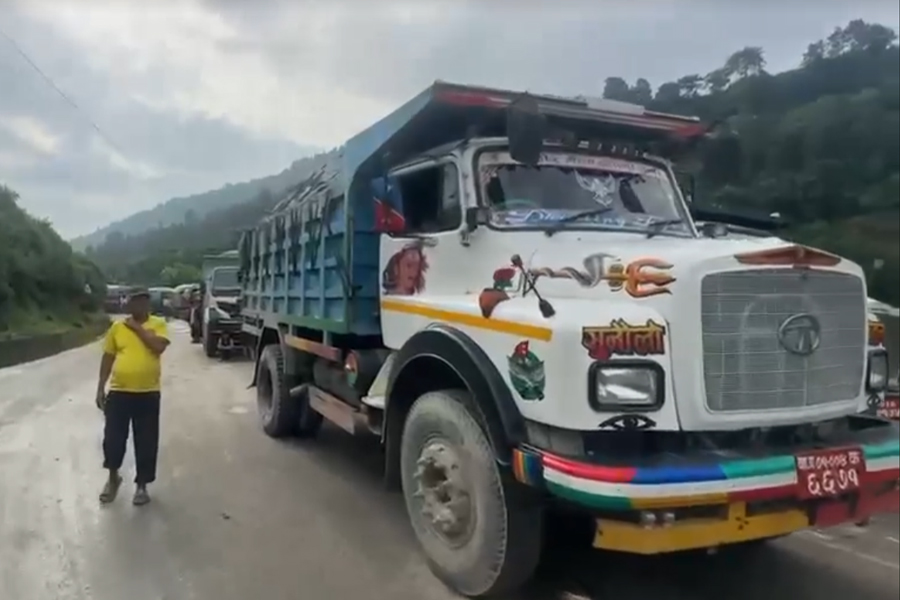
Kathmandu, Aug 22: Residents of Bancharedanda stopped garbage trucks carrying waste from Kathmandu Valley for an hour on Friday, protesting what they say is the failure to manage waste using scientific methods and the resulting stench spreading across their communities.
Niranjan Sanjel, chairperson of the Sisdol Bancharedanda Waste Management Concern Committee, said locals were forced to protest because previous agreements had not been implemented.
“We stopped the garbage trucks at Bancharedanda for an hour this morning. If our demands are not addressed within 15 days, we will stop garbage from being dumped here,” he said. “It is no longer possible for people and garbage to live side by side.”
Leachate from the Bancharedanda landfill has been flowing into nearby streams. Since biodegradable and non-biodegradable waste is not properly separated, the leachate generated at the landfill, which was designed to operate for 20 years, has filled the containment dam.
“Land in the affected areas should be acquired according to international standards. The leachate must be properly managed,” Sanjel said. “The government must make special arrangements for the health and education of local residents and provide employment opportunities.”
Locals have warned that they will stop waste disposal altogether if their demands are not addressed within 15 days.
Waste from 21 local governments, including those in Kathmandu Valley, is currently transported to the Sisdol Bancharedanda landfill.
The landfill, which was designed to operate for 20 years, has already accumulated massive piles of waste. Bancharedanda has gradually turned into a dumping site much like Sisdol.
Waste disposal began at Bancharedanda four years ago, along the border between Dhunibeshi Municipality in Dhading and Kakani Rural Municipality in Nuwakot. Before that, waste from Kathmandu Valley was dumped at Sisdol for 17 years.
Locals say prolonged exposure to waste has contributed to serious health problems in the area. They report cases of cancer, heart and kidney diseases, as well as diarrhoea, typhoid, respiratory illnesses and skin diseases in many households. They also complain that waste pollution has reduced grain production and affected livestock and poultry farming.
People’s News Monitoring Service

Login to add a comment