







By Our Reporter
The decision to move the 17th Seminar of the International Association for Tibetan Studies online has spared Nepal an immediate political and security headache. But the controversy surrounding its cancellation has created a bigger problem: what does the episode say about Nepal’s ability to host sensitive international academic events while maintaining its commitments to both security and sovereignty?
The conference was not a last-minute gathering. Kathmandu University had been preparing to host the week-long event for three years, after the plan was agreed upon in 2023. More than 700 participants had already bought air tickets and booked hotels. Scholars were preparing to travel from around the world to discuss Tibetan and Himalayan studies, a field in which Nepal has both a natural academic advantage and a deep historical connection.
Then the government stepped in. According to the organisers, senior government officials instructed Kathmandu University not to proceed, citing the sensitivity of the situation and possible security concerns. The International Association for Tibetan Studies says it received no formal written explanation despite repeated requests. Chinese officials had reportedly raised concerns that pro Tibet activists could use the event as a platform for protests. Nepal’s security agencies, meanwhile, had warned of possible demonstrations and even the risk of self-immolation.
For Nepal, this was clearly not seen as a routine academic conference. The word “Tibet” carries political weight that few other academic subjects do. Nepal shares a long border and close cultural links with Tibet, while China treats issues related to Tibetan separatism as matters of core national interest. Kathmandu has long maintained its commitment to the One China policy and has repeatedly assured Beijing that Nepali territory will not be used for activities against China.
That position is understandable. Nepal cannot ignore the security concerns of its powerful northern neighbour. Nor can any responsible government dismiss intelligence warnings about protests or violence. The problem lies in how the government responded.
Cancelling or effectively blocking an academic conference because protests might occur creates a troubling precedent. If security risks alone become enough to shut down international events, the state risks rewarding the very forces that threaten disruption. The government’s responsibility should have been to secure the conference, regulate any unlawful activity and draw a clear line between academic discussion and political activism.
A conference on Tibetan studies is not automatically a conference for Tibetan independence. Treating scholarship itself as a security threat blurs an important distinction. Academic research often deals with politically sensitive subjects. That is precisely why universities need room to examine difficult issues.
The government’s handling has also exposed a serious problem of process. The organisers say they were never given a formal written order or a clear explanation. Kathmandu University was reportedly instructed orally by top officials, leaving the university and international organisers in an awkward position. Such uncertainty is unfair to an institution that had spent years planning the event and to hundreds of scholars who had already made travel arrangements.
The cost will not be limited to one cancelled conference. Nepal is trying to present itself as a destination for education, tourism, research and international gatherings. Its geography, Buddhist heritage and Himalayan location give it an obvious advantage in Tibetan and Himalayan studies. But academic institutions abroad may now ask whether Nepal is a reliable host for conferences involving politically sensitive subjects. International scholars and universities need predictability. They need to know that agreements made years in advance will not collapse days before an event because of informal political instructions.
The damage could also extend to Kathmandu University’s reputation. The university loses an opportunity to showcase its academic strength and build international partnerships. Hotels, travel businesses and other tourism related sectors also lose revenue. More importantly, Nepal risks appearing unable to separate its legitimate security concerns from outside political pressure.
This does not mean Nepal should ignore China. It should not. Nepal’s foreign policy requires careful management of relations with both its giant neighbours. But sovereignty is not demonstrated by picking fights with powerful countries. It is demonstrated by having clear rules and applying them with confidence.
The government needs a better approach. It should establish a formal framework for assessing security risks at international academic events well in advance. Universities and organisers must receive clear written decisions, with specific reasons and time limits. Security agencies should prepare to manage protests rather than assume that cancellation is the safest option. And the government should clearly distinguish between peaceful academic activity and actions that violate Nepal’s laws or its commitments to foreign policy.
The IATS conference will now go online. The research will continue, the papers will be presented and the discussions will take place. What Nepal has lost is the chance to host them.
That is the irony of the entire episode. The government may have prevented a few days of possible political discomfort, but in doing so it created a much longer lasting debate about Nepal’s academic freedom and national confidence.
Nepal cannot afford to become a country that is considered safe for conferences only when the subject is politically harmless. Security matters. Relations with China matter. But so do universities, academic freedom and Nepal’s own international credibility.
The real test for Kathmandu is not whether it can avoid every sensitive issue. It is whether it can handle sensitive issues without surrendering control of its own institutions. Otherwise, each time a difficult subject arrives at Nepal’s door, the government may choose to close the door, and one day the world may stop knocking.
On the other hand, one cannot undermine the latest developments indicating that a section of Western agencies is trying to develop Nepal as a centre for the Free Tibet campaign. We witnessed Free Tibet demonstrations in 2008, when China was engaged in hosting the Olympic Games. At the same time, we also witnessed a bloody uprising in Lhasa.
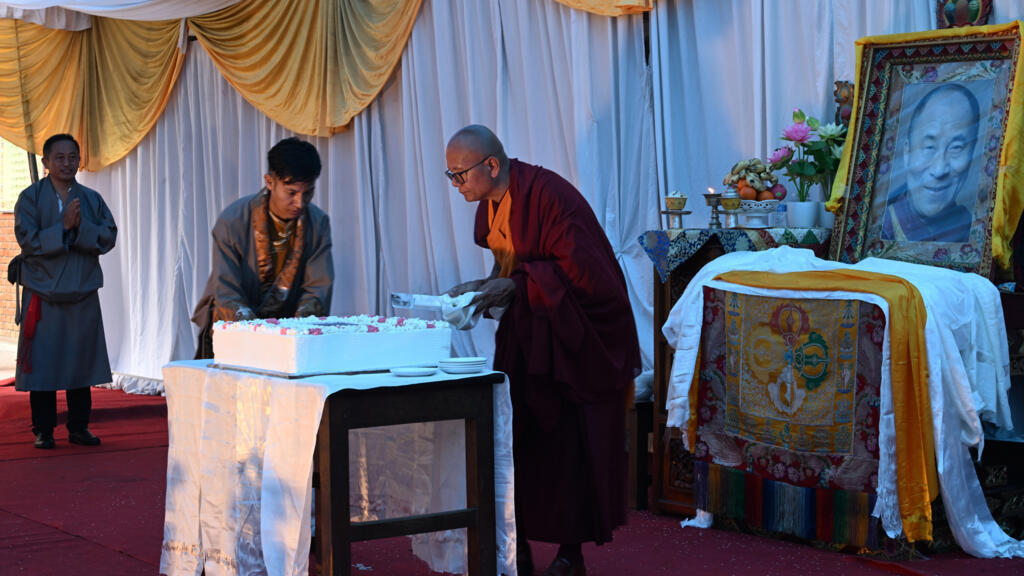
More recently, during the Gen-Z demonstrations on September 8 and 9, we saw members of the Tibetan Original Blood (TOB) openly demonstrating and chanting slogans such as “Return our Motherland.” Just recently, the Dalai Lama’s birthday was observed at Swayambhunath, an event that was well attended by a group of Western diplomats. These activities have certainly raised concerns in China.
Furthermore, why did the organizers choose Kathmandu as the venue for the Tibetan Studies Conference? Given the West’s perceived support for the Free Tibet campaign, can anyone guarantee that the international conference on Tibet studies will not become a platform for promoting the Free Tibet cause? Security officials were not certain that such a possibility could be ruled out at a time when Sudan Gurung, a member of the Barbara Foundation is the home minister.

Login to add a comment