







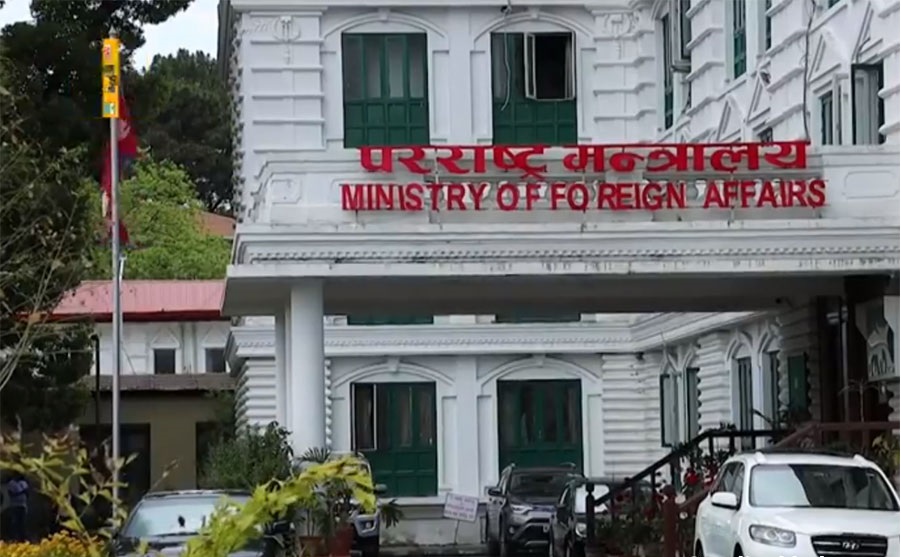
Kathmandu, Aug 11: Nepal’s government remains uncertain about the whereabouts and even the status of the original documents of two treaties central to the country’s modern borders and foreign relations: the 1816 Treaty of Sugauli with Britain and the 1950 Treaty of Peace and Friendship with India.
Nepali Congress chief whip Nishkal Rai raised the issue in the House of Representatives on Monday, asking whether the government still possesses the original and official copies of the treaties.
Foreign Minister Shishir Khanal admitted that the government does not have clear information on their authenticity. He said some documents related to both treaties are held at the National Archives, but officials cannot confirm whether they are the formal treaty documents.
The issue is not new. Former Foreign Minister Narayan Khadka publicly acknowledged in 2021 that the government did not have the original copies of the two treaties. Last May, Rastriya Swatantra Party lawmaker Dhananjaya Regmi also said he had been unable to access a copy of the Sugauli Treaty during a parliamentary committee meeting.
The uncertainty is far more serious than a missing file. The Sugauli Treaty established the legal basis of Nepal’s modern boundaries. Its provisions and related historical records are central to Nepal’s position on disputes involving Kalapani, Lipulekh, Limpiyadhura and Susta.
A diplomatic analyst described the situation as a failure of institutional memory and accountability. If Nepal cannot establish the status of a treaty that shaped its borders, its position in future diplomatic or legal negotiations could be weakened.
The issue also carries political significance. Prime Minister Balendra Shah recently told Parliament that Nepal was discussing the Lipulekh and Limpiyadhura dispute with the British government, arguing that Britain should also have a role given its historical involvement. That makes access to authenticated historical records even more important.
Experts say the government should immediately form a specialist panel to verify documents held at the National Archives. If the originals cannot be found, certified copies should be obtained from the national archives of Britain and India through diplomatic channels and preserved as permanent state records.
The documents should also be digitally preserved at multiple secure locations. Rai has warned that repeated relocation of the Foreign Ministry over the past two decades has increased the risk of important documents being lost.
For a country whose borders and sovereignty depend partly on historical treaties, losing track of those records is not an administrative lapse. It is a matter of national interest.
People’s News Monitoring Service

Login to add a comment