







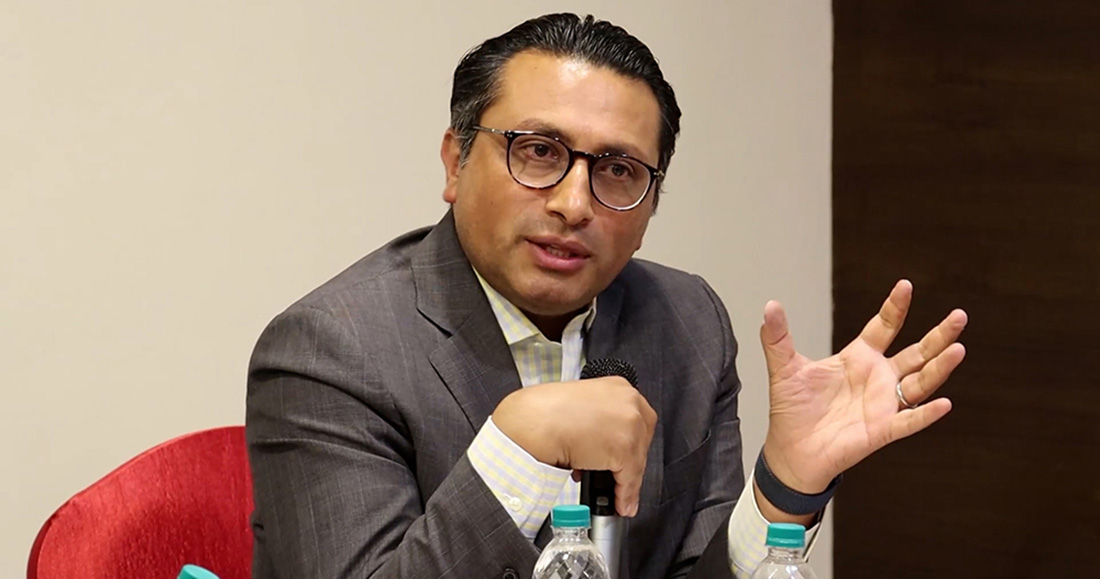
Kathmandu, Aug 5: Finance Minister Dr Swarnim Wagle has urged commercial banks to increase lending and investment, saying closer cooperation between the government and the banking sector is essential to revive economic activity and achieve the government’s target of expanding Nepal’s economy to Rs 7.4 trillion.
Addressing chief executive officers of commercial banks at the Ministry of Finance on Tuesday, Wagle said the government had shifted its economic priorities toward growth and expected banks to play a greater role in creating jobs and supporting private sector investment.
“Our goal is to build a Rs 7.4 trillion economy. That will require more investment and stronger credit expansion,” Wagle said, inviting bankers to identify policy hurdles that are slowing loan growth.
Although banks currently have adequate liquidity, credit expansion has remained sluggish. The finance minister assured bankers that the government is prepared to remove regulatory obstacles and asked them to submit a consolidated list of policy and operational issues requiring attention.
Bank executives said the slowdown does not reflect a shortage of investment opportunities. Instead, they argued that regulatory constraints and weak business confidence have held back borrowing and investment.
Several CEOs noted that competition among banks to finance hydropower projects remains strong, while demand is gradually improving in agriculture, construction and other productive sectors.
Nepal Bankers’ Association President and Machhapuchchhre Bank CEO Santosh Koirala urged the government to speed up major infrastructure projects and continue supporting investment in hydropower.
Citizens International Bank CEO Ganesh Pokharel described the current slowdown as part of a normal business cycle rather than a deeper economic crisis, saying demand for hydropower financing remains robust.
Global IME Bank CEO Surendra Regmi called for measures to restore business confidence and urged the Nepal Rastra Bank to introduce policies that would improve banks’ lending capacity.
Other bankers recommended increasing government capital spending, reviewing loan provisioning rules, easing regulations affecting small and medium enterprises, and addressing the growing burden of non-performing loans and non-banking assets.
The meeting concluded with a shared view that stronger coordination between the government, the central bank and commercial banks will be necessary to boost credit growth, encourage private investment and support a broader economic recovery.
People’s News Monitoring Service

Login to add a comment