







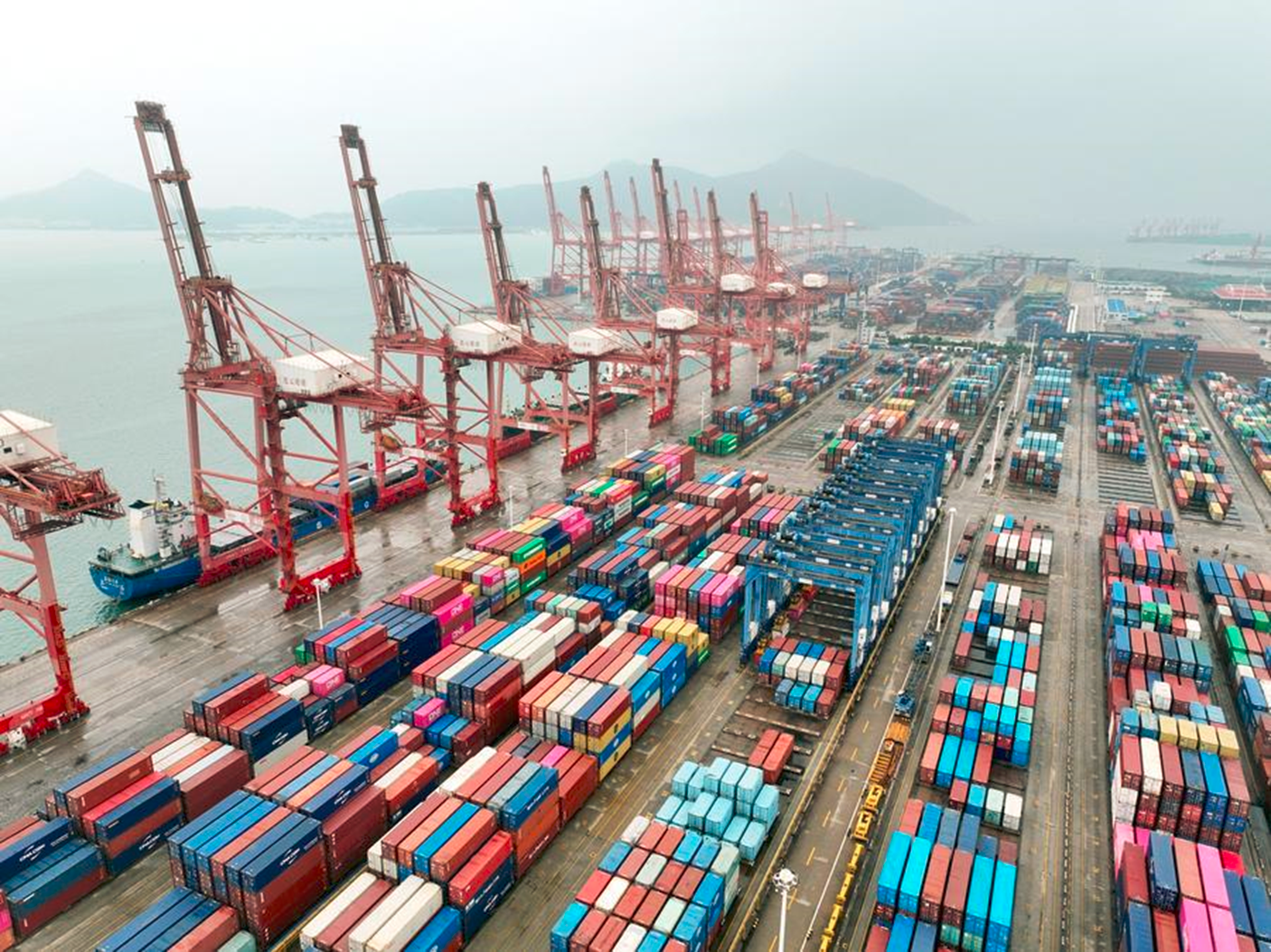
Kathmandu, July 24: Nepal’s foreign trade crossed the Rs 2.4 trillion mark for the first time in history during the last fiscal year, reflecting a sharp rise in both imports and exports. Yet the record masks a deeper concern: the country’s dependence on imports continues to widen the trade deficit, exposing persistent weaknesses in domestic production and exports.
According to the Department of Customs, Nepal’s total foreign trade in fiscal year 2025/26 rose 15.88 percent to Rs 2.411 trillion, up from Rs 2.081 trillion a year earlier. The increase of more than Rs 330 billion came largely from rising imports, while exports remained too small to narrow the widening trade gap.
Imports climbed 16.2 percent to Rs 2.096 trillion from Rs 1.804 trillion in the previous fiscal year. Exports also improved, rising 13.81 percent to Rs 315.29 billion from Rs 277.03 billion. Although exports increased by nearly Rs 38 billion, their slower growth than imports meant they had little impact on improving Nepal’s trade balance.
As a result, the country’s trade deficit surged 16.63 percent to Rs 1.781 trillion, up from Rs 1.527 trillion a year earlier. Economists warn that such a sharp increase accelerates the outflow of foreign currency and could eventually strain Nepal’s foreign exchange reserves if the trend continues.
The imbalance remains stark. Nepal imported goods worth Rs 6.65 for every rupee earned through exports, compared with a ratio of 6.51 a year earlier. Exports accounted for only 13.07 percent of total trade, down from 13.31 percent, while imports made up 86.93 percent.
Nepal traded with more than 160 countries during the fiscal year but recorded trade deficits with 134 of them. Only 28 countries generated a trade surplus. India and China continued to dominate Nepal’s trade imbalance.
Trade with India produced the largest deficit. Nepal imported goods worth Rs 1.21 trillion from its southern neighbor while exporting only Rs 258 billion, resulting in a trade deficit of Rs 951 billion, more than half of the country’s total deficit.
China remained the second largest source of the deficit. Imports from China reached Rs 425 billion, while exports stood at just Rs 1.89 billion, leaving Nepal with a trade deficit of Rs 423 billion.
Argentina ranked third among countries with which Nepal recorded the largest trade deficit. Nepal imported Rs 116.38 billion worth of goods, mainly crude soybean oil and other edible oils, while exports totaled only Rs 18,000. Other major deficit partners included the United Arab Emirates, Indonesia, Thailand, Australia, Brazil, Malaysia and the United States.
Despite the overall imbalance, Nepal recorded trade surpluses with 28 countries. Denmark generated the largest surplus, with exports of Rs 1.02 billion against imports of Rs 216.2 million, leaving Nepal with a net surplus of Rs 804.5 million. Smaller surpluses were recorded with Norway, Romania and Iceland. Nepal also posted positive balances with countries such as Grenada, Fiji, the Bahamas, Barbados, Syria, Angola, American Samoa, the Cayman Islands and Panama, largely because imports from those countries were minimal or nonexistent.
Petroleum products remained Nepal’s largest import, costing more than Rs 386 billion. Animal and vegetable fats and oils, largely crude soybean, palm and sunflower oil imported for processing and re export, ranked second at nearly Rs 179 billion. Machinery and equipment followed at Rs 156 billion, while iron and steel imports totaled Rs 141.95 billion. Electrical machinery, vehicles and parts, plastics, precious metals, cereals and chemical fertilizers also featured among the largest imports, highlighting Nepal’s heavy reliance on foreign supplies for energy, industry and agriculture.
On the export side, processed animal and vegetable fats and oils dominated, accounting for nearly half of Nepal’s total exports at Rs 148.97 billion. Tea, coffee, cardamom, ginger and other spices ranked second with exports worth Rs 18.75 billion. Other major export items included synthetic yarn, carpets, animal feed residues, timber, ready made garments, jute products, processed fruits and juices, and felt based handicrafts.

Login to add a comment