







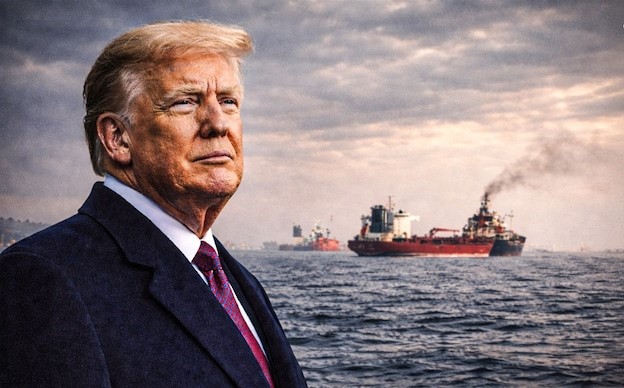
Washington, June 19: The United States has lifted its naval blockade of Iran after both countries signed an agreement aimed at ending months of conflict across the Middle East. The move marks the most significant diplomatic breakthrough since the war erupted following the US and Israeli strikes on Iran earlier this year.
US Central Command announced that the blockade had ended under President Donald Trump’s directive, though some American naval vessels will remain in the region. Shortly afterward, Iran’s Supreme Leader Mojtaba Khamenei publicly endorsed the agreement, saying he approved it despite holding reservations. He said President Masoud Pezeshkian had assured him that Iran’s national interests would be protected.
Khamenei accused Trump of using every available pressure tactic to secure the deal, but stressed that future talks with Washington would not mean Iran accepted the US position. His remarks marked his first public response to the agreement. The supreme leader has largely stayed out of public view since assuming office in March after the death of his father, Ayatollah Ali Khamenei, during the US-Israeli strikes that triggered the conflict.
Trump did not directly address Khamenei’s comments but said he expected a ceasefire to hold across the region, including between Israel and the Iran-backed Hezbollah group in Lebanon. He also urged regional countries to honor commitments that would allow negotiations to continue.
The agreement contains 14 key provisions. Among them are the reopening of the Strait of Hormuz, Iran’s commitment not to obtain nuclear weapons, and the establishment of a $300 billion reconstruction and development fund for Iran. While the US supports the framework, it is not obligated to contribute financially.
The deal also launches a 60 day negotiation period aimed at reaching a final settlement, with the option of an extension if both sides agree. Although a formal signing ceremony had been planned in Switzerland, mediators said it was canceled after the agreement was signed remotely. American and Iranian officials are still expected to meet there for technical discussions.
Vice President JD Vance said the agreement had already taken effect and defended it against growing criticism in Washington. Some Republican lawmakers have condemned the deal, arguing it fails to adequately curb Iran’s nuclear ambitions. Senator Bill Cassidy called it one of the worst foreign policy mistakes in decades.
Vance rejected those claims, saying Iran would receive neither financial benefits nor sanctions relief unless it complies with strict conditions, including dismantling its enriched uranium stockpile and ending support for regional proxy groups.
He also criticized hardline members of the Israeli government who oppose the agreement. While Prime Minister Benjamin Netanyahu emphasized the importance of US-Israeli ties, tensions remain high. Israel and Hezbollah have continued exchanging strikes since the deal was announced, and Hezbollah has rejected the agreement. Vance warned that attacks causing civilian casualties, particularly in Beirut, could undermine the fragile peace process. (Source: BBC)
People’s News Monitoring Service

Login to add a comment