







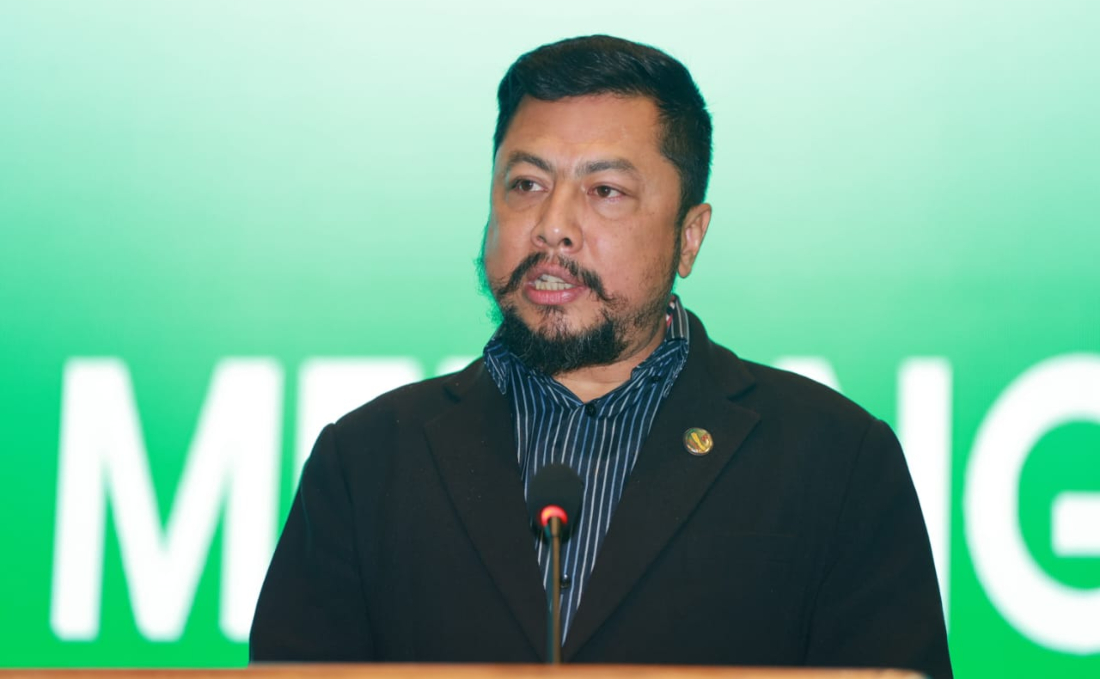
KATHMANDU, June 12: Energy, Water Resources and Irrigation Minister Biraj Bhakta Shrestha has said the government is moving ahead with a policy that will allow the private sector to participate not only in electricity generation but also in power trading and transmission line development.
Addressing the 24th annual general meeting and eighth convention of the Independent Power Producers’ Association Nepal, the minister said Nepal’s energy sector has entered a crucial phase of transformation.
He said the government has already paved the way for private sector involvement in electricity trading and transmission infrastructure. Under the proposed framework, private companies will be able to trade electricity directly in international markets and construct transmission lines with their own investment, earning revenue through wheeling charges for transmitting power.
Calling energy a key driver of economic transformation, Shrestha said the government has allocated Rs 70 billion this fiscal year for transmission lines and substations. It aims to complete more than a dozen strategically important transmission projects within the next year.
Responding to demands from small hydropower developers, he said the government has reopened power purchase agreements (PPAs) for projects with capacities below 10 MW. New PPAs will follow a “take or pay” model, while the licence period for reservoir based projects will be extended to 50 years to encourage investment.
The minister also announced that hydropower developers will be allowed to issue up to 40 percent of their initial public offering (IPO) shares during the first year of construction, a move expected to attract more investment into the sector.
To address long standing hurdles related to forests and environmental approvals, the government is preparing amendments to the Forest Act and the Environment Protection Act. Under the proposed changes, projects with approved Environmental Impact Assessments (EIAs) will not need supplementary EIAs if the affected forest area or number of trees decreases. Procedures related to tree felling and other approvals will also be simplified.
Shrestha said the government plans to table the Water Resources Bill and the Renewable Energy Bill during the current parliamentary session.
He also warned against project hoarding, saying developers who obtain licences but fail to move forward with construction would no longer be tolerated.
Nepal currently records per capita electricity consumption of about 450 kilowatt hours annually. The government aims to raise that figure to 1,500 kilowatt hours within the next decade.
To support that goal, Nepal is prioritizing cross border transmission projects with India and China, including the Butwal–Gorakhpur and Chilime–Kerung transmission lines. Shrestha added that the government is also advancing the unbundling of the Nepal Electricity Authority to make it more competitive and efficient.
Congratulating IPPAN as it enters its silver jubilee year, the minister expressed confidence that its new leadership would play an important role in expanding investment, energy development and electricity trade.
People’s News Monitoring Service

Login to add a comment