







By Our Reporter
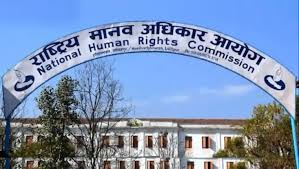
The National Human Rights Commission’s recommendations on the September 8 and 9 Gen Z protest crackdown have placed Nepal’s political leadership in a difficult position. Governments in the past have often ignored or delayed human rights recommendations, particularly when they involved politically powerful figures. This time, doing so may not be as easy.
The commission has gone further than it has in most previous cases. It has not only recommended action against senior political leaders and security officials who were in power during the crackdown, but has also named dozens of others, including 17 sitting lawmakers from the Rastriya Swatantra Party (RSP), social media activists and public figures. More significantly, it has invoked its constitutional authority to recommend prosecution for alleged human rights violations.
The report lands at a sensitive moment. The current political order emerged directly from the fallout of the Gen Z movement. Many of the people who gained political prominence after the protests built their legitimacy on promises of change, justice and a break from old practices. Ignoring the report would expose them to accusations that they are behaving no differently from the governments they once criticized.
What makes the report politically explosive is that it spreads responsibility across multiple camps. Former Prime Minister KP Sharma Oli, former Home Minister Ramesh Lekhak and former Communications Minister Prithvi Subba Gurung and Rabi Lamicchane have been accused of involvement in human rights violations during the crackdown. At the same time, the commission has recommended investigations against lawmakers, activists, influencers and protest organizers for allegedly contributing to violence or incitement.
This creates a challenge for every side. Those who demanded accountability for state violence must now explain why some protest leaders should not face scrutiny. Those defending the accused lawmakers must also explain why the state should ignore findings from its own constitutional watchdog.
The controversy surrounding the report’s release has added another layer to the debate. The report was held back for nearly a month before publication. During that period, reports circulated that pressure was being applied to remove the names of Prime Minister Balen Shah and the then army chief from the list of those facing possible responsibility.
The commission ultimately released a report that does not mention Balen at all, despite his highly visible involvement in discussions surrounding the movement. Before the protests, he publicly endorsed the Gen Z mobilization and encouraged debate about Nepal’s political future. After the demonstrations, he made a series of political interventions, some of which were later deleted from social media.
Whether the omission was justified or politically motivated is now becoming a major question. Critics argue that if public statements, social media posts and political influence were sufficient grounds to recommend investigations against activists and lawmakers, the same standard should have been applied consistently. The perception of selective accountability may become as controversial as the recommendations themselves.
Yet the bigger issue is not who was included or excluded. It is what happens next. The NHRC is not an ordinary government committee. It is a constitutional body whose findings carry weight beyond Nepal’s borders. Its reports are reviewed by international human rights mechanisms, including processes linked to the United Nations Human Rights Council. Failure to act does not automatically trigger sanctions or prosecutions abroad, but it can damage Nepal’s credibility when it claims commitment to human rights and rule of law.
The Kumar Lama case remains a reminder of that reality. In 2013, former Nepali Army colonel Kumar Lama was arrested in the United Kingdom over allegations of torture committed during the Maoist conflict. British authorities relied on the principle of universal jurisdiction, which allows certain serious crimes to be investigated outside the country where they occurred. Nepal eventually secured his return, arguing that domestic mechanisms were addressing conflict-era violations.
The lesson from that case is not that every person named by the NHRC faces arrest abroad. The lesson is that when a state fails to investigate credible allegations itself, foreign jurisdictions may decide to act under international legal principles. Serving politicians, security officials and public office holders often travel internationally, participate in conferences and seek roles in global institutions. Human rights allegations that remain unresolved can create complications long after domestic political controversies have faded.
The government now faces two difficult options. It can pursue investigations under existing laws, or it can attempt to create a new legal framework and special court as recommended by the commission. Both paths carry political risks. Doing nothing may prove even more costly.
For decades, many human rights reports in Nepal have gathered dust. Cases linked to conflict-era abuses, the Madhesh movement, the Gaur massacre and other major incidents often stalled once political interests intervened. The Gen Z report is becoming a test of whether that pattern will continue.
The question is no longer simply about the events of September 8 and 9. It is about whether Nepal’s institutions are prepared to hold powerful actors accountable when constitutional bodies demand action. The government’s response will reveal far more than the report itself.

Login to add a comment