








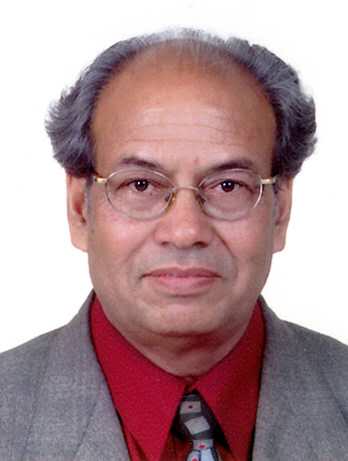
By Narayan Prasad Mishra
The principle of multiparty democracy is predicated on foundational ideals such as equality, justice, and transparency. It envisions a system where merit prevails, opportunities are equal, and leaders are accountable.
Multiparty democracy promotes the dispersion of power among diverse political factions, ensuring that no single group monopolizes governance. The system’s emphasis on checks and balances aims to minimize corruption and promote inclusivity. Ideally, the merit-based selection of candidates ensures that the most capable individuals ascend to leadership positions, representing the interests of the broader population. Voters, empowered by their right to choose, are central to maintaining the integrity of this system. Leaders are expected to prioritize public welfare over personal gain, exemplifying fairness and accountability.
Because of these attributes and lofty ideals, a system of multiparty democracy is popular worldwide, with many countries adopting it. Nepal is one of them. We have a multiparty democracy, and we boast about it. We are proud of it. However, despite this, we have a culture of nepotism and favoritism ingrained in our society, which makes our practices starkly contradictory to democratic principles.
In reality, our democracy has become a system that showcases equality and justice outwardly while, in practice, perpetuating nepotism and favoritism. Personal relationships, family ties, and partisan loyalties often overshadow merit and fairness. Political appointments and opportunities are frequently reserved for individuals connected to influential leaders, sidelining deserving candidates. This practice perpetuates a cycle of privilege, excludes marginalized groups, and fosters resentment among citizens. Nepotism and favoritism are evident in all aspects, such as selecting and appointing the President or Vice President, selecting candidates for the proportional representation in the House of Representatives, appointing any constitutional positions like ambassadors, chairman, vice chairman, or members of any constitutional bodies – National Planning Commission, Public Service Commission, Commission of the Abuse of Authority, justices of courts, etc. or appointing high positions in universities – vice chancellors, reactors, registrars, etc.
Nepotism, the practice of favoring relatives or close associates, is especially insidious in our politics. It consolidates power within elite families or circles, effectively transforming democratic institutions into vehicles of personal enrichment. Favoritism, while broader, creates similar distortions, as individuals are promoted based on loyalty or personal affinity rather than competence. These practices erode public trust, deepen inequality, and hinder the ability of democracies to deliver justice. We often see this practice in the selection, promotion, and appointments of different positions of responsibility, privilege, and power, even within the party, often at the expense of others. In this situation, how can we expect justice and equality for the general people in the country?
The contradiction between the culture of nepotism and the ideals of multiparty democracy is most evident in governance outcomes. While democracy demands transparency, favoritism operates in secrecy. While democracy calls for justice, nepotism institutionalizes inequality. The gap between these two paradigms weakens democratic institutions and disillusions citizens, leading to voter apathy or, worse, political instability. We have seen this pattern in every government, whether led by the Nepali Congress, the Nepal Communist Party (Unified Marxist-Leninist), or the Nepal Communist Party (Maoist). From their speech, they appear to be great disciples and advocates of democracy. However, their actions suggest they are deeply invested in nepotism and favoritism, which are completely contrary to democratic values. Since the introduction of the multiparty system, we have yet to see a President or Prime Minister who governs with a broad and impartial mind, treating all citizens equally rather than favoring their party or its followers. We have yet to see the President and the Prime Minister who command people’s love and respect as the President and Prime Minister of the country even after their power period, and they do not disappear like the water bubbles when the power of positions ends.
Our political parties are frequently accused of being dynastic, with leadership positions passed down within families. This trend diminishes the competitive nature of elections and limits opportunities for ordinary citizens. Similarly, favoritism often distorts the allocation of resources, as leaders prioritize regions or communities that supported them politically, neglecting others.
As a result, citizens lose faith in governance, viewing political institutions as self-serving rather than representative. Addressing this contradiction requires systemic reforms and cultural shifts. We must have a cultural revolution to eradicate our deep-rooted culture of nepotism and favoritism, create trust in the multiparty democracy among our people, and make the system effective for the development of the country and the welfare of the people. Transparency in political appointments, strict anti-corruption laws, and mechanisms to promote meritocracy are essential. Civil society and the media play crucial roles in exposing nepotistic practices and holding leaders accountable. Furthermore, cultivating a culture of fairness and equality—through education, advocacy, and public discourse—can gradually weaken the grip of nepotism and favoritism. While reforms are essential, I remain skeptical about the willingness of political parties to abandon the entrenched culture of nepotism and favoritism, which seems to be a strong foundation of their power-grabbing politics for personal gain rather than the county’s development, creating their henchmen.

Login to add a comment