







On/Off the Record

By P.R. Pradhan
1 Pous 2017 (15 December 1960) is the day when King Mahendra banned the political parties and introduced partyless Panchayat democracy, assuming executive power with him.
The Panchayat system existed in the country until 1990. The era of King Mahendra is recalled as the golden era for Nepal. However, a section of people project King Mahendra as a dictator and the system introduced by him, partyless Panchayat democracy, as an autocratic system; nevertheless, during his almost decade-long rule in the country, Nepal was able to avoid Indian intervention and strengthen the pillars of an independent and sovereign Nepal. The King made a remarkable contribution in introducing Nepal as a sovereign and independent nation in the international arena. The economy is the major pillar of a functioning democracy. King Mahendra made efforts to advance the country’s economy by establishing more than 50 industries. The Nepali nationals had to travel to India while visiting from one part to another part of the country. He took the initiative for the construction of the East-West King Mahendra Highway, Araniko Highway, and Siddhartha Highway, among others. At a time when Nepal had no university, King Mahendra established Tribhuvan University. From his private funds, he established the Royal Nepal Academy for the development of culture, literature, and Nepali civilization. The Royal Nepal Airlines was elevated considering the significance of the airline for a landlocked country. The King introduced a mixed economic system by adopting the good characteristics of capitalism as well as communism. At a time when the capital market was not developed and the private sector investors were not organized, the government established different industries under the government’s sole investment by yielding employment opportunities within the country and substituting imports. Three types of investment were introduced under the Panchayat economics. They were government undertakings, public-private partnerships, and private-sector investment.
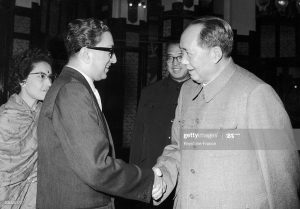
Moreover, King Mahendra made a revolutionary contribution to ending caste discrimination. In foreign policy, Nepal adopted a non-aligned policy, introducing the country into the international arena. Nepal established strong relations with China.
King Mahendra, born on 11 June 1920, died on 31 January 1972 and became the King of Nepal from 1955 to 1972. He became the King for 17 years, nevertheless, he assumed the power of the executive chief of the nation following the 15 December 1960 move.
King Birendra succeeded King Mahendra and the Panchayat democracy continued until 1990. Following the people’s movement sponsored by India, the multiparty system was introduced. Unfortunately, the multiparty democracy didn’t perform well. Taking benefit of the bad governance and anomalies in the society, the Maoists launched a “people’s war” killing more than 17 thousand innocent Nepalis. Not odd, the Maoist “people’s war” was also solely sponsored by India, which is not hidden among the Nepali people.
India didn’t like Nepal’s prosperity under the king’s direct leadership. There are the Indian hands behind the demise of the Panchayat system. The Indians were not satisfied even with the introduction of the multiparty democracy and thus, sponsored the Maoist insurgency to derail Nepal’s peaceful progress. Finally, the Indo-West lobby became active to end the institution of monarchy from the country. Today, the leaders who were involved in the 2006 political change are in power and they are serving the interests of those foreign power centres. On the one hand, those leaders are serving foreign powers weakening national sovereignty and independence; on the other, with the blessings of the foreign powers, they are involved in daylight loon in the country. All the organs essential to functioning as a sovereign and independent nation have already been destroyed. The country’s economy has been ruined as the gap in international trade deficit is continuously widening, the country’s debt burden has tremendously increased, and the country has turned into a consumer country as local industries have been ruined. To conclude, Mahendra was the King who struggled to safeguard and uplift the nation, which is now on the verge of collapse.
The views expressed in this article are the author’s own and do not necessarily reflect People’s Review’s editorial stance.

Login to add a comment