







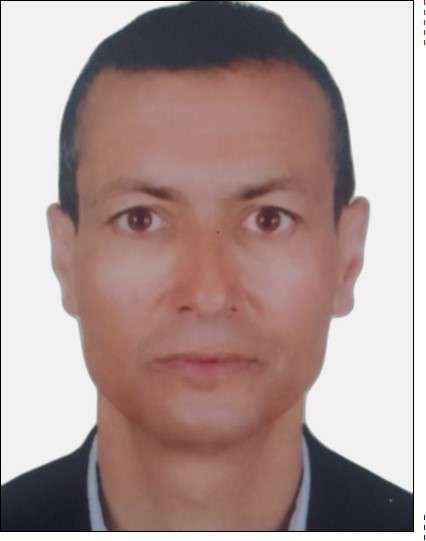
By Deepak Joshi Pokhrel
Across the globe, politics is often perceived as a game played by unscrupulous actors. This perception is even more relevant in the Nepalese context. Here, political actors frequently change their positions according to circumstances for personal advantage. Whether they belong to the Nepali Congress, CPN-UML, the Maoists, or fringe parties, political leaders have consistently demonstrated opportunism, changing their positions to serve their own interests. This has remained a hallmark of the Nepalese political landscape since the restoration of democracy in 1990.
Take the example of the recent bonhomie between Prachanda and KP Oli. On July 25, 2026, the two communist leaders—the chairman of CPN-UML, KP Oli, and the coordinator of CPN, Prachanda—who are otherwise always at each other’s throats, joined hands once again by signing a three-point agreement. This time, their political understanding was aimed at provincial governance. The agreement stipulated that CPN-UML would lead the governments in Koshi, Lumbini, and Bagmati provinces, while the Maoists would lead the governments in Karnali and Sudurpaschim.
Well, this is not the first time these two communist leaders have come together, claiming that their rapprochement is in the broader interest of the nation. Over the years, particularly in the aftermath of the promulgation of the constitution in 2015, these two communist leaders have joined hands multiple times, only to part ways soon afterwards. In other words, they come together whenever they see political mileage in their alliance and dissociate once their respective interests have been served.
The coordinator of CPN Maoist, Prachanda, and CPN-UML Chairman KP Oli are fundamentally different despite sharing broadly similar political ideologies. They are like chalk and cheese. Both have a tendency to change their positions according to the circumstances for personal benefit. At the same time, they are known for pulling each other down whenever one appears to gain an advantage over the other.
Former Prime Minister and CPN-UML Chairman KP Oli rose to prominence in the wake of what New Delhi calls an unofficial blockade in 2015. Following the promulgation of the constitution that year, New Delhi imposed an economic blockade, citing dissatisfaction with some of its provisions. What made the situation even worse was that the blockade came at a time when Nepal was struggling to recover from the devastating earthquake. The then Prime Minister, KP Oli, took the side of the people and refused to bow to Indian dictates. Almost a decade later, however, people have come to realize that Oli’s defiance of Indian dictates was largely intended for public consumption.
As things stand now, KP Oli is perceived as one of the most ruthless, arrogant, incompetent, and unaccountable politicians within his party. The party rank and file are increasingly critical of him and hold him responsible for the electoral debacle in the parliamentary election held in March 2026. Voices opposing his leadership have grown louder, with many demanding that he step down on moral grounds. While he was under immense pressure to hand over the reins to a younger generation, paving the way for a graceful exit, former President Bidhya Devi Bhandari has presented herself as a viable alternative to the party chairperson. Of course, whether the former president can stake such a claim while continuing to enjoy state-provided perks and privileges remains a debatable issue.
His autocratic approach to governance within the party is an open secret. Except for a few ‘yes-men’ within the party, almost everyone appears fed up with him, with many working covertly or overtly to remove him from the leadership position.
On the other hand, there is another comrade, Prachanda, who is no unfamiliar figure in Nepal’s political landscape. An architect of the People’s War, Prachanda is a self-centred politician driven by ego and stubbornness. He led the decade-long insurgency from 1996 to 2006, claiming that it would emancipate people belonging to marginalized communities, including indigenous nationalities, Dalits, Madhesis, and women. Now, more than two decades later, the very rationale behind the People’s War has come under public scrutiny. People from all walks of life are asking whether the loss of 17,000 innocent Nepalis can be justified in the name of what Prachanda calls emancipation. The answer is a resounding no.
At present, both these comrades appear to be losing ground, with their political influence gradually weakening. Prachanda and Oli are increasingly viewed as politicians lacking ethics and morality. This is evident from the fact that the former has breached the trust of the people, while the latter has betrayed his own party and its members.
As their popularity gradually declines, threatening their political careers, Prachanda and Oli have decided to set aside their differences and join hands to safeguard their sinking political fortunes. Their decision to come together validates the saying, “You scratch my back, and I will scratch yours.”
Political observers also agree that parties sidelined in the parliamentary election held in March 2026 have already begun manoeuvring for next year’s local elections and provincial polls. The agreement between the two leftist leaders has naturally fuelled speculation about whether this is groundwork for a larger political alliance that could eventually lead to unification.
The tenure of the current local-level elected representatives is scheduled to expire on May 13, 2027. Parties relegated to distant second and third positions will be looking to make a strong comeback in the local elections. To this end, Prachanda and Oli have already started laying the groundwork. The three-point agreement signed in July 2026 is the clearest manifestation of this effort.
On the other hand, the upcoming local elections will provide an opportunity for the Rashtriya Swatantra Party (RSP) to sideline the three major traditional parties and establish its dominance at the local level as well.
Past experience clearly shows that Oli and Prachanda have never managed to maintain their alliance for long. They have parted ways soon afterwards, citing differences over trivial issues and turning their partnership into an object of ridicule. We hope they have learned from their past mistakes, failures, and setbacks and will refrain from repeating them in the days ahead.
However, this is Nepalese politics, where a friend can turn into a foe and a foe into a friend in the blink of an eye. Given the fickle and self-centred nature of Prachanda and Oli, remaining together for long, even in the broader interest of the nation—a narrative both leaders repeatedly invoke—will be a tall order.

Login to add a comment