








Kathmandu, October 28: Palpa’s historic Rani Mahal once attracted tourists as a symbol of love.
The palace stands on the banks of the north-flowing Kaligandaki River. The surrounding area used to bustle with visitors who came to admire the palace’s beauty, take photographs and enjoy themselves along the riverbank. However, floods and inundation following incessant rainfall on October 11 have dramatically changed the landscape.
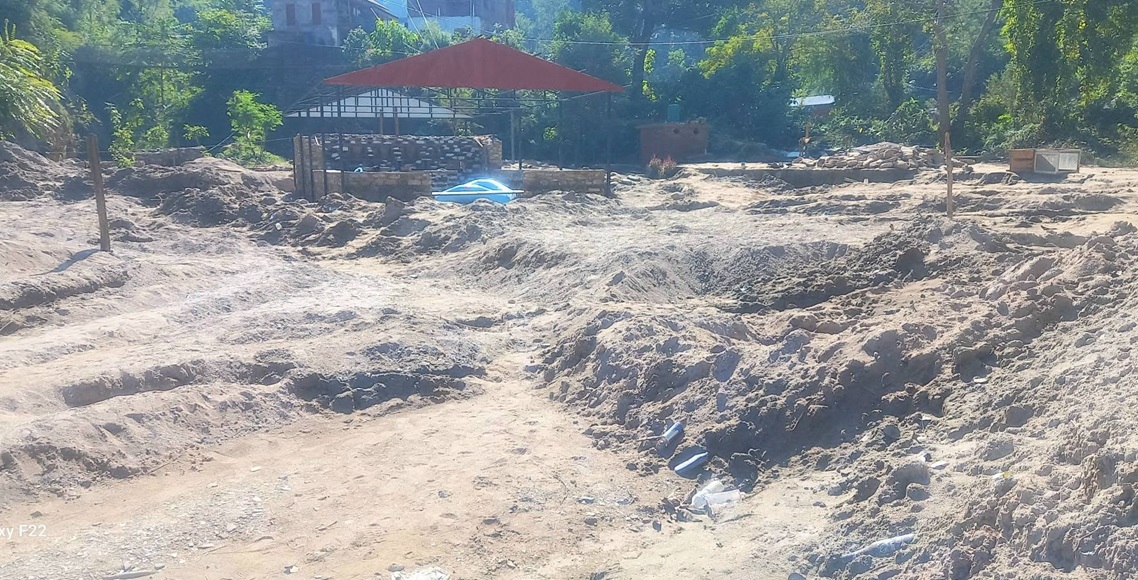
The area, once bustling with visitors and commercial activities, is now buried under sand, gravel and rocks. The palace courtyard bears the scars of the flood, while the dreams of local residents lie scattered across the riverbank.
Local entrepreneurs who depended on the steady flow of tourists visiting Rani Mahal, renowned as a symbol of love, are now worried about how to resume their businesses.
The flood damaged business premises, roads, parking areas and other infrastructure necessary for access to the site. More than a dozen businesses around Rani Mahal have been affected.
The natural disaster has not only disrupted commercial activities but also dealt a blow to investments accumulated over years and hopes for the future.
Local resident Shankar Basyal said the damage to business premises, roads and parking areas, along with the accumulation of debris, had disrupted tourist movement and directly affected businesses.
“Although we invested heavily to run our businesses, it is distressing to see everything devastated by the flood. The number of tourists visiting Rani Mahal usually increases every year during Dashain. This time, however, the area has been transformed into a barren riverbed, leaving business operators struggling,” he said.
He accused the local government of failing to pay attention to immediate cleanup, the management of damaged structures and the rehabilitation of affected areas following the disaster. Beyond the physical damage caused by the flood, local entrepreneurs have been further disappointed that representatives of the responsible authorities have not visited the area to understand their suffering or assess the situation.
Basyal said the local government, which actively collects taxes, should demonstrate an equal level of responsibility for protecting tourist heritage sites and ensuring post-disaster rehabilitation.
Tansen Municipality, which is responsible for the preservation and management of Rani Mahal, has claimed that it has removed and managed damaged structures within its jurisdiction.
Chetanath Giri, the municipality’s chief administrative officer, said damaged structures within the municipality’s jurisdiction had been removed promptly. According to him, the Rani Mahal palace complex is no longer in a state of disorder.
Giri said some structures that still appear disorganised around Rani Mahal fall within the jurisdiction of Bagnaskali Rural Municipality and that the concerned rural municipality should take responsibility for managing them.
Meanwhile, Bagnaskali Rural Municipality Chairperson Saraswati Chidi said coordination had been established with Kaligandaki Rural Municipality in Syangja district to reopen the road immediately.
She said continuous rainfall following the flood, followed by the Dashain holiday period, had prevented the authorities from immediately proceeding with the cleanup and management work.
Chairperson Chidi said an excavator would be deployed within the next one or two days to remove the materials buried by the flood and level the riverbank.
The historic Rani Mahal palace is also known as Nepal’s “Taj Mahal.” It is situated on the banks of the Kaligandaki River, approximately 13 kilometres north of Tansen in Palpa district. Khadga Shumsher, a general and western commander during the Rana regime, built the palace in 1954 BS (1897 AD).
Khadga Shumsher constructed Rani Mahal in memory of his wife, Tej Kumari Devi, following her death. Having promised to build her a palace surrounded by a garden, he brought an engineer from India and had the palace constructed over a period of five years.

Login to add a comment