








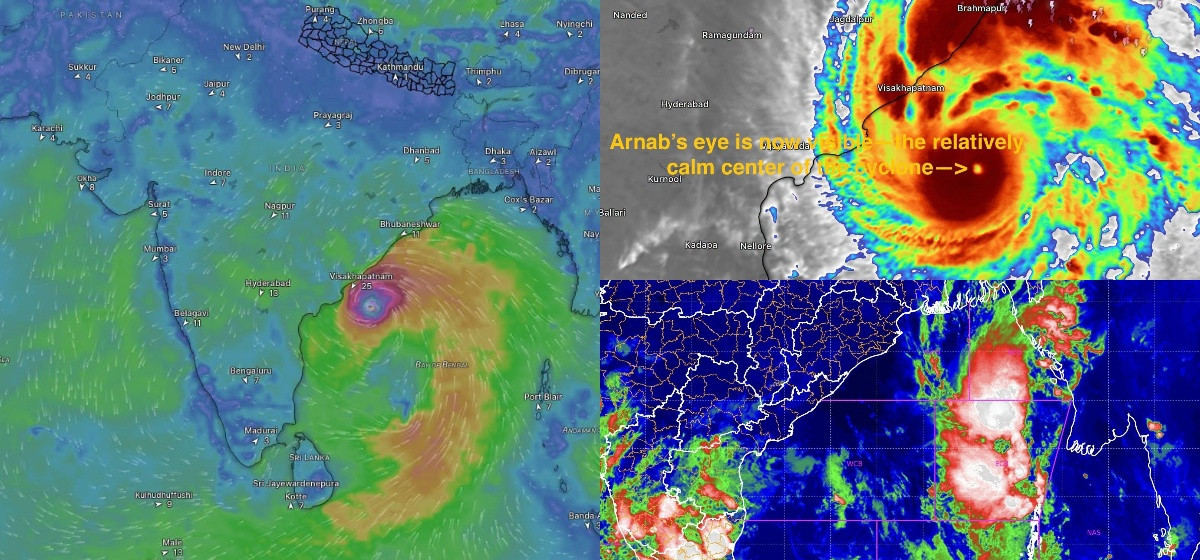
Kathmandu, Oct 28: Cyclone Arnab, which is expected to bring heavy rain and snowfall to Nepal, is forecast to weaken gradually after making landfall in India.
Meteorologist Binod Pokharel said the storm would no longer retain the intensity of a tropical cyclone by the time it reaches Nepal.
However, interactions between the moisture carried by the system and an upper level low pressure trough associated with westerly winds could trigger heavy rainfall, he said.
“According to the current forecast, heavy rainfall is likely in several districts from Lumbini and Gandaki to Koshi provinces,” Pokharel said. “People should remain particularly alert for about 36 hours, from Thursday evening to Saturday morning.”
He added that the location, timing and intensity of the rainfall could still change.
Meanwhile, the National Disaster Risk Reduction and Management Authority has urged people to remain highly alert, warning of possible heavy rainfall, lightning and strong winds on November 13 and 14.
In a notice, the authority said many places in Koshi, Madhesh, Bagmati, Gandaki and Lumbini provinces could experience moderate rainfall accompanied by thunderstorms, lightning and strong winds. Some areas could receive heavy rainfall.
According to the authority spokesperson Ram Bahadur KC, the Department of Hydrology and Meteorology has forecast that the effects of Cyclone Arnab could begin to be felt in Nepal on Friday, November 13.
The system could also bring rainfall to some areas of Karnali and Sudurpashchim provinces. The authority warned of a high risk of heavy snowfall, snowstorms and avalanches in the high hills and Himalayan regions.
To reduce the risk of disasters, the authority has urged people to avoid travelling to high hills and Himalayan areas, refrain from nonessential travel, and stay away from riverbanks, stream banks and flood-prone areas.
It has also advised the public to regularly monitor weather forecasts and official early warnings, and to move to safe locations immediately if they detect signs of potential danger.
People’s News Monitoring Service

Login to add a comment