







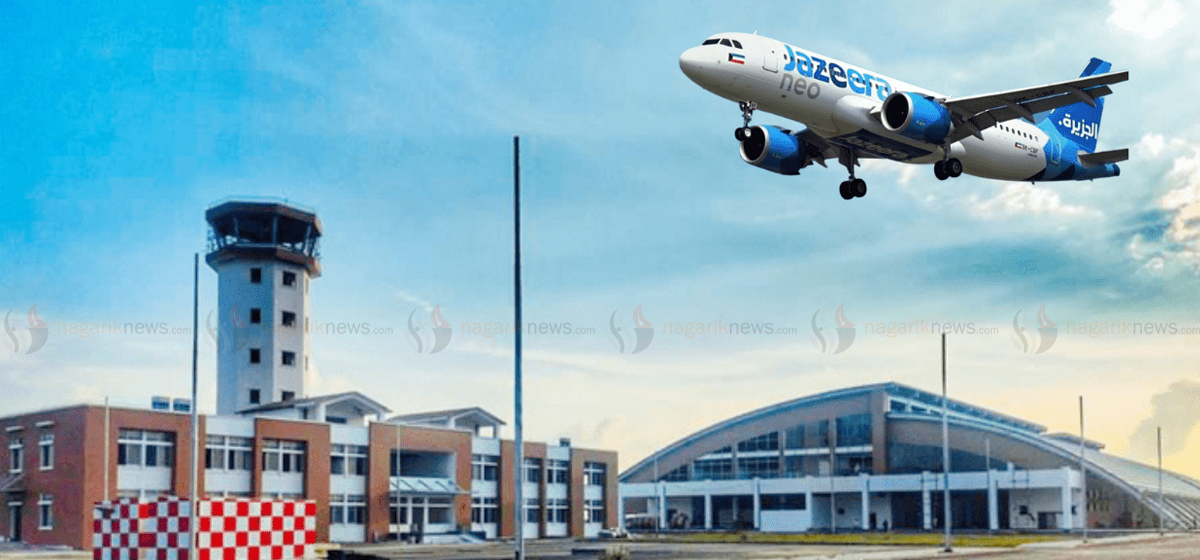
Bhairahawa, Oct 12: Gautam Buddha International Airport, built at a cost of about Rs 36 billion, has gone more than six months without an international flight, leaving tourism businesses disappointed while the government continues paying loan interest and operating expenses.
No airline currently has a scheduled international service at the airport, according to Information Officer Pawan Agrahari Baniya.
“A charter flight from Delhi is expected on October 12, but its proposal has not yet been approved,” he said.
The airport’s last international flight was operated by Thai AirAsia on March 24. It arrived from Bangkok with 14 passengers and departed with 106.
Opened on May 16, 2022, the airport was promoted as an alternative to Kathmandu’s Tribhuvan International Airport and a gateway to Lumbini. The arrival of Jazeera Airways from Kuwait and a Nepal Airlines narrow-body aircraft on its opening day raised hopes that international connections would boost tourism.
Local businesses anticipated eight to ten large international aircraft a day. Those expectations have since given way to frustration.
Since opening, the airport has recorded 1,222 scheduled and charter flight movements, serving 69,377 passengers. Of these, 31,932 arrived from abroad and 37,445 departed.
The government acquired about 500 bighas of land for the project, spending Rs 22 billion on compensation alone. The remaining investment covered the runway, control tower, other infrastructure and equipment.
Construction began on January 15, 2015, after the government designated the airport a national pride project. It was financed partly through a concessional loan from the Asian Development Bank. Despite the absence of international services, the government must continue servicing that debt.
Annual operating and administrative expenses exceed Rs 80 million. More than 100 permanent, temporary and contract employees work at the airport, including technical, administrative and security personnel.
The terminal, runway lighting, air conditioning, radar and communication equipment must remain ready around the clock, generating monthly electricity bills running into hundreds of thousands of rupees.
Additional expenses include maintaining X-ray machines, baggage handling systems and fire engines, alongside runway inspections, repairs, cleaning and grounds maintenance.
The lack of international flights also threatens billions of rupees invested by local businesses, said Thakur Kumar Shrestha, president of the Federation of Nepalese Chambers of Commerce and Industry’s Lumbini Province chapter.
He said investors expanded hotels, industries and other businesses after the airport’s construction became certain, expecting increased visitor numbers and commercial activity.
“Forget earning returns. Even the money already invested is now at risk,” Shrestha said.
People’s News Monitoring Service

Login to add a comment