







By Our Reporter
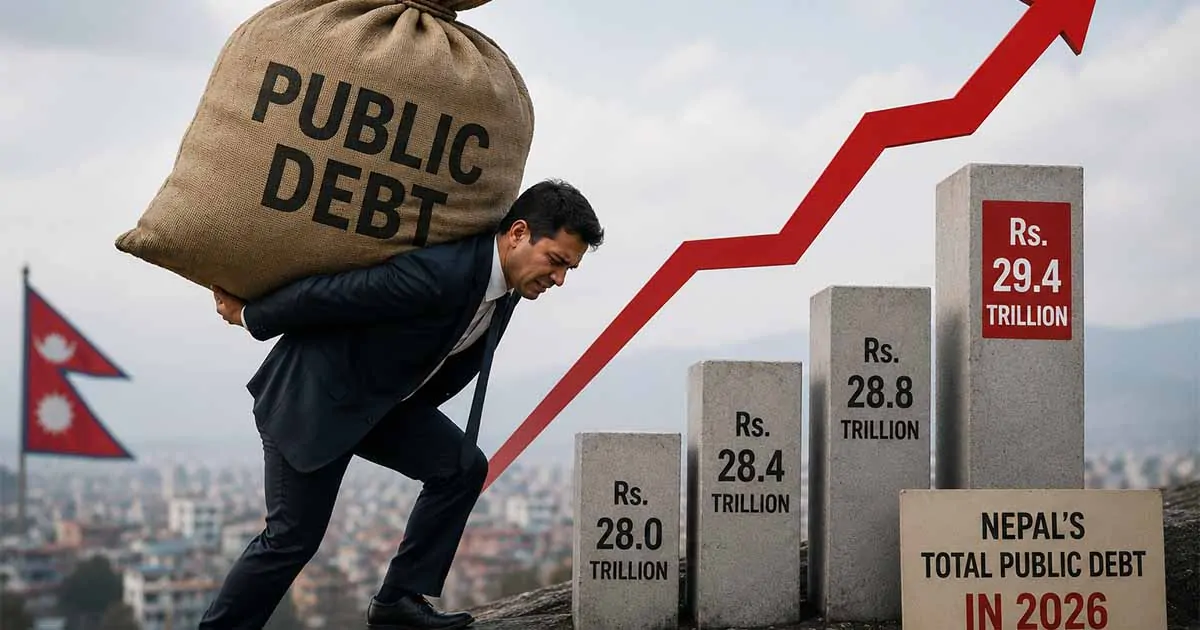
Nepal’s public debt is now just a step away from Rs 3 trillion. At Rs 2.98 trillion, it equals about 45.5 percent of GDP. That level may not by itself signal a debt crisis, but the speed at which borrowing has grown and, more importantly, what Nepal gets from that borrowing deserve serious attention.
Governments borrow for good reasons. A developing country needs roads, power lines, hospitals, schools and other infrastructure long before its revenue can finance everything. Borrowing can support growth when the money creates assets, raises productivity and expands the future tax base. Nepal’s problem is that debt has increased without a corresponding improvement in economic growth, infrastructure delivery or government revenue.
Several factors have pushed debt upward. Government expenditure has consistently exceeded revenue, while development needs remain enormous. Weak revenue growth makes the gap wider. At the same time, large projects frequently suffer from delays and cost overruns. The government then borrows more while waiting longer for the economic benefits those projects were supposed to produce.
The debt structure also carries risks. External loans account for more than half of total public debt. Foreign borrowing often comes at concessional rates, but currency movements can increase the burden without Nepal borrowing a single additional dollar. The Auditor General found that exchange rate changes alone had added Rs 115.76 billion to the debt burden by the end of Chaitra 2082.
Domestic borrowing creates a different problem. If the government increasingly turns to domestic banks and financial institutions, it competes with businesses for available funds. When credit demand strengthens, heavy government borrowing can push up interest rates or reduce the money available for private investment.
Debt servicing is already taking a substantial share of public resources. The government has allocated Rs 417.89 billion this fiscal year for principal and interest payments. Every rupee spent servicing old debt is a rupee unavailable for classrooms, hospitals, irrigation, roads or social protection unless revenue rises accordingly. Ultimately, taxpayers carry that burden.
This does not mean Nepal should stop borrowing. The more sensible question is what it borrows for. Loans financing productive infrastructure can help an economy generate enough additional income to repay them. Borrowing to cover routine expenditure, poorly prepared projects or schemes that remain unfinished for years merely passes today’s bills to future taxpayers.
The government therefore needs stricter debt discipline. Every major loan funded project should undergo credible assessment of its economic return, implementation capacity and repayment implications before borrowing begins. Projects that cannot spend allocated budgets should not automatically receive more money.
Completing existing projects should take priority over announcing new ones. Faster capital spending, stronger procurement, tighter control over cost overruns and regular public disclosure of project results would make each borrowed rupee work harder.
Nepal also needs stronger revenue collection and a broader productive economy. Expanding exports, tourism, domestic production and investment would enlarge the tax base without simply raising tax rates.
A Rs 3 trillion debt burden is ultimately a warning about choices. Debt itself is a tool. Used to build productive assets, it can support future prosperity. Used to finance inefficiency and repeated delays, it becomes a bill handed to the next generation.

Login to add a comment