







By Our Reporter
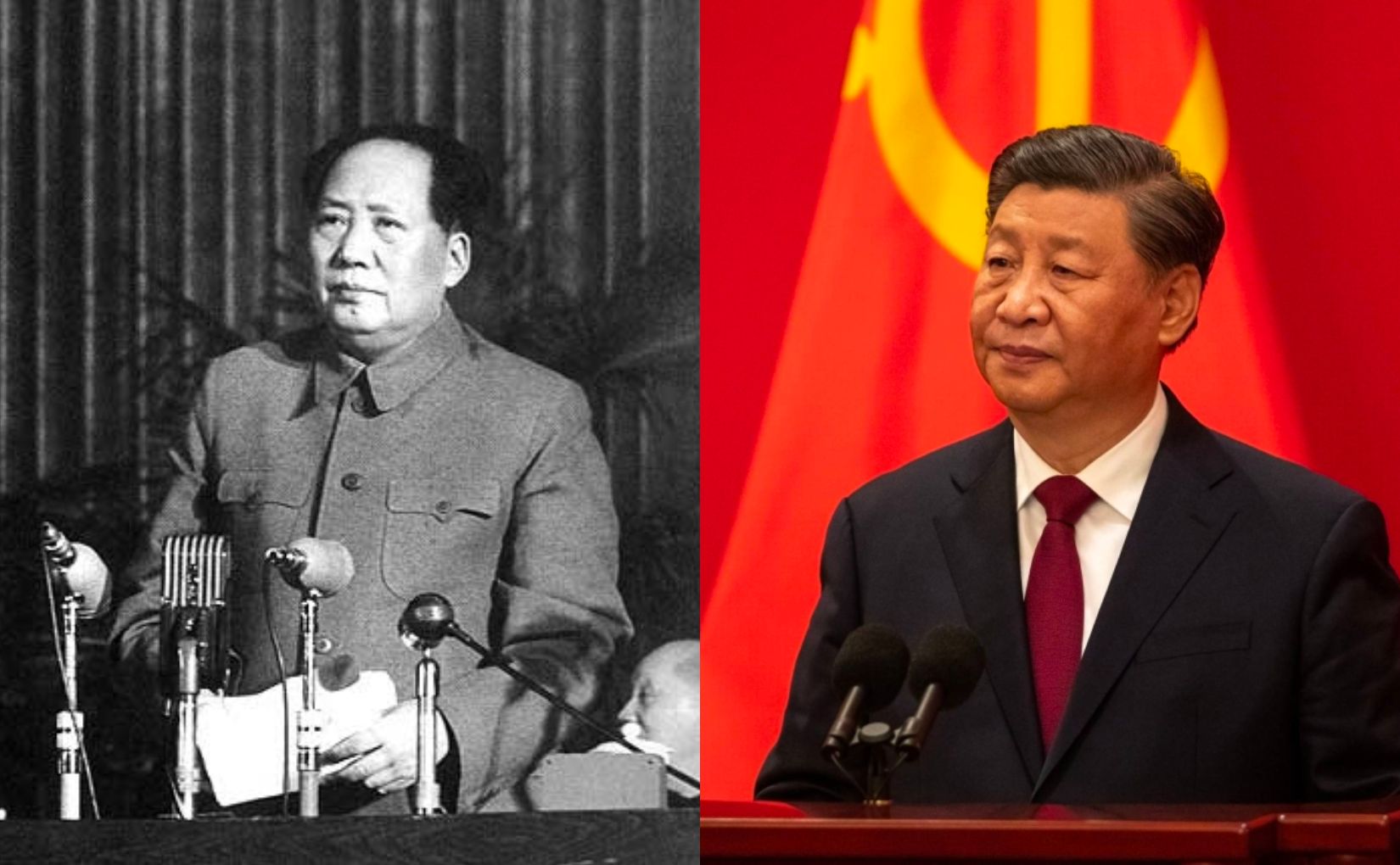
October 1, 2026 marks the 77th National Day of the People’s Republic of China. On this day in 1949, Mao Zedong proclaimed the founding of the People’s Republic of China in Beijing. Seventy-seven years later, China stands transformed from a predominantly poor and agrarian country into an industrial, technological and economic power with global influence.
The journey from Mao to Xi Jinping is therefore not merely a political history; it is also a remarkable story of economic and social transformation.
When the People’s Republic was established, China was overwhelmingly rural, poor and economically underdeveloped. The early decades under Mao focused on building a unified state, developing basic industries and pursuing rapid industrialisation. Those years also witnessed severe economic and social disruptions, including the Great Leap Forward and the Cultural Revolution. The Chinese leadership itself has subsequently described the experience of the pre-reform period as providing lessons for the country’s later development.
The decisive economic turning point came after 1978, when Deng Xiaoping and the Chinese leadership embarked on reform and opening up. Agricultural reforms, the gradual introduction of market mechanisms, special economic zones, foreign investment and expanding international trade fundamentally altered the structure of the Chinese economy. The World Bank estimates that since 1978 China’s GDP growth has averaged more than 9 percent annually, while nearly 800 million people have been lifted out of extreme poverty.
This transformation was accompanied by unprecedented industrialisation and urbanisation. China became the manufacturing centre of much of the world, while its exports, infrastructure, telecommunications and technological capabilities expanded rapidly. The country moved from an economy heavily dependent on agriculture to one dominated by manufacturing and increasingly sophisticated services.
The scale of the transformation is evident in economic figures. World Bank data put China’s nominal GDP at about $19.5 trillion in 2025, compared with only about $1.2 trillion in 2000. GDP per capita reached approximately $13,862 in 2025.
Under Xi Jinping, China has entered another phase of development. The emphasis has increasingly shifted from simply pursuing rapid growth to achieving what Chinese policymakers describe as high-quality development. Advanced manufacturing, artificial intelligence, electric vehicles, renewable energy, high-speed rail, digital technology and other strategic industries have become increasingly important to the country’s economic strategy.
China’s transformation has also altered the global economic landscape. Its enormous manufacturing capacity, trade relationships and investment abroad have made it central to international supply chains. Its Belt and Road Initiative has further expanded economic and infrastructure links with countries across Asia, Africa, Europe and other regions.
Yet China’s rise has not been without challenges. The World Bank points to an ageing population, a declining labour force and the need to shift from investment- and export-led growth towards stronger domestic consumption and higher-value services. The IMF likewise projects slower growth and highlights property-sector difficulties, high debt, weak domestic demand and demographic pressures as important risks.
The question of whether China will become the world’s largest economy therefore requires some qualification. In purchasing-power-parity terms, China is already the world’s largest economy. In nominal-dollar terms, however, the United States remains larger: World Bank data for 2025 put the US economy at about $30.8 trillion compared with China’s $19.5 trillion. Future leadership in nominal GDP will depend on relative growth rates, exchange rates, productivity, demographics and economic policy.
China’s story from Mao to Xi is thus a story of extraordinary transformation, but also of continuing adjustment. From a poor, predominantly agrarian country in 1949 to a major industrial and technological power in 2026, China has travelled an extraordinary distance in less than eight decades.
As China celebrates its 77th National Day, its next challenge is no longer simply to become rich. It is to sustain productivity, improve living standards, manage demographic change, foster innovation and maintain economic stability while integrating itself with an increasingly complex world economy. The next chapter of China’s rise may consequently be as consequential as the transformation that brought it to this point.

Login to add a comment