







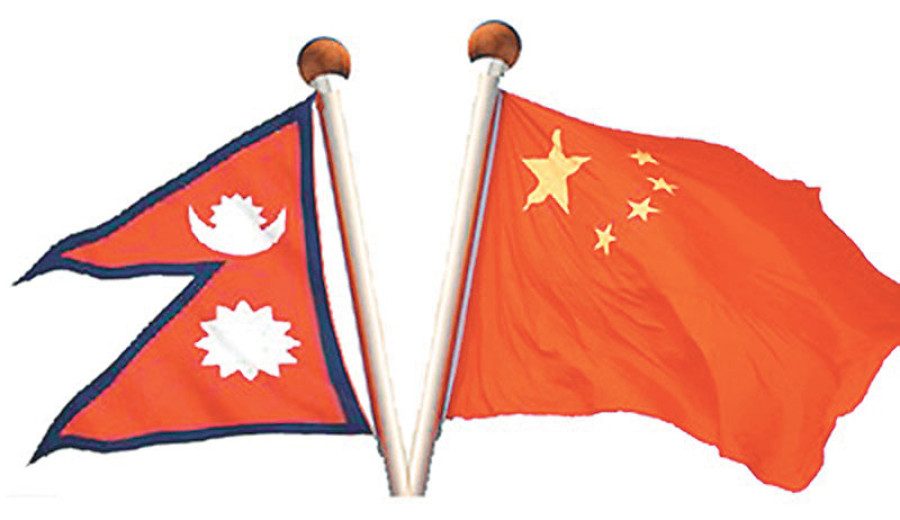
Kathmandu: Eight months after the Rastriya Swatantra Party (RSP) government led by Prime Minister Balen Shah took office, Chinese officials have formed an initial assessment of the administration.. A senior Chinese source said the government appeared reluctant to even mention the Belt and Road Initiative (BRI).
Speaking to a group of journalists last week, senior Chinese officials said the government was focusing on selected projects, including the Kathmandu Ring Road expansion, but appeared unwilling to continue agreements reached by previous governments under the BRI framework.
Although Beijing remains in contact with Shah and several of his ministers, discussions on continuing existing projects have made little progress, the official said.
“The current government does not want to mention BRI. The Pokhara International Airport project has also been discredited,” the official said. “The feasibility study for the Tokha Chhahare tunnel is nearly complete, but the bureaucracy is causing excessive delays.”
A 20-member RSP parliamentary delegation is currently visiting China. Before their departure, Shah had summoned the lawmakers to Singha Durbar and instructed them not to comment on BRI, describing it as a controversial issue.
Chinese officials have expressed interest in reports of corruption linked to the construction of Pokhara airport but have not specified who they believe is attempting to discredit the project.
Beijing has also said Nepal’s long-awaited political stability should be judged by whether it delivers economic progress and better governance.
Chinese officials hope Shah will visit Beijing following his trips to New York and New Delhi. While indicating that China would welcome him, they appeared less optimistic about such a visit in the near future. They said they had also been prepared to host RSP chair Rabi Lamichhane, but flooding in the Bhotekoshi had prevented the visit.
China has expressed expectations of further high-level visits, while maintaining contact with Finance Minister Swarnim Wagle and Foreign Minister Shishir Khanal.
Discussions were also held on Thursday about reopening the Tatopani border crossing. Chinese officials said its geographical conditions were similar to those at Rasuwagadhi, making an immediate reopening difficult. However, they indicated that China could continue clearing snow to keep the crossing operational if Nepal maintained access on its side. Chinese Ambassador Zhang Maoming pledged to convey the concerns raised by Nepali ministers to Beijing.
Referring to the recent floods and landslides in the Himalayan region, Zhang urged Nepal not to allow the disasters to be used to discredit China. He said Chinese citizens had also suffered heavy losses in the Bhotekoshi disaster, including tourists and their families, and called for the tragedy not to be exaggerated for political gain.
Beijing has also expressed indirect dissatisfaction with Foreign Minister Khanal’s earlier remark that Nepal’s diplomacy should not carry the baggage of previous governments.
“We believe history and traditions should be respected, rather than focusing on whether to carry baggage,” a senior Chinese official said, adding that communication with Khanal and other Nepali leaders remained positive.
China also acknowledged Khanal’s appreciation for its support at the COP31 session in Antalya, Turkey, where Beijing backed Nepal’s concerns over climate justice.
Chinese officials said they were still assessing the Balen government’s performance over the past eight months. “Good intentions and willingness alone are insufficient. What matters is implementation capacity,” the official said, urging Nepal to improve its ability to formulate and execute plans.
Meanwhile, Chinese diplomats have been briefing their counterparts on decisions taken around the 105th anniversary of the Communist Party of China and the party’s 20th Central Committee meeting. Beijing says it wants to strengthen its long-term governing capacity and translate its development achievements into mutually beneficial cooperation with neighbouring countries.
Chinese officials also said President Xi Jinping’s speech in Shenzhen on Wednesday, titled Towards a Bright Future for the Asia Pacific: Commitment and Action, addressed the concerns of developing neighbours, including Nepal.
Xi also addressed the 33rd APEC Economic Leaders’ Meeting, attended by US President Donald Trump and Russian President Vladimir Putin. China’s role in bringing the US and Russia into the same meeting has drawn considerable attention.

Login to add a comment