








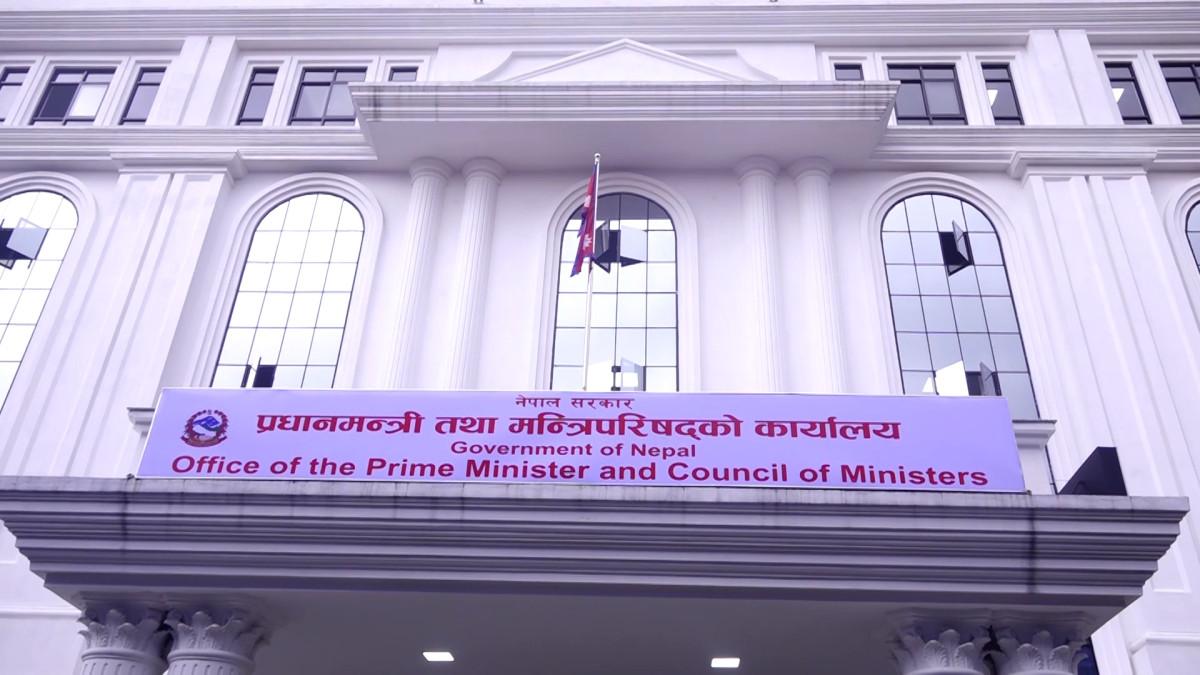
Kathmandu, Nov 14: President Ram Chandra Paudel is yet to receive a briefing on two ordinances recommended by the government, raising questions over whether he will approve or return them.
The Cabinet recommended the ordinances on November 3, including one amending the Press Council Act, 1991. The recommendations reached the President’s Office on November 6. The government has not explained why it chose the ordinance route after a 62-day parliamentary session in which it had a near two thirds majority.
A briefing scheduled for Friday was postponed because presidential legal adviser Baburam Kunwar had not returned from the Tihar holiday. The briefing is now expected on Monday.
The Federation of Nepali Journalists has urged the President not to issue the ordinances. Sources at the President’s Office said some provisions, particularly the requirement to disclose news sources, appeared problematic, but the President would decide after reviewing the documents.
The ordinance proposes a single Press Council for the entire country, creating uncertainty over provincial press registrar offices established under provincial laws. It allows the national council to establish provincial units, but does not clarify the future status of existing offices, officials and employees.
The proposed law extends the journalistic code of conduct to anyone performing journalistic work through online platforms, social media, mobile applications and other digital technologies.
The rules would also cover people identifying themselves as media workers, content creators, presenters or influencers rather than journalists. Foreign journalists working in Nepal and news agencies previously outside the council’s jurisdiction would also come under its authority.
News agencies would have to correct inaccurate material and inform media outlets. Failure to do so could invite disciplinary action.
Repeated violations could lead to recommendations to suspend state facilities for journalists or media organisations. The council could also prescribe the space, format, size and deadline for publishing or broadcasting corrections. It could publish complaints, explanations sought from media organisations and their responses.
Concerns Over Press Freedom
Former Federation president Dharmendra Jha said the ordinance undermines the international principle of media self-regulation. He criticised the government’s control over council appointments and the proposed punitive provisions.
He warned that broad definitions and powers to restrict state facilities could curtail press and expression freedoms. He also raised concerns over provisions covering personal social media accounts and news agencies.
The ordinance explicitly excludes personal social media posts from the Press Council Act when they do not constitute journalism. However, journalists expressing views through their personal accounts could still face prosecution under Section 47 of the Electronic Transactions Act.
The ordinance raises the qualification for Press Council chairperson. Candidates must either qualify for appointment as a Supreme Court judge or hold a postgraduate degree, have at least 15 years of continuous journalistic experience and make an outstanding contribution to journalism.
Previously, a bachelor’s degree and 15 years of experience were sufficient.
The amendment creates a distinction between legal and journalism graduates. A law graduate may qualify through the constitutional criteria for Supreme Court judgeship, while journalism graduates must hold a postgraduate degree and demonstrate outstanding contributions to the field.
People’s News Monitoring Service

Login to add a comment