







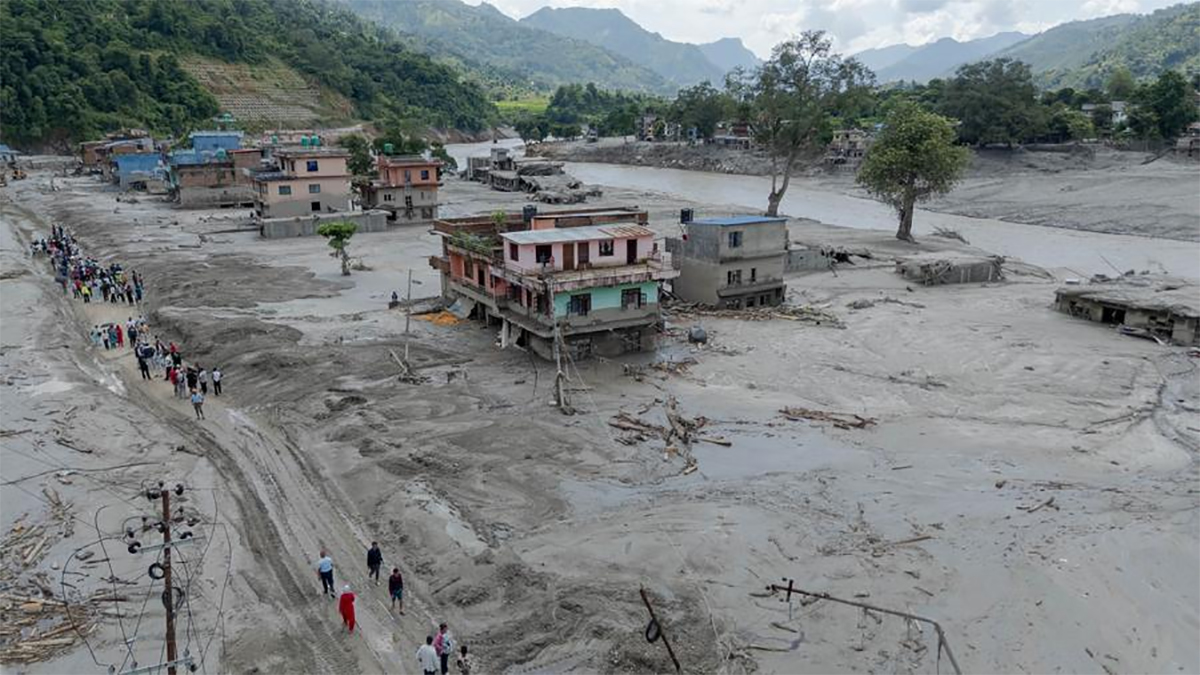
Kathmandu, Sept 13: The devastating Bhotekoshi flood of August 26 caused extensive damage to rural communities in Rasuwa, Nuwakot, Dhading and other districts, destroying farmland and killing thousands of livestock and poultry.
According to the Food and Agriculture Organization of the United Nations, the flood destroyed around 1,800 hectares of agricultural land, particularly paddy fields, and killed thousands of livestock and poultry.
FAO Deputy Director General Beth Bechdol highlighted the impact of the disaster on farmers and livestock owners, the immediate agricultural assistance they need and the urgency of restoring production before the next farming season.
FAO’s preliminary assessment has raised concerns about the long-term impact on food security and income among affected farming families. Agricultural land, fish ponds, food stocks and farming infrastructure have all suffered damage.
The FAO is supporting the Nepal government’s relief and rescue efforts while providing emergency animal health services and assessing damage to agriculture and rural livelihoods.
Bechdol said the recent floods had caused immense human suffering.
“More than 1,000 people have lost their lives, thousands are still missing and entire communities have been severely affected,” she said.
The flood destroyed not only homes and physical infrastructure but also the main sources of food production and income for many families, she said. Farmland has been buried under mud and debris, while fish ponds have been swept away. Damage to roads, bridges and markets has severely disrupted supplies of food, animal feed, milk and agricultural inputs.
FAO estimates that damage to around 1,800 hectares of farmland could result in the loss of nearly 7,700 metric tonnes of agricultural production.
For farming families, the loss goes beyond the current harvest, the organisation said, warning that future production and income opportunities are also at risk.
The affected area is one of Nepal’s important livestock producing regions. Before the flood, the 11 affected local governments were home to around 350,000 cattle, buffaloes, sheep and goats, as well as more than 1.6 million chickens.
According to Bechdol, thousands of animals and poultry have either died or gone missing. Overall losses of livestock and poultry are estimated at between 5 and 10 percent.
“For a farming family, losing an animal means losing not only an immediate source of food but also the basis for future income and production,” she said.
FAO said affected farmers urgently need seeds. Animal feed and veterinary services are equally important, Bechdol said, warning that the risk of disease outbreaks among livestock rises after floods. She called for greater attention to vaccination, treatment and disease surveillance.
The FAO is working with the Nepal government on a detailed assessment of damage to crops, livestock, fisheries, farmland and agricultural infrastructure. The assessment combines field inspections with satellite and remote sensing technology.

Login to add a comment