







Sir,
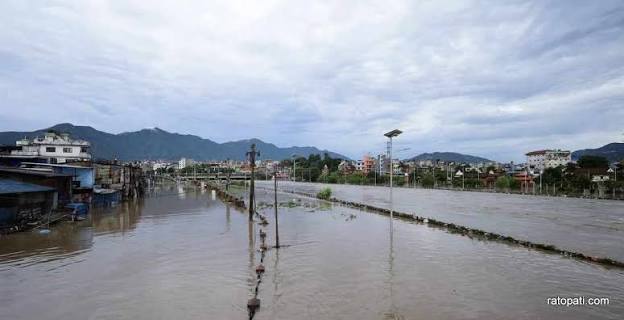
Kathmandu Valley has been facing an increasing problem of flooding and waterlogging during the monsoon. Rapid and unplanned urbanization, encroachment on riverbanks and natural drainage channels, and inadequate drainage infrastructure have significantly reduced the valley’s capacity to manage heavy rainfall.
Every year, heavy monsoon rains cause rivers and streams such as the Bagmati, Bishnumati, Dhobikhola, Manohara, Hanumante, Nakkhu and Balkhu to swell, putting settlements, roads and infrastructure at risk. The problem is becoming more serious as rainfall patterns become increasingly unpredictable and intense.
Against this backdrop, the construction of a dedicated drainage tunnel at Chobhar could be explored as a long-term solution for improving the drainage capacity of Kathmandu Valley.
Chobhar is the only natural outlet through which the Bagmati River leaves the Kathmandu Valley. Therefore, improving the water-discharge capacity at Chobhar could help reduce the accumulation of excess water inside the valley during periods of exceptionally heavy rainfall.
The proposed tunnel should not be viewed simply as a conventional infrastructure project. It should be designed as a strategic flood-management system capable of carrying excess water safely out of the valley. The tunnel would require sufficient capacity to handle extreme rainfall events, while its design would have to take into account water flow, geological conditions, sedimentation and future climate risks.
However, constructing a tunnel at Chobhar would require extensive scientific and technical studies. Chobhar has significant geological, environmental, cultural and historical importance. Any construction must therefore be preceded by detailed geological surveys, hydrological studies, environmental impact assessments and assessments of the potential effects on downstream areas.
A drainage tunnel alone cannot solve Kathmandu Valley’s flooding problem. It must be part of a broader flood-management strategy. River and stream corridors need to be protected, illegal encroachments removed, bridges and culverts upgraded, rainwater harvesting promoted, and modern storm-water drainage systems developed throughout the valley.
The proposed tunnel could also serve as an emergency drainage system during extreme rainfall. If the water level in the valley rises rapidly, the additional flow could potentially be diverted through the tunnel, reducing pressure on rivers and drainage channels within densely populated areas.
At the same time, authorities must carefully study where the tunnel would begin and end, how much water it could safely carry, and what impact the discharged water could have on downstream communities and the Bagmati River ecosystem.
Kathmandu Valley needs a long-term and integrated approach to flood management. With climate change increasing the possibility of intense rainfall events, the valley cannot continue relying solely on existing drainage infrastructure.
Therefore, the idea of constructing a water-drainage tunnel at Chobhar deserves serious consideration. It should, however, be based on scientific feasibility, environmental sustainability and long-term planning rather than political decisions alone.
If properly designed and implemented without damaging Chobhar’s natural and cultural significance, such a tunnel could become an important component of a modern flood-management system for Kathmandu Valley.
Sumana Chaudhari, Nakkhu, Lalitpur

Login to add a comment