







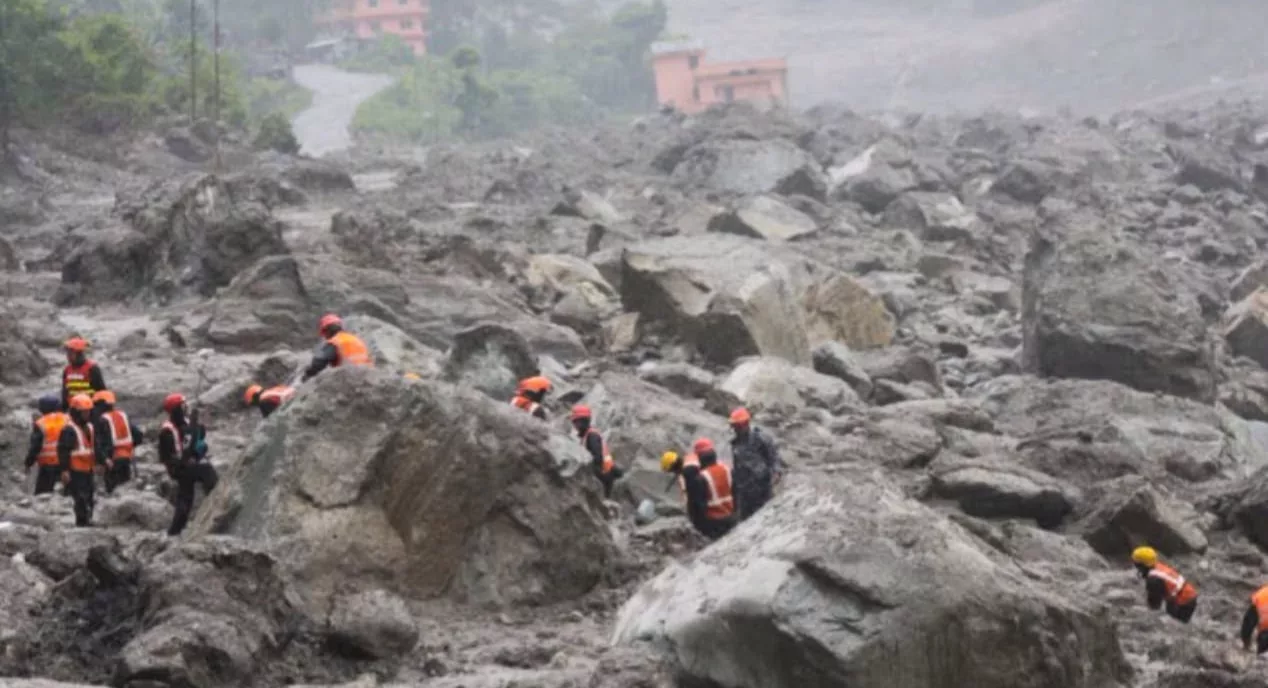
Kathmandu, Aug 31: Nepal’s response to the devastating Bhotekoshi flood is facing a familiar problem: institutions responsible for disaster management lack the expertise, equipment and coordination needed to respond effectively when a major crisis strikes.
The National Disaster Risk Reduction and Management Authority, the country’s central disaster management agency, has no specialised experts on its staff and depends on outside agencies for critical technical support. The government has now brought specialists and equipment from India and China to assist with search and rescue, including efforts to locate people believed to be trapped inside hydropower tunnels.
The authority had only one expert until about a year ago, when geologist Gangalal Tuladhar’s tenure ended. “For the past year, the authority has not had a single expert,” said senior divisional engineer Sushil Kumar Shrestha.
The authority has been allocated Rs 200 million for the current fiscal year, but officials say much of the money goes toward salaries and routine programmes. Former chief secretary Eknarayan Aryal said the agency needs stronger authority and resources to coordinate federal, provincial and local governments during disasters.
The weakness in institutional capacity has been compounded by poor coordination on the ground. Local representatives in Rasuwa, Nuwakot and Dhading say relief is sometimes being distributed without adequate consultation with municipalities, creating delays and duplication.
Gosaikunda Rural Municipality chair Kaisang Narpu Tamang said local governments were not being properly informed about where relief was being sent. Other local leaders have raised urgent concerns about damaged roads, electricity shortages, food supplies, cooking gas, body management, temporary shelters and access to hospitals.
In Dhading, a dispute even broke out between RSP lawmaker Ashika Tamang and local representatives after relief materials reportedly remained at a ward office for three days.
The government says it has released Rs 67.5 million from the Disaster Management Fund for 15 crisis declared local levels in five districts. The National Disaster Risk Reduction and Management Authority has also deployed 12 specialised teams, while thousands of security personnel are involved in rescue operations.
The disaster is also disrupting Nepal’s trade with China. With the Rasuwagadhi Kerung border severely damaged and closed, Chinese cargo is increasingly being diverted through the Korala border in Mustang.
The Armed Police Force recorded 66 cargo containers at its Jomsom check post by Sunday evening, with officials reporting a steady rise in traffic toward Korala.
The diversion could keep essential imports moving, but it is also testing Korala’s limited infrastructure. Mustang Customs collected Rs 6.92 billion in revenue in fiscal year 2025/26 and another Rs 290 million in the first month of the current fiscal year. Yet the customs office has only 12 employees against an approved strength of 18.
The Bhotekoshi disaster has therefore exposed problems beyond the immediate rescue effort. Nepal now faces the task of strengthening disaster agencies, improving coordination among three levels of government and expanding alternative trade infrastructure before the next major crisis arrives.

Login to add a comment