







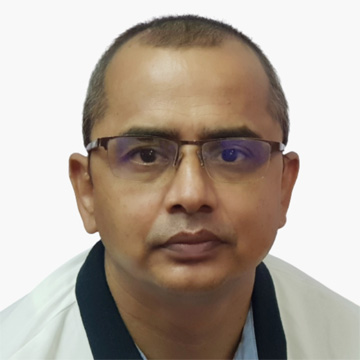
By Devendra Gautam
Are we heading towards socialism as a nation? First of all, let’s define what this thing called socialism is.
It is a political, social and economic philosophy in which the community or the working class owns and controls the means of production such as factories, land and resources. The goal is to distribute wealth equally based on individual needs rather than private profit, often through democratic means.
Sounds lofty, doesn’t it?
The constitution of Nepal, the seventh magna carta of our very own introduced in a space of eight decades with blood, sweat, toil and tears of successive generations (without throwing in the towel against the most formidable of adversaries), describes Nepal as an independent, indivisible, sovereign, secular, inclusive, democratic, federal democratic republic committed to socialism.
The adjectives-laden charter aims to build an egalitarian society free from discrimination by ensuring social justice, equitable distribution of resources and public welfare through state-guided economic policies.
Section 3 of the supreme rulebook of the country, among other things, guarantees access to free education and basic healthcare as fundamental rights. Without a doubt, in a socialist polity, public schools and public health institutions are the organs that guarantee free—and quality—education and healthcare.
How are public education and public health faring in socialism’s very own country where households bear a greater share of the cost of education and healthcare than citizens in many countries that openly embrace market capitalism?
Fast-emptying community classrooms
Public schools are in dire straits with declining enrollment even as private schools continue to thrive.
According to the government’s Economic Survey 2025-26, out of the 7.04 million students enrolled in grades 1 through 12 across the country, 4.38 million (62 percent) study in community schools, while 2.66 million (38 percent) attend private schools. A decade ago, around 80 percent of students studied in community schools and only about 20 percent attended private institutions.
The number of community schools in Nepal is steadily declining due to active government school merger campaigns and shifting parent preferences. Public schools now account for 71.27 percent of all educational institutions nationwide (27,010 schools), while the share of private (institutional) schools has expanded to nearly 25 percent (8,941 schools).
Private education is a luxury for a vast majority of people even in rich countries like the United Kingdom and the United States, with only about 10 percent of students in the US and around nine percent in the UK attending private schools.
Annual tuition fees are a major hurdle in these countries. In the US, tuition generally ranges from $15,000 to over $60,000 while in the UK, typical day school fees range from $19,500 to $39,000 annually, with boarding schools reaching over $70,000.
Whereas in Nepal, a country with per capita nominal GDP of $1,548, private schools charge anywhere between $370 and $15,000-plus every year for K-12 students, depending on whether the school targets the local middle class or elite international expats.
Mushrooming private schools and declining community schools also point at a widening gulf in terms of access to quality education between those who can afford it and those who can’t.
This much for the status of public education versus private education in Nepal.
A catastrophic diagnosis
Health is one of the several other sectors that is not in the pink of health in Nepal.
While health posts do exist even in hinterlands offering primary healthcare using limited means and resources, geographical barriers like distance from the centre and treacherous terrain make higher-level facilities located in provincial and federal headquarters virtually inaccessible for the needy, both in terms of cost and physical distance.
Launched on April 7, 2016, the National Health Insurance Programme aimed (it still does) to protect citizens from catastrophic health expenses. Its core goals include shielding households from out-of-pocket medical financial burdens, ensuring equitable access to quality healthcare for marginalised groups and advancing towards universal health coverage.
According to the Nepal Health Research Council, about half a million Nepalis fall below the poverty line every year due to out-of-pocket medical expenses.
Additionally, around three million people in a country of barely 30 million people incur catastrophic health expenditures every year, frequently being forced to sell property, deplete savings or take high interest loans to pay hospital bills.
This, despite such a ‘robust’ insurance coverage.
For want of healthcare facilities at home, lakhs of these people head to hospitals in Delhi and other Indian health institutions for treatment, many losing whatever they had, including their dear lives, leaving their families deep in debt.
Tracking the trickle-down
The government has allocated Rs 101.95 billion ($668.31 million) for the public health sector (Rs 15 billion or $98.33 million for the insurance programme) and Rs 218.3 billion ($1.43 billion) for the public education sector, out of the total outlay of Rs 2,124.34 billion ($13.93 billion).
How much of it will trickle down to the last person and what portion will evaporate like in the past will give us all a clear hint of where exactly we are heading when it comes to chasing our ‘socialist’, ‘capitalist’ or plain and ordinary dreams where all Nepalis can make a living within the country and lead peaceful lives, barring those who are in a perpetual search for proverbial lands where milk and honey flow.

Login to add a comment