







By Our Reporter
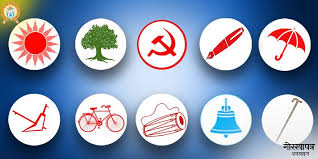
Nepali politics has taken a sharp turn. The recent parliamentary election pushed aside parties that dominated public life for decades. The rise of the Rastriya Swatantra Party surprised even its own leaders. During the campaign many voters showed interest in the new party, its bell symbol, and the public appeal of figures such as Rabi Lamichhane and Kathmandu mayor Balen Shah. Even then, few expected the result to give the party such overwhelming strength in parliament.
The vote did more than bring a new party to power. It signaled the end of the old order. For years, three forces shaped the centre of Nepali politics, the Nepali Congress, the CPN UML, and the Maoist party. Each had its own story, its own movement, and its own base. Yet over time, their conduct in government created deep frustration among voters.
The Nepali Congress once stood as the main driver of democratic change. It led struggles against autocratic rule and later played a large role in shaping the democratic system after 1990. That legacy gave the party moral authority for many years. Yet the party gradually drifted from its original mission. Internal rivalries weakened its direction. Leaders focused more on power sharing and coalition deals than on public service. As alliances with communist parties became routine, many supporters felt the party had lost its distinct identity.
The UML and the Maoist movement also travelled a similar path. The UML gained ground in the multiparty era and became a major force in parliament. The Maoists emerged through armed rebellion with the promise of reshaping the state. Over time, both groups entered the same political circle they once criticized. Leaders moved in and out of coalitions, often exchanging the post of prime minister among themselves. For ordinary voters, the pattern began to look like a closed club where the same figures took turns in power.
This sense of political stagnation slowly built public anger. Many people believed the leadership of major parties had become detached from daily concerns such as jobs, inflation, corruption, and public services. The repeated rotation of familiar leaders, Sher Bahadur Deuba, KP Sharma Oli, and Pushpa Kamal Dahal, reinforced the perception that politics had turned into a game among a small group.
The election result showed how strongly voters wanted change. The surge of support for the RSP swept away long-standing electoral habits. The once dominant parties suddenly found themselves reduced to smaller roles in parliament.
Still, the future direction of politics remains uncertain. The RSP itself is still a young party. Its ideology, internal structure, and long-term policy direction are still taking shape. It does not follow the traditional leftist framework that shaped Nepali politics for decades. In that sense, it may become a new competitor for the Nepali Congress in the democratic centre. Yet its durability will depend on how it handles power and governance.
At the same time, older parties are not necessarily finished. The UML could recover if it produces new leadership and renews its organisation. The Nepali Congress may also regain strength if younger leaders such as Gagan Thapa and Bishwa Prakash Sharma manage to reform the party and reconnect with voters.
Regional politics also faces uncertainty. Madhesh based parties performed poorly in the election. Still, the issues they represent, identity, inclusion, and regional development, will not disappear from national debate.
What lies ahead is not a fixed political order but a transition. Parties will need to rebuild trust and adjust their structures. Some may combine the discipline of cadre based organizations with the openness of mass parties to survive in this new environment.
The election storm changed the political map. Storms do not last forever. What matters now is what grows after the storm passes. If the new leadership governs with integrity and competence, the change may mark the beginning of a healthier political culture. If not, Nepali voters have already shown they are ready to sweep the field once again.

Login to add a comment