







By Our Political Analyst
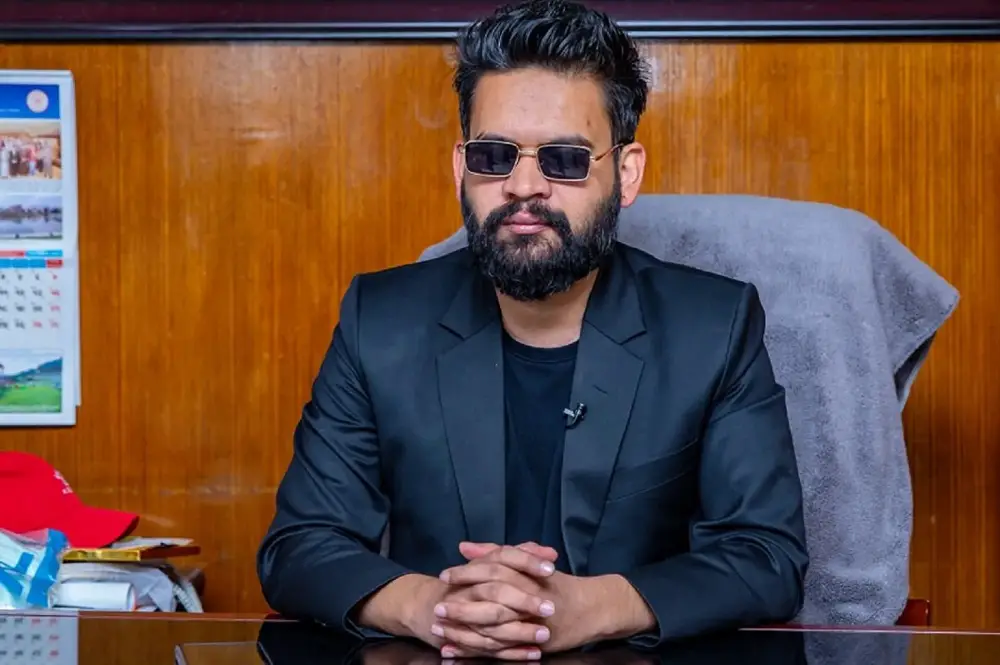
Nepal’s latest House of Representatives election has produced a result few people expected. The Rastriya Swatantra Party (RSP) has surged ahead and is moving close to a two thirds majority in parliament. The scale of the victory has shaken the political field and opened a new question, who will lead the next government. At the center of that question stands Balen Shah.
Before the election, party chair Rabi Lamichhane and Balen Shah signed a 7-point agreement. The understanding was simple. Lamichhane would remain party chair, and after the election Balen would lead the parliamentary party and become the party’s candidate for prime minister. The idea appeared clear at that time. Now, after the election result, the same agreement has turned into the subject of debate.
Part of the confusion comes from statements made by senior leaders after the vote. Vice chair Dol Prasad Aryal said he would need to check the agreement again before confirming what it contains. Lamichhane also avoided giving a direct answer when asked if Balen would serve as prime minister for the full five-year term. These remarks have triggered speculation that not everyone inside the party feels comfortable handing power to Balen.
Such doubts are not surprising. The party is new, many leaders have strong personal influence, and the scale of the electoral victory was not widely expected. In such moments, internal competition often appears. Some leaders may believe the prime ministerial position should remain inside the party structure rather than move to a figure who entered politics from outside the party organization.
Another factor also shapes the situation. Lamichhane himself faces several legal cases linked to cooperative fraud and financial wrongdoing. These cases remain under review in court. Because of this legal pressure, his immediate path to the prime minister’s office looks uncertain. In that sense, the agreement with Balen also served as a political solution. It allowed the party to present a clear leadership option while Lamichhane dealt with legal complications.
The real question is not only political loyalty. The party constitution also outlines a formal process to choose the parliamentary party leader. Article 66 states that interested candidates among elected members must compete in an internal election. Party members vote and the candidate who receives fifty percent plus one of valid votes becomes the parliamentary leader. If no candidate reaches that level, the top two candidates face another round.
This rule creates two possible paths. The first path is simple. If Balen becomes the only candidate for the parliamentary party leadership, the process ends quickly. In that case he would be selected without a vote and then move forward as the party’s prime ministerial candidate. Some leaders argue this scenario is likely because the earlier agreement already sets the political direction.
The second path involves competition. If another leader challenges Balen, the party would hold an internal election. That situation would reveal how strong the agreement truly is. It would also test how united the party remains after its sudden rise to power.
Supporters inside the party insist the agreement will be honored. They say the commitment represents political integrity and a break from the habits of older parties. Nepal’s political history offers a warning here. In 2017, leaders of the Nepal Communist Party promised to rotate power between them. The agreement collapsed and the party itself later split. Many observers now watch the RSP closely to see if it repeats the same pattern.
At this moment, Balen’s path to the prime minister’s office remains open but not fully secure. The agreement gives him a political claim. The party constitution provides the procedure. If party leaders choose consensus, Balen could become parliamentary party leader with little resistance and then step forward as prime minister. If factions appear and competition begins, the process may turn complicated. Given the current situation, if Balen’s path to become the next PM is blocked under any pretext, then the RSP will certain to witness a seismic upheaval that may even split the party before it takes to power.

Login to add a comment