







Kathmandu, Sept 18: President Ram Chandra Paudel said that when there were calls to dissolve the House of Representatives earlier, he had taken a firm stand that he would rather become a martyr than go beyond the constitution.
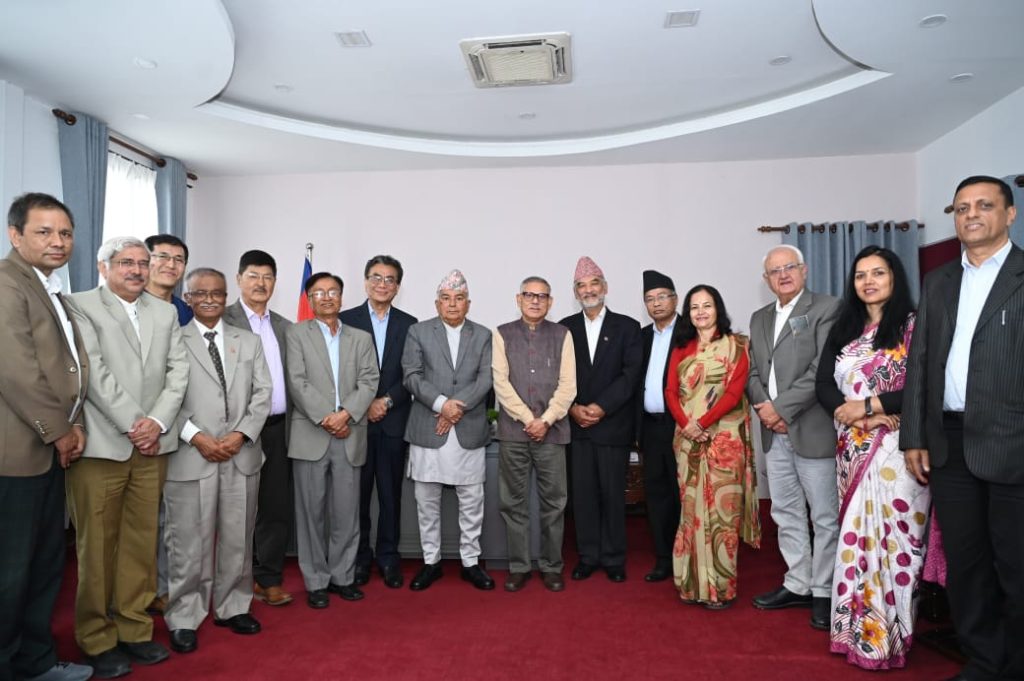
During a meeting with civil society leaders at Shital Niwas on Thursday, Paudel recalled the events of September 9 and the process leading to the formation of the interim government. He said that because of his position, the interim government was formed first and only later the House was dissolved on the recommendation of the prime minister, even though protestors had been demanding dissolution first.
“This situation arose under extraordinary circumstances. But the constitution is still intact. We must work without letting it be undermined,” he told the leaders.
Paudel said that the country had barely been stabilized and that elections were now the top priority. He also told the civil society leaders that he would not approve any ordinances other than those necessary for holding elections.
Civil society leaders urged the president to ensure that the interim government focuses solely on conducting elections. They also handed him a memorandum, asking political parties to avoid revenge politics, which they warned could create unnecessary tensions.
“Democracy rests on citizens and political parties. If there are efforts to weaken them, seek revenge, or manipulate constitutional structures, it could create another conflict and derail the interim government from its main duty,” they said.
Senior advocate Tikaram Bhattarai, who attended the meeting, said the president acknowledged his own role during this extraordinary period. “We told him that elections must be held within six months. We also warned him about possible unnecessary ordinances,” Bhattarai said.
The leaders said that since Sushila Karki has been appointed prime minister as per protestors’ demands, the government must now work in coordination with Gen-Z protestors, political parties, and civil society.
“To build trust and create an environment of mutual understanding, the president’s role will be significant,” they said. “Proper functioning of the National Assembly will also be a constitutional step toward creating such an environment.”
They asked political parties to recognize the current reality and ensure a peaceful transition that strengthens democracy and fulfills the legitimate aspirations of young people.
They praised the president for defending the constitution, preventing anarchy, and appointing the interim prime minister with political consensus.
But they also criticized the dissolution of the House on the interim prime minister’s recommendation, saying it was unconstitutional and had widened the gap between the interim government and political parties, undermining the confidence of professional organizations that stood for constitutionalism.
“With election dates already announced, we hope the temporary disruption of the constitution will not last long,” they said. “In these exceptional circumstances, political parties, Gen-Z protestors, and civil society must cooperate to ensure successful elections and keep the constitutional order functioning.”
The delegation included Mahesh Kumar Maskey, Malla K. Sundar, Parshuram Tamang, Ratna Sansar Shrestha, Kundan Aryal, Jagat Deuja, Tikaram Bhattarai, Kanak Mani Dixit, Chandeswar Shrestha, Rajendra Maharjan, Gita Tripathi, Bindu Sharma, Sharad Wanta, and Sushil Pyakurel.

Login to add a comment