







By Our Reporter
The Shanghai Cooperation Organization (SCO) has evolved into one of the most important multilateral forums in Asia. Established in 1996 by China, Russia, Kazakhstan, Kyrgyzstan, and Tajikistan, the group was first meant to address border security after the Cold War. Over the years, its membership has expanded to include Uzbekistan, India, Pakistan, Iran, and Belarus. Mongolia and Afghanistan hold observer status, while Nepal, along with countries like Sri Lanka, Turkey, and the UAE, is currently a dialogue partner. This steady expansion has turned the SCO into a body that represents almost half of the world’s population, and its scope now spans trade, infrastructure, energy, technology, and security.
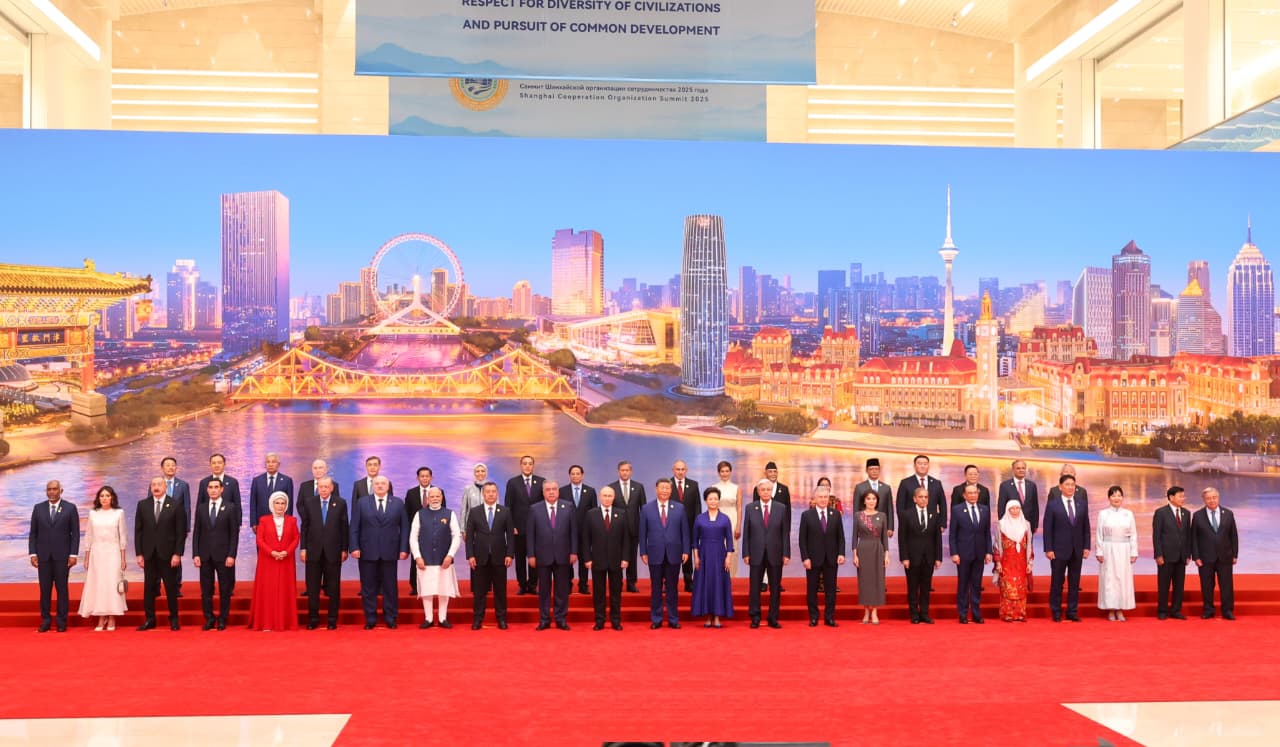
Nepal has formally sought full membership during the current summit in Tianjin. The timing is significant. Multilateral forums like SAARC have remained largely inactive, leaving a vacuum in South Asia for regional dialogue. The SCO, meanwhile, has proven its ability to create space for cooperation even among countries with differing political systems and clashing interests. For Nepal, a small state caught between two powerful neighbors, this forum offers more than symbolic participation.
There are several reasons why Nepal would benefit from deeper engagement and eventual membership. First, the SCO gives Nepal a wider diplomatic platform beyond its immediate neighborhood. With both India and China already members, the organization provides a neutral stage where Nepal can engage both powers collectively rather than bilaterally. Sensitive issues like Lipulekh, which strain relations with neighbors, could at least be discussed in a wider setting where multilateral principles carry weight.
Second, economic prospects within the SCO are expanding. Trade among member states has multiplied since the organization’s founding. Joint efforts in infrastructure, energy connectivity, and even digital cooperation are gaining momentum. For Nepal, which faces chronic trade deficits and underdeveloped infrastructure, closer ties within this framework could support its own growth goals. Membership would also provide Nepal with more access to investment flows, technology partnerships, and energy projects.
Third, the SCO increasingly serves as a voice for the Global South. It seeks to balance the dominance of unilateral decisions by powerful nations and promotes multipolarity. For small and developing states like Nepal, this is important. The recent history of tariff wars and unilateral sanctions has shown how vulnerable smaller economies are to global power plays. Being part of a bloc that collectively resists such dominance strengthens Nepal’s position in international politics.
Yet, there are also challenges. The SCO is not free from the weight of competing interests, particularly between India and China. While it has managed to keep dialogue alive, fault lines do exist. Nepal will need to tread carefully to avoid being caught in those rivalries. Membership also requires more than attendance at summits. It demands a proactive role, with well-prepared policy positions and concrete proposals that safeguard Nepal’s national interests. Without such preparation, participation risks becoming ceremonial.
Nepal’s request for membership reflects both ambition and necessity. In a region where traditional forums have failed to deliver, the SCO offers an alternative that is broader and more functional. For Nepal, the challenge is to convert this opportunity into tangible outcomes—greater trade access, stronger diplomatic space, and infrastructure support—while maintaining balanced relations with its powerful neighbors inside the same organization. If managed wisely, joining the SCO could mark a turning point in Nepal’s external engagement.

Login to add a comment