







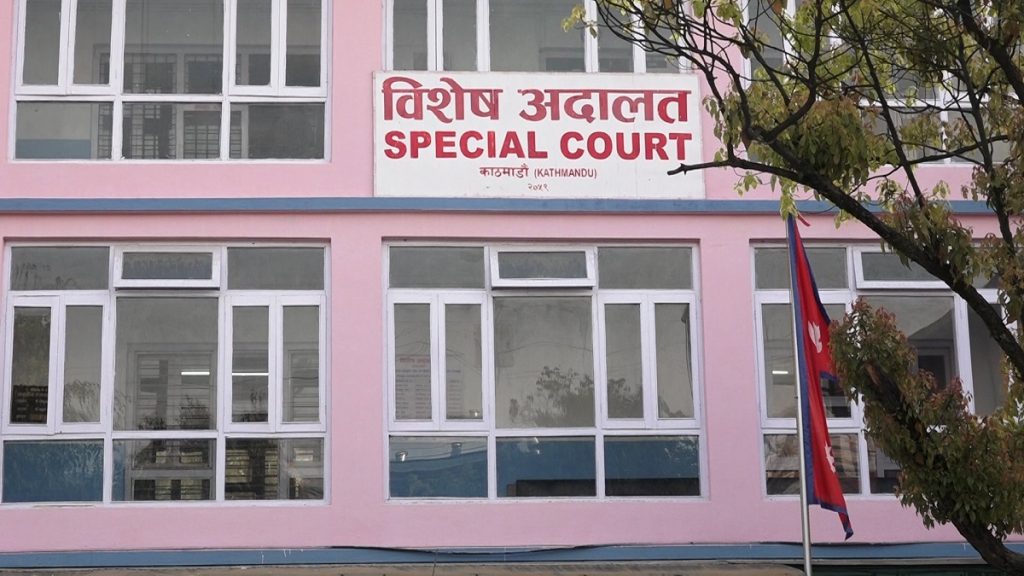
Kathmandu, July 25: Serious questions are being raised about the moral and legal standing of Chief Commissioner of the Commission for the Investigation of Abuse of Authority (CIAA), Prem Kumar Rai, after the Special Court delivered a stinging verdict in the infamous wide-body aircraft procurement scandal.
While the court refrained from prosecuting Rai, its verdict explicitly noted that the foundation of the corruption began with decisions made under his leadership—when he chaired the executive board of Nepal Airlines Corporation. The court’s “judicial observation” that Rai’s actions marked the starting point of the irregularities has ignited a storm of criticism and demands for his resignation.
The Special Court’s full ruling, which was made public recently, points to selective prosecution: CIAA, under Rai’s leadership, chose not to pursue charges against him while indicting 32 others—including 24 Nepalis and eight foreign nationals—in March 2024. The court issued its verdict on December 6, 2024, holding the remaining accused accountable for embezzling over Rs 1.47 billion. Each convict was fined over Rs 122.5 million in damages and penalties.
Former Supreme Court Justice Balaram KC said the Special Court had done what it could within its jurisdiction—issuing an “excellent verdict”—while sharply criticizing the selective manner in which the case was prosecuted. “Rai no longer holds the moral or legal ground to remain CIAA chief,” KC asserted. “The law allows him to appeal the judicial remarks, but until then, he should step down.”
The court found that Rai had played a central role throughout the purchase process. He chaired the board meetings that approved the draft bidding documents and the decision to procure two Airbus A330-200 wide-body aircraft. He also played a key role in securing loans from the Employees Provident Fund and the Citizens Investment Trust—ignoring red flags raised by both institutions. Yet, once appointed CIAA chief, he oversaw an investigation that ultimately exonerated himself.
Legal experts warn that such “selective prosecution” severely undermines public trust in justice. The verdict itself underscores that the principle of equal application of the law was violated. “Prosecuting selectively goes against the fundamentals of natural justice and erodes public confidence,” the court stated.
KC emphasized that if Rai wishes to challenge the court’s remarks legally, he must first vacate his office. “If he personally wants to contest the judicial commentary, he must do so as a private citizen—not while holding the CIAA post,” KC said, warning that Rai’s continued presence would damage institutional credibility.
Rai was appointed CIAA chief on February 3, 2021, based on a recommendation made by the Constitutional Council on December 15, 2020, during the KP Sharma Oli administration. His appointment, made through an ordinance and during a dissolved House of Representatives, bypassed parliamentary hearings—raising further constitutional concerns.
The court ruling traced Rai’s involvement back to 2016, when, as the then-Tourism Secretary and Chair of the airline’s board, he approved the procurement roadmap, helped finalize the draft tender, and formed the committee that executed the purchase. Yet, while members of these committees, like then-Undersecretary Surya Prasad Acharya, were indicted, Rai’s actions were never even investigated.
In sum, the court has issued a powerful message: accountability must begin at the top. Whether Prem Kumar Rai steps down or clings to office may well determine whether Nepal’s anti-corruption watchdog retains its moral authority—or loses the public’s trust for good.
People’s News Monitoring Service

Login to add a comment