







National/Regional/International Affairs
“Always recognize that human individuals are ends, and do not use them as means to your ends”.
-Immanuel Kant.

By N. P. Upadhyaya (Aryal)
Kathmandu: Let’s now revisit the politics of the early 1990s, when the sitting Nepal King Birendra was cut down to size by the men paid and posted by the Indian Congress (albeit supported by the Indian Intelligence Agency RAW) and the country ushered in a Constitutional democracy, which meant that Nepal henceforth would be governed by a democratic system with a constitutional monarch.
However, I am the witness myself, as an active journalist then in Kathmandu, as the King willingly accepted to step down from an active monarch to a constitutional one rather than yielding to the dictates of the Indian playboy Prime Minister Rajiv Gandhi.
I was then the Chief Editor of the Telegraph Weekly, which remained in existence for almost 34 years beginning in the early 1980s.
Why the Indian pilot turned Indian Prime Minister Rajiv Gandhi was at odds has something related to the lady-Pakistani Prime Minister Benazir Bhutto’s excessive hobnob with Rajiv Gandhi who in a combined manner cut a joke at King Birendra in Islamabad where the King had gone to attend to a SAARC Summit in Pakistan. Ms. Bhutto then was the darling of the West.
King Birendra’s fault?
King Birendra while in Islamabad then refused to attend to a break-fast invitation extended by Rajiv Gandhi who had proposed by then a “mini SAARC” well within the SAARC that housed then some seven south Asian countries-Nepal included obviously.
The inclusion of Indian satellite Afghanistan into the regional body demands yet another story which may appear time permitting should the readers exhibit their keen interests.
King Birendra’s rejection judgment was that the seven countries conglomerate itself of the SAARC body shall in doing so further weaken and more so the “emerging mini SAARC” shall act as a parallel to the original SAARC body. This may shadow even the main SAARC body-the King contended.
Looking at the straight disavowal of King Birendra to the mini SAARC idea, both Gandhi and Mrs. Bhutto passed on unpleasant words to the modest Nepal King who was one of the brains of the SAARC organization followed by President Zia-Ur-Rehman of Bangladesh.
The West-tilted Pakistani lady, the so-called highly arrogant daughter of the East, Ms. Bhutto did not comprehend that Rajiv’s scheme will one day kick out Pakistan itself from the SAARC mainstream.
Gandhi’s trickery she could not fathom.
Only some years later, India split the SAARC and formed a new mini-SAARC that included India, Bangladesh, Sri Lanka and Nepal.
This fractured SAARC was coined as a South Asian Growth Quadrangle that deliberately boycotted Pakistan, the born rival of India.
India’s declared satellites formed the Growth Quadrangle as it was later known.
An infuriated Pakistan almost was about to quit the SAARC officially, however, thanks to the sagacity of the then Sri Lankan Foreign Minister Laxman Kadirgamer (a Sri Lankan Tamil) who convinced Pakistan that the evolved political aberrations could be later corrected and hence Pakistan need not to quit the regional body.
Pakistan complied but yet began looking towards the Central Asian Countries for greater regional connectivity.
The idea behind isolating Pakistan was that with the presence of Pakistan, India felt uneasy as she felt threatened that in each of its annual summit, Pakistan with its South Asian colleagues inevitably raised the issue of India occupied Kashmir among others.
The segregation of Pakistan was the prime objective of India and its satellites. Pakistan was a strong regional force by then. Its diplomats posted in South Asian nations were much more active than what we, sorry to say, could see in these recent years.
Pakistani diplomacy was at its pinnacle at the time when Ambassador Kamran Niaz in the mid-nineties came here to discharge his official duties.
Later after decades and decades, it was Javed Majhar who interacted with the intellectuals and the media as well which is what I have personally felt as and when I was invited for such an interaction.
That was the end of it all.
Thus, India has a real edge over Pakistan and China in South Asia more so in Nepal. China and Pakistan must act together to match Indian diplomacy for understandable reasons as it has evolved in recent years.
Only recently, the Association of Former Career of Ambassadors of Nepal organized a day-long seminar on Foreign Direct Investment wherein the Indian Ambassador Shri Navin Srivastava exhibited his expertise in the subject mentioned above.
This seminar also allowed the Indian envoy to mingle with noted scholars, former veteran diplomats and media men, this scribe included, and expand his reach among the informed Nepali citizenry.
China believes in quiet diplomacy, it is said.
Back to the point:
It was for this reason that the South Asian Quadrangle that took shape right here in Kathmandu was also “actively” given the energy by the then Nepal Foreign Minister Dr. Prakash Chandra Lohani, an RPP stalwart now.
When Dr. Lohani was hand-in-glove with India, I was briefed in an excited manner, by the B’deshi Ambassador Mahmood Ali who was very intimate to me and the Forum that I chaired for over a decade-the Nepal-SAARC Journalists Forum (NSJF).
He told me how the Growth Quadrangle was being formed clandestinely under Indian instructions.
The NSJF in its life span of a decade or so brought the entire SAARC nations together in Kathmandu.
On a private note, I must extend my sincere thanks to the SAARC Secretary General Ambassador Nihal Rodrigo, a veteran Sri Lankan diplomat for all he did to expand the role of the SAARC Journalists’ Forum in the entire SA region.
(As of now, I have no connections whatsoever with the said Forum).
Needless to say, even when the King was kicking and alive in Nepal, some of his ministers were “posted” by India who danced to the tune of India and the formation of the SA Quadrangle thus became a reality, however, the entire four country quadrangle collapsed because of the domineering role being played by the regional scoundrel.
An ill-intended grouping had to crumble and it smashed.
A mere mistake Mrs. Bhutto made then is still haunting Pakistan even today. May funny talks in the region were in circulation as regards the ties between Ms. Bhutto and Mr. Gandhi.
Though Pakistani troubles of the recent days and years are of its own making including the political and military leadership.
The one takes the other as an enemy, an opponent to the nation and vice versa which is why the nation is split vertically much to the political advantage of rival India.
The continued financial crisis has almost broken the vertebral column of neighboring Pakistan.
I hope the IMF deal may have eased the crisis. The CNN TV (Business) dated July 12, 2023, reports that the IMF board has approved a $ 3 billion bailout program for troubled Pakistan which will immediately disburse about $ 1.2 billion to help stabilize the South Asian ailing economy.
CNN quoted the IMF as saying.
Hope Pakistan now regains its lost economic stamina.
Moreover, let’s hope the approaching elections shall bring stability and peace to politically torn Pakistan.
Pakistan even as of today, is paying the price of Mrs. Bhutto’s damn follies who later was killed in a very merciless manner. Bhutto trusted India’s Gandhi which was in itself a terrible joke.
Needless to say, both Rajiv Gandhi and King Birendra too have had a very terrible killing.
For a while, the formation of the mini-SAARC was postponed but King Birendra was the Indian target now.
Rajiv then instructed his “paid and posted” men in Kathmandu to bring in an artificial blizzard against the sitting monarch.
UML leader Madhav Nepal even proposed that the Indian military be invited to discipline King Birendra which apparently exposed Mr. Nepal’s excessive India bend. His India bend continues reportedly as against Nepal’s advantages.
The then-Indian Ambassador Arvind Ram Chandra Deo (a shrewd Indian national) in Kathmandu then ballooned the political parties who were ready to dance to the Indian jingle and thus the entire Kathmandu’s politics became tense with each passing day.
In the meanwhile, Indian Foreign Secretary S. K. Singh landed in Kathmandu with a fresh Indian offer which had it that if the King agreed to remain under India’s security umbrella a la Baby Bhutan, his Crown was safe.
The King upon listening to the “humiliating Indian offer” instructed his Prime Minister Marich Man Singh Shrestha to convey to the Indian Secretary that the King had outrightly rejected the Indian proposal.
And, expectedly, the velocity of ongoing India-engineered, sponsored, and funded political movement against the King doubled which forced the King to invite Nepal’s political leaders for negotiations.
The King did so to send signals to Rajiv Gandhi that he would prefer to talk to his own perverted nationals instead of bowing down to an alien and politically immature Prime Minister.
Thus, the King accepted to remain in the Crown as a “constitutional monarch”.
The second jolt to constitutional monarch Birendra from India:
The India-funded movement of 1990 April ended with the formation of an “interim government in Nepal” under Congress leader Krishna Prasad Bhattarai.
A few months later, the interim PM Bhattarai sought an urgent audience with the King in the Palace.
The usual complementariness came to an end and Prime Minister Bhattarai in a hesitating manner forwarded an earth-shaking offer to King Birendra.
Listening to PM Bhattarai’s unbelievable and equally dangerous intent, the King without losing his composure replied, “Look PM! Don’t you think that the presence of the Nepal Army shall at least keep Nepal sovereign for half an hour? If so, how and why should I agree to your suggestions of dismantling the Nepal Army institution once and for all given that our Army is one of the oldest Armies in the world more so first in the South Asian region?
King’s response thus capped the talk of dismantling the Nepal Army for some decades. Yet this episode exposed wherefrom the idea had emanated and PM Bhattarai was speaking whose voice?
Why do some need the dismantling of the Nepal Army?
However, the idea of ‘pulling to bits’ the Army institution persisted in some crooked minds of some perverted Nepali nationals close to the Indian regime who continued their tirade against the Nepal Army.
However, the talk of doing away with the Nepal Army subsided for some decades.
And now the same idea has begun floating from some “disgruntled and sponsored quarters” which forcefully demands the early and necessary dismantling of the Nepal Army.
Why is the Nepal Army its target and its inner motive?
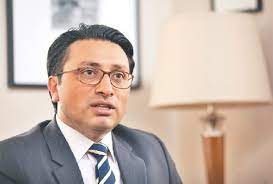
Some allege that these “some” who intend to do away with the Army reportedly have tacit connections with some alien forces who wish to weaken Nepal in the absence of the Army and create chaos and disturb communal harmony and exploit the weakened Nepal.
Reportedly, the man who is up against the Nepal Army these days is said to have had linkages in the past with the Nepali Congress and as of now, he has joined a new debatable party led by yet another provocative journo-turned politician.
Some even say that he has a Catholic Vietnamese wife?
Some even suspect his factual citizenship credentials.
Bimla Rai Poudel joins the “target NA mission:
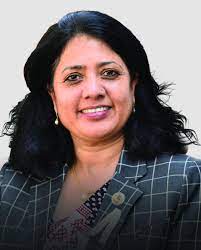
As if this were not enough, yet another lady politician Mrs. Bimla Rai Poudel the other day forcefully demanded from the Nepal Parliament that a redundant and almost defunct army like the one that we have demanded immediate dissolution as Nepal Army can’t even fight with the Indian or for that matter the Chinese Army if and when these two alien armies declare war on Nepal?
Clearly, the manner Bimla Rai Poudel was presenting her hatred against the Nepal Army gave the impression that she was speaking “Her Master’s Voice” and that she will continue to do so until the Army institution says total and complete dissolution.
Mrs. Rai, an NGO/INGO giant, was for some time (roundabout 42 days) the country’s Foreign Minister from the UML quota.
Ms. Rai has several colleagues like her who opine that the Army must be dissolved as it would “save” money for other developmental processes.
And now Sumana Shrestha’s outburst against the Army?

Very freshly, parliamentarian Sumana Shrestha has joined the chorus in hitting the Nepal Army hard who almost said that Nepal doesn’t need a contingent of 90, 000 Army as it is a white elephant for the cash crunch Nepal economy.
Ms. Shrestha is a doctoral degree holder from Massachusetts, USA.
But why do they all oppose the Nepal Army?
A close look at the debauched ideas being incessantly floated targeting the Nepal Army does tell that some “organized alien forces” near and far were at constant work to weaken the morale of the Nepal Army thereby exploiting from ensuing communal chaos that shall grip the country instantly.
A weakened, fractured and split Nepal is in the interest of, I guess, India and the countries that wish Nepal in a torn state.
Think if and when a communal or say identity crisis crops up and takes its heavy toll then isn’t it the Nepal Army to quell the threats that possess the potential to split the nation both vertically and horizontally?
We need the Army to save the country from going to the dogs. Good or bad, our Army…Nepal Army. I salute the Army.
Needless to say, if and when Nepal has a threat to its existence or say, sovereignty, it is necessarily from India and India alone.
Thus, if Nepal were to be saved for all time to come, the fake tradition of awarding the title of honorary Army General to India’s Army Chief must be scrapped altogether. Or it would be too late. The real threat to Nepal emanates from India and India alone. Let’s be clear that M. M. Naravney and General Rawat treated Nepal as inferior. Erratic Undisciplined Naravney even accused Nepal, May 2020 of working against India at the behest of China and yet was greeted in Nepal by our Army men as the undeclared King of Nepal and that too appointed by India itself. But why is the Army silent yet? The Army’s silence gives ample space to suspect the very credentials of the Army itself. Isn’t it?
Attention China and Pakistan:
China and Pakistan should now without wasting a single second feel the gravity of the “emerging frightening situation and in tandem begin providing higher training to the Nepal Army officers or else acute sovereignty issues shall grip Nepal soon, the symptoms of which are being floated by some depraved brains at the behest of inimical forces? A weak Nepal is neither in the interest of China nor that of the next regional force Pakistan. Will China assist Nepal this time earnestly and prove itself a reliable partner? Recall, China once betrayed Nepal in May 2015 when the country signed a bilateral trade route with India through the Nepali landmass. A weak Nepal means the beginning of troubles in its underbelly Tibet that adjoins Nepal fortunately. That’s all.

Login to add a comment