








By Shyam Adhikari
Context:
Monica (name changed) arrived at one of the brick industries of Bungmati from far western Nepal when she was 12 years old. Adverse family circumstances led her to survive as a child labour in the industry. She continued her work as a babysitter for the workers of the industry. The death of her mother and her father’s imprisonment for the murder of her mother not only led her to involve in the vicious cycle of child labour but also led to her discontinuing education. Being the second youngest child of six siblings, Geeta has the added baggage of taking care of her family.
Hari (name changed), 17 years old travelled to Kathmandu from Rukum district with a conviction to get out of the deteriorating economic condition. Once he reached Kathmandu, his only destination in the unknown city was the brick kiln factory in Lalitpur where his family was working. He supported his parents to make bricks as the only means to survive in Kathmandu.
Alarming Facts on Child Labour:
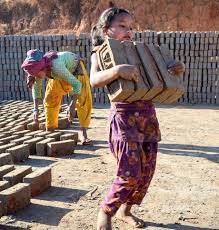
Children like Monica and Hari are only a representation of how children jeopardize themselves in the vulnerability of child labour. Child labor in Nepal is a growing problem. Involving children in child labour and exploiting them is a serious human rights violation. International Labour Organization (ILO), child labour is often defined as work that prohibits children of their childhoods as well as their potential and their dignity and that is harmful to physical and mental development.
According to the National Child Labour Report 2021, 15.3 per cent total population of children were engaged in child labour. Out of them, 847,776 (12%) were 5-13 years of age and 158,912 (2.3%) were 14-17 years of age. Among 1,081,512 children, 87% are engaged in the agriculture sector and 13% in other different sectors. The prevalence of children in the garment and carpet industry is 1.63% and 6.66% respectively, according to the report, ‘Changing State and Prevalence of Child Labour in Carpet and Garment Industries in Nepal-2021’ by Ministry of Labour, Employment, Social Security (MoLESS) and Central Bureau of Statistics (CBS) and World Vision International Nepal. As highlighted by the report of the United States Department of State 2021, some children working in brick kilns are doing various risky jobs including carrying loads and preparing bricks, for an extended period. A report on Employment Relationship Survey in the Brick Industry Nepal 2020 highlights that out of 34,593 children found in brick kilns, 17,738 (51.3%) are working children, 17,032 (96%) are child labourers and 623 (1.8%) are forced, labourers. Nepal Labour Force Survey 2017-2018 mentioned, traffickers force children younger than 15 years to engage them in agriculture, forestry and construction sectors.
Once children are exposed to child labour they are exposed to multifaceted problems and deprivation. The children are deprived of their fundamental rights including education, health, safety and protection and the resultant effect on their physical, social, emotional and cognitive development.
International obligations vs Nepal’s policy base:
The Constitution of Nepal Article 39 guarantees the rights of children as fundamental rights and rights against exploitation (Article 29), rights to get compulsory and free education up to the basic level and free education up to the secondary level (Article 31).
Further to this, Sub-Article 6 of the Constitution provisions State should protect children from all sorts of exploitation, including employment in any factory or mine, engagement of children in hazardous work, recruitment or use by the army, police or any armed group, and physical, mental, sexual and all other from all sorts of exploitation and improper use. The Children’s Act 2018, section 17(4) states that parents and families shall not engage a child in labour which may adversely affect his/her education, health, or physical or mental development. The Act outlines to provision of social protection to any ‘children involved in labour’ according to section 48 and requires a systematic approach from a case management point to support children in need of special protection as mentioned in section 50.
Nepal has also ratified international and regional conventions related to child rights and child labour. The ratification of the UN Convention on the Rights of the Child 1989 on 14th September 1990 and subsequent ratification of the Minimum Age Convention 1973 (ILO Convention No. 138) ratified in 1997, the Worst form of the Child Labour Convention 1999 (ILO Convention No. 182) ratified on 2002, Abolition of Forced Labour Convention 1957 (ILO Convention No. 105) ratified on 2007, SAARC Convention on Preventing and Combating Trafficking in Women and Children for Prostitution, 2002 are some of the important conventions that have determined the base for addressing child labour issues systematically.
There are several other policy provisions including Nepal Labour Act 2017 mention the prohibition on employment of prohibits employing a child in any work. The Act provisions to establish a labour and employment office with a mandate to appoint inspectors for any area according to the need and also to monitor enterprises and the informal sector for child labour in a periodic basis and also to carry out labour audits with a mandate of periodic written or verbal correspondence with factories regarding the prohibition and regulation of child labour. As of 2021, 11 labour and employment offices are in place throughout the country.
Nepal has also become a pathfinder country for Alliance 8.7, a multi-stakeholder cooperation aimed at speeding up progress toward SDG Goal 8.7. The goal focuses on adopting immediate and effective measures to eradicate forced labour, eliminate the worst form of child labour and end all forms of child labour by 2025. The national secretariat of Alliance 8.7 is based in MoLESS itself.
Future directions and the way forward
Along with the ratification of international conventions and treaties and establishing the policy base at the national level, Nepal has been making efforts towards the march to end child labour across various sectors. A government report (2021) highlights that, among seven million children between the ages of 5 and 17 in Nepal, 1.1 million children were found to be engaged in child labour as compared to 1.6 million in 2008. However, vulnerabilities faced by children in workplaces remain to be the same.
In this context, there should be multifaced approaches to end child labour from the government at all levels and the civil society organizations (CSOs).
The federal government has to amend of Child Labour Prohibition and Regulation Act, 2000 to give the mandate to local government to inspect the situation, and rescue and rehabilitate children engaged in labour. The amendment also gives space and scope to provincial and federal governments. The government and civil society organizations can collaborate on providing temporary protection, health treatment, psychosocial support, family reunion, rehabilitation, alternative care, family support and socialisation.
Whilst an effective implementation of the existing legal and policy provisions is the key to success in eliminating all forms of child labour there should be continuous awareness raising at the community level from the government and CSOs. The focused campaign should be designed and implemented by the government in collaboration with the stakeholders in the community. In addition to that, there should be the provision for accessing well to education which sets them up for life and better social protection for vulnerable children. Ensuring the participation of children in decision-making by any authorities in and around issues affecting them is another important milieu. Likewise, there should be a stronger partnership of all stakeholders who have their best interest in mind and comprehensive implementation of existing and new commitments to ending child labour.

Login to add a comment