







By Our Reporter
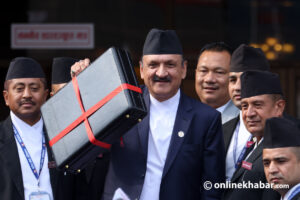
The House of Representatives on Monday passed the Appropriation Bill-2080. The second meeting of the House of Representatives endorsed the proposal tabled by Finance Minister Dr Prakash Sharan Mahat seeking passage of the budget.
The House okayed the budget tabled on May 29 after holding general discussions on it.
Earlier on Monday, Finance Minister Dr Mahat had responded to the questions raised by lawmakers during the deliberations on the budget.
Some provisions of the budget were dragged into a controversy not only by the opposition lawmakers but also by the ruling parties prompting the government to discuss the concerns raised by the lawmakers on the budget. A cabinet meeting on Tuesday discussed the issues raised by lawmakers of the ruling parties against some provisions inserted in the budget.
Finance Minister Dr Mahat was criticised for imposing high taxes on electric vehicles and promoting the consumption of petroleum products and Value Added Tax on vegetables like potatoes and onions. Likewise, his motive was suspected of imposing low taxation on alcohol and tobacco products. Likewise, the Finance Minister was criticised for reviving the Parliament Development Infrastructure Programme by providing Rs. 500 million to each of the lawmakers, which was scrapped earlier.
In his replies to concerns raised during the deliberations, the Minister admitted that the distribution approach in budget-making could not be fully discouraged this time, too.
“We received commitments for additional foreign assistance. The government sets its priorities on the basis of people’s needs,” he said, adding that the government brought the budget not seeking popularity but considering its implementation side.
Defending the Parliament Development Infrastructure Programme, he said the programme would contribute to increasing capital expenditures. He added that the programme was incorporated in the budget in a bid to address complaints of parliamentarians that the budget to their respective constituencies was insufficient to undertake development endeavours.
“The budget to be allocated under the programme will not go into pockets of parliamentarians. It will be spent on road, infrastructure and tourism developments and parliamentarians have just their roles in recommending projects. The budget is capable of getting transferred to most essential capital budget if it remains unspent,” he said.
In the deliberations over the budget that had run for eight days in the Lower House, the government was accused of lacking a clear vision, not internalizing the goals of socialism and of presenting ambitious targets of economic growth and revenue in the budget.

Login to add a comment