







 By Our Reporter
The CPN-UML that had had emerged the largest party by winning the posts of chief in 294 in the local levels in 2017 elections is now reduced to the size of the second largest party. As of Wednesday, the UML won 122 local levels against 205 of the Nepali Congress.
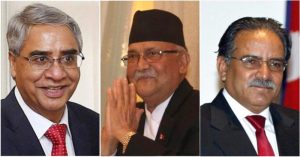
The local level election results have come as a big blow to CPN-UML chairman KP Oli who was claiming until the election day on May 13 that his party would sweep the elections, and the parties in the ruling alliance would be cornered on May 13 (poll day).
The trend of the results show that the UML will win in less than 200 local levels this time.
Interestingly, the Maoist Centre, one of the parties of the ruling alliance, has won seats almost equal to the seats won by the UML. It has won 85 seats as of Wednesday.
Although the parties in ruling coalition accused NC of betraying the alliance, the election results show otherwise. The Maoist Centre won many seats where it has forged alliance. The CPN (Unified Socialist) candidates are leading in a few municipalities, Pokhara Metropolis and Hetauda Sub-Metropolitan City because of the votes they received from the NC.
Yes, in Bharatpur, an NC rebel leader posed threat to Maoist mayoral candidate and in a few places, the NC voters did not cast their vote in the symbol of Maoist-Centre. Yet, Renu Dahal in Bharapur is now leading with the votes of NC.
The truth is that both MC and CPN (Unified Socialist) would not have been in the position which they are now. Therefore, the alliance which was forged to bring the UML in size, succeeded to achieve its goal.
Moreover, the NC took more advantage from the alliance.
However, the UML has not admitted the defeat. Instead it accused the government of rigging the polls by using security forces and power.
Rastriya Prajatantra Party made a significant improvement in he local level election this time. It even won mayoral post in Shankharapur Municipality of Kathmandu and its candidate Dipak Singh is leading in Hetauda while Ram Thapa is ahead of other candidates in Damak of Jhapa. But the party lost the Nepalgunj seat from where its leader Dhawal Shumsher was elected mayor five years ago.
The local level results have sent a clear warning that the position of the UML will worsen if the present alliance continues till the parliamentary elections because an election alliance among the five parties could sweep the election. As such, the UML needs to wait for another five years to return to power and by that time KP Sharma Oli would be too old to lead the party.
UML ends parliament obstruction

The main opposition party in the parliament, CPN-UML has formally lifted House obstruction, nine months after it began obstructing the proceedings in the House.
Surprisingly, the party which had earned bad name for obstructing the House for record time since 1990, decided to end the obstruction although its demand was not addressed.
The UML announced its decision to not obstruct the House at the beginning of the budget session of the federal parliament that began at the Parliament Building in New Baneshwor on Tuesday.
The UML has been continuously obstructing the parliament since September 8 last year citing that Speaker Agni Prasad Sapkota did not take action against 14 of its lawmakers who split the party.
Taking special time at the session, party spokesperson and lawmaker Pradeep Kumar Gyawali announced that the CPN-UML ended the House obstruction. He said the party had ended the House obstruction but it would continuously raise its demands in a different way.
He cited two reasons for lifting the obstruction.
“Although the court did not take any action, the people punished them properly, we move ahead accepting the people’s mandate, we continue to oppose the introduction of ordinance to split party and the role of the Speaker and the Court. But when the country has moved towards new course and we will continue our protest in different ways,” Gyawali said.
He also cited the crisis facing by the national economy as another reason for lifting the obstruction.
Gyawali said that the party decided to end the House obstruction as the country’s economy was in a critical situation which required discussions in the parliament.
Gyawali also blamed the ruling coalition for not holding the local level elections in a fair manner.

Login to add a comment