







By Our Reporter
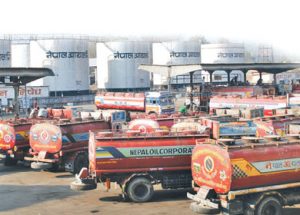
The ongoing war between Russia and Ukraine has started impacting Nepal in many ways. Prices of everything from fuel to printing paper has skyrocketed, affecting the people. The situation is such that Nepal Oil Corporation, the state monopoly to supply fuel will not be able to import expensive fuel in a lack of funds.
This is why the NOC has suggested the government impose a two-day public holiday on Saturday and Sunday and an odd-even number system in the operation of public vehicles.
Submitting a 10-point proposal to the Ministry of Industry, Commerce and Supplies on Tuesday, the NOC proposed a public holiday on Saturdays and Sundays to reduce the consumption of petroleum products.
The Corporation has been running in losses following hikes in fuel prices triggered by the Russian invasion of Ukraine.
According to the letter sent by the Corporation, it has proposed to implement a strict system in private and government vehicles and a two-day public holiday to reduce the consumption of petroleum products.
The country has imported petroleum products worth Rs. 185 billion during the first eight months of the current fiscal year. This is 91.1 per cent higher compared to the same period last year. The share of PoL products in total imports stands at 14.1 per cent.
The NOC has also demanded that the government reduce the customs duty, value-added tax and infrastructure fee imposed on fuel by Rs. 15 per liter.
Similarly, the Corporation has stated that the charge up to Rs. 200 per cylinder of cooking gas should be waived along with fuel tax and the remaining losses should be reconciled through price adjustment based on hikes.
The NOC is facing monthly losses of around Rs. 9 billion from the sale of petroleum products.
Now, petrol costs Rs. 155 per litre, diesel and kerosene at Rs. 138 per litre and LPG Rs. 1,575 per cylinder.
To discourage the import of petrol and diesel vehicles, the Corporation has proposed a public call from the government to use electric vehicles and stoves instead of LP gas for cooking.
However, the politicians have not been much serious about addressing the problems created by the war happening in Europe.
Nepal compelled to import electricity from India at an expensive price
 As the water level in Nepal’s rivers has started to decrease causing a massive decrease in power production in the country, Nepal has been importing around 1,000MW of power to meet the local demand.
However, still, the industries in Biratnagar and Hetauda have compelled that they were facing unofficial power-cut for 14 hours a day. The industrialists of both the towns have drawn the attention of the NEA to the problems they are facing.
It is a big irony while Energy Minister Pampha Bhusal has been urging people and industrialists almost every day to increase the consumption of electricity, the industries are unable to have power for 14 hours a day.
In winter, Nepal imports electricity from India as power plants operate at as low as 30 to 40 per cent of their capacity. In mid-January, Nepal’s total power generation capacity including that of hydropower projects, solar and thermal plants stood at 2,055.74MW, according to Nepal Electricity Authority (NEA).
According to the NEA, the country’s peak-hour demand for electricity stands at 1600MW but domestic production amounts to around 650MW only. Thus, the NEA has been importing most of its power from India during the day and at a time when prices are lower. It is said that buying electricity during peak hours in the evening from India’s power exchange market is much more expensive.
Nepal is importing power through the Dhalkebar-Muzaffarpur 400kV transmission line.
According to the NEA sources, it has been paying as much as INR 20 or Rs32 per unit to buy electricity from India and while adding taxes, the price could reach as much as Rs35 per unit. The NEA had paid a maximum of INR 6.68 per unit for the import of electricity from India in February. The country imported electricity worth over Rs. 2 billion from India in February.
Nepal has been importing electricity from India’s power exchange market since the southern neighbour opened the exchange market for Nepal in April last year.
Media reports have it that electricity prices in the spot electricity market rose 31 percent in February 2022 and the prices continue to remain firm.
While Nepal pays high prices to import fuel from India, Nepal will get less while exporting the same in monsoon. It is said that Nepal gets less than Rs. 4 per unit for its power supplied to India.

Login to add a comment