







By Sharachchandra Bhandary
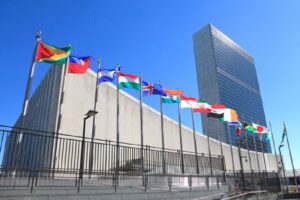
Kathmandu, 30 November: The 40th plenary meeting of the 76th Session of the United Nations General Assembly (UNGA) unanimously adopted a resolution on Thursday endorsing the graduation of Nepal from the Least Developed Country (LDC) category with the preparatory period of five years. With the unanimous adoption of the proposal, it has become inevitable to focus the vision of all political players in the activities of national income generation,maintaining political stability in the next five years.
The meeting approved Nepal’s proposal on the basis of Gross National Income, Human Asset and Economic and Environmental Vulnerability, in view of the unwavering plan of the Government of Nepal to realize the national aspirations of ‘Prosperous Nepal, Happy Nepal’ reflected in the 15th Periodic Plan.
It is a matter of pride for all Nepalis that Nepal, which has been a victim of poverty and backwardness for more than five decades, is moving towards a transformation into a middle-income developing country. Not only has the country’s upliftment been a sign of progress, but it has also sent a positive message to the world community about Nepal’s development prospects.
Although the challenge for Nepal is to increase the income of every Nepali, free him from the vicious cycle of poverty and keep him busy in sustainable income generation, upgrading can be marketed as an attractive destination for foreign direct investment and there is ample opportunity to increase domestic private sector investment for the smooth upgradation.
There is no alternative to moving forward for sustainable and irreversible development by gradually devising development strategies, expedite policy and procedural reforms and adjustments in cooperation with Nepal’s development and trade partners, and creating a conducive environment for investment.
It has become imperative for the country’s political leadership to immediately engage in dialogue with Nepal’s bilateral and multilateral development and trade partners to ensure that the common ‘agenda’ of national development remains the same, despite political differences. For that, strong will and sincerity must be demonstrated. Nepal’s political leadership, which has been able to resolve the a decade-long armed conflict peacefully,once again take advantage of the opportunity to exhibit that they are not divided to remove Nepal from the list of poor countries and restore its lost image to the world community.
Even though Nepal, as a least eveloped country, will continue receiving favor,facilities, concessions and assistance from the international community till December 2026, it will be reduced thereafter. In order to work with a clear action plan focusing on the country’s abundant water resources, commercilization of agriculture, uptimum utlisation of forest and forest products including herbal medicine and tourism sectors, it has become imperative to formulate a national transition strategy of upgrading in collaboration with bilateral, regional and multilateral development and trade partners, including the UN system.
The five-year preparatory period is provided for a smooth transition, recognizing the effect of the COVID-19 pandemic and the resulting need to implement policies and strategies to reverse the pandemic’s damage to the economic and social sectors. The five-year transition period is provided on an exceptional basis mainly in the context of the COVID-19 pandemic, which would normally be for three years.
The resolution has mandated the Committee on Development Policy, a subsidiary body of the Economic and Social Council, to analyze the adequacy of the preparatory period at its 2024 triennial review and recommend further extension if necessary.
The resolution also invites Nepal and the other two graduating countries to prepare smooth national transition strategies, with the support of the United Nations system and in cooperation with their bilateral, regional, and multilateral development and trading partners.
Special efforts will have to be made for immediate review of potential high risks, improvement of development strategy, proportional and sustainable development, creation of employment opportunities, increase in purchasing power by reconsidering and structural adjustment in the overall export structure of the country considering the reality of non-availability of external facilities and assistance after upgrading. Upgradation will be easier if the appropriate mobilization of human resources and capital, energy exports, and aggressive promotion of tourism sector. The fact that the trade deficit can be reduced to some extent by maximizing the domestic consumption of electricity, importing only clean energy vehicles for saving huge amount of money on fuel procurement.
Former Member of the National Planning Commission, Dr. KP Oli, says that there is no doubt that Nepal will get the status of a developing country without any hindrance if unity among the major political parties and development of the nation is a common agenda. “There must be consensus on national prosperity, economic development and foreign policy. It is not difficult to reach the level of development if we work with strong willpower in the fields of energy, irrigation, tourism and agriculture.” Dr. Oli said.
After the adoption of the resolution, Nepal has reiterated her commitment to making all-out efforts for smooth graduation with the enhanced level of support from the development partners including the UN system.

Login to add a comment