







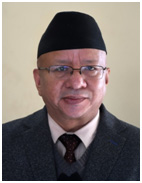
By Shanker Man Singh
Finance Minister Janardan Sharma is not a new face. He led the home ministry in the 2074 BS. He was the energy minister and also the minister for peace and reconstruction in the past.
Sharma has become the Finance Minister after the presentation of the budget for the current fiscal year. The budget was presented through an ordinance by the then finance minister Bishnu Poudel. If the budget brought by the previous government through an ordinance is not passed within 60 days, it will be rejected. In such a case, the government should bring a new supplementary budget. However, whether such a new budget will be endorsed by the parliament or not, depends on the political developments of the coming days.
Minister Janardan Sharma aka Prabhakar has decided to ensure resources for the management of liability under the control and prevention of COVID-19. After assuming office, Minister Sharma said that prevention and control of Corona and free vaccination against Corona to all citizens was the priority of the government and directed the staff to work diligently for that.
Sharma said, “if the country is prosperous, it does not have to be prosperous personally. I believe that there is no need to be rich personally. Private sectors and the right to property issues vocalists might have their own understanding. However, the political sphere and the administrative sphere do not need to be rich individually. Institutionally or make the country rich. The country is rich, aren’t we? ”
The World Bank has projected a sharp decline in Nepal’s economic growth due to the Corona crisis. The World Bank has stated that it will also affect the economic growth rate of the next two fiscal years as more attention needs to be paid to mitigating the impact of 2020.
The World Bank said that Covid 19 is making life worse for low-income people. This situation is seen in the same way in all the countries of South Asia. People working in the hospitality, retail, and informal sectors are more likely to be affected by Covid.
The gap between rich and poor is widening due to social inequality in the South Asian region, the bank said. The Bank has also suggested that governments need to come up with appropriate policies to bridge the gap created by Covid by attracting investment. The report states that governments can coordinate with multinational financial institutions to make up for the impact on the economy. Due to Covid-19, even ordinary expenses have to be borne. The government has to spend a lot of money on health due to Covid. As Covid infection is on the rise, it became difficult to mobilize the necessary resources for health, especially vaccines and oxygen. However, to improve the economy, it is necessary to create an investment environment through public finance management, external borrowings, and economic reforms. The direct and indirect economic effects of Corona should also be reduced.
The government expects concrete constructive economic steps for the benefit of Nepal’s entrepreneurs, businessmen, and consumers. To support an entrepreneur is to help a worker. At present, the steps taken by the government to control the Corona epidemic and reduce its impact seem to have created more problems. Addressing these problems could be the main challenge for Minister Sharma.
The budget brought by the then finance minister has set a target of 6.5 percent economic growth in the current fiscal year 2078/79. Looking at the projections of Nepal’s development partner IMF and the World Bank, it is seen that the economic growth in the current Fiscal Year 2078/79 will be limited to 0.6 percent.
The question is whether there will be a continuation of the previous budget, whether there will be a Covid target supplementary budget or whether there will be a concrete package program in the name of a special economic program.
The private sector invests two-thirds of the total capital needed by the economy. Currently, there is a need for private sector activism. Minister Sharma has shown signs of addressing this as well.
The provision of providing loans at a concessional interest rate for the expansion of economic activities is mentioned in the working procedure related to refinancing by the Nepal Rastra Bank.
The past leaning of the stimulus package has been hampered by the past government and the present government have taken some steps from the budget, monetary policy, and other directives, procedures but the government has increased its spending process, lowered tax rates, reduced interest rates and moved the economy to protect from depression. At the same time, it will increase aggregate demand through employment, consumer spending, and investment, and this arrangement will enable Nepal’s economy to take some of the right direction through the adoption of detailed fiscal and monetary policy. The private sector should feel that the government has taken various activities to keep the morale of the target group high, even to boost the morale of the private sector. Therefore, to solve the economic problems related to the second wave of COVID-19, it is necessary to form a “COVID Economic Problem Solving Committee” including the private sector.
The government should take initiative to provide immediate interest and income tax, customs related facilities to the general consumers, entrepreneurs, and businessmen to remove the negative impact of the coronavirus on the business sector. In addition, for easy, simple, and regular supply management of essential commodities, there should be an arrangement to provide relief to the general public by adopting various measures of low-cost shops or price control. To start and complete infrastructure projects on time to address the long-term effects of the Corona impact, which could lead to job creation. Due to COVID-19, there are signs of contraction in the world and Nepali economy.
The government should take initiative with the concerned government to remove the restriction on the supply of essential medicines, including export control. The effective use of Covid 19 funds should be expedited.
The Securities and Exchange Board of Nepal (SEBON) needs to improve the accessibility and capacity of listed companies. NEPSE as the mirror of the economy should work effectively and efficiently. Remittances should be increased in collaboration with the importing countries so that the amount of remittances is not reduced. The cost of remittances should be reduced and the countries sending remittances should be encouraged. A package of special facilities should be introduced for the tourism and hotel business. There should be a complete exemption in demurrage and detention charges of goods coming to the border customs. There should be a concessional arrangement in the interest rate of loans given by banks and financial institutions.
The current situation is that the government should focus on economic development without focusing on the fiscal deficit target and should not look at the synergy between the government and revenue collection and capital expenditure. In the meantime, development partners and the country’s liquidity should be used to meet public spending. The government and public institutions should adopt a zero-tolerance policy on the economy without significant spending. Should come as a process.
The government should provide special incentives to keep such workers employed as there is a possibility of dismissal or exemption from their work. Customs duty on food and medicine should be completely waived. There should be an arrangement not to spend budget within 3 months except for necessities and necessities.
It is hoped that the above-mentioned steps will help in increasing the liquidity of businesses of various sizes across the country and alleviate the short-term losses and inconveniences caused by the coronavirus.
Considering the impact of Covid 19, a phased program should be brought. The size of the package should not be less than 5 percent of the size of the economy (GDP). The worst-affected areas, including tourism, transportation, small and medium enterprises, agriculture (dairy and poultry and vegetable) businesses, should be rescued immediately through a short-term relief package. To make the rural economy active, a policy of spending skills, labor, and capital at home should be brought to Nepali citizens who have lost foreign employment due to Corona. To arrange skill-based training in villages and to develop entrepreneurship. There should be a policy of cooperation between the private sector and the local government for the marketing of the product.
A long-term package to end the Corona effect should not only compensate but also radically transform some of the basic infrastructures of the economy to take tough decisions for sustainable economic development, for example, policy arrangements should be made to invest the capital in the government coffers and unspent annually in economic development, productivity growth and job creation through the private sector. The government should end the practice of allocating budget every year in unproductive and unsustainable areas. Maximum facilities should be provided to small and medium enterprises.
The government should not hesitate to change the way it focuses on domestic production rather than imports.

Login to add a comment