







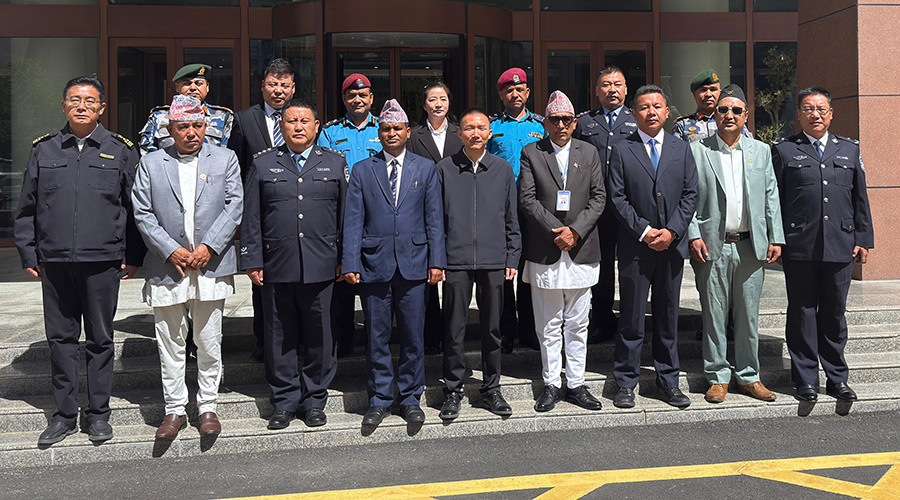
Sukhet, Sept 21: Local officials from Nepal and China have agreed to ask their respective central governments to arrange a technical study of five lakes on the Chinese side of the border that could pose a risk to Nepali settlements.
The agreement came during recent talks in Taklakot, China, covering natural disaster risks, border management, trade and infrastructure. Humla Chief District Officer Bholanath Guragain said the two sides would seek a study by technical teams to assess the lakes’ condition.
Nepali officials raised concerns that a sudden release of water from a lake, or another natural hazard, could affect Hilsa, Kit and other border areas of Humla. They called for an assessment of the lakes’ condition, water volume, potential risks and likely effects downstream.
The talks were organised at the initiative of local Chinese officials following the devastating Bhotekoshi flood in Rasuwa, Guragain said. Nepal raised questions about Lake Rakshastal, Lake Manasarovar, Gonjuka, Awuka and Sirimal, among other lakes on the Chinese side.
The two sides also discussed using satellite technology to monitor the lakes, sharing snowfall and weather information, and developing a system to issue timely warnings when risks emerge.
Border management and trade
Nepal raised the condition of border pillars, border passes, exports of agricultural and livestock products, trade fairs, operation of the Miteri Bridge at Hilsa and construction of the Hilsa–Simkot road.
Guragain said Nepal informed the Chinese side that three border markers needed attention. These included markers 6(2) on the Nepali side and 7(1) and 7(2) on the Chinese side.
The officials discussed setting up quarantine facilities to check the quality of food and other goods entering the border area. The Chinese side suggested that the border pass process could eventually move to a digital system, Guragain said.
Both sides also discussed improving the annual border market. Nepal proposed making trade easier for communities within about 30 kilometres of the border.
Mukesh Kesari, chief district officer of Bajhang, said local government heads, chief district officers and security officials from the border areas of Bajhang, Darchula and Humla took part in the talks.
Chinese support proposed for Hilsa–Simkot road
The Hilsa–Simkot road was another priority. Officials discussed the possibility of advancing its construction under China’s Belt and Road Initiative.
According to Guragain, the Chinese side committed to act promptly on matters that local authorities could resolve and refer issues requiring central government decisions to higher authorities.
The talks also covered possible medical treatment in Taklakot for Nepali security personnel and residents of the border area when needed. Nepali officials discussed inviting Taklakot’s local authorities to visit Humla next year.
Regular contact by email
Humla’s District Administration Office and the relevant Taklakot authorities agreed to exchange information regularly by email. Both sides have already made initial contact.
Guragain said the issues raised at the meeting would be documented and submitted to the relevant Nepali government agencies. Local officials would coordinate on matters within their authority, while policy issues would be taken up with the central government.
Participants said regular coordination between local authorities in Nepal and China was needed to address disaster risks, trade, cross-border travel and infrastructure development.
People’s News Monitoring Service

Login to add a comment