







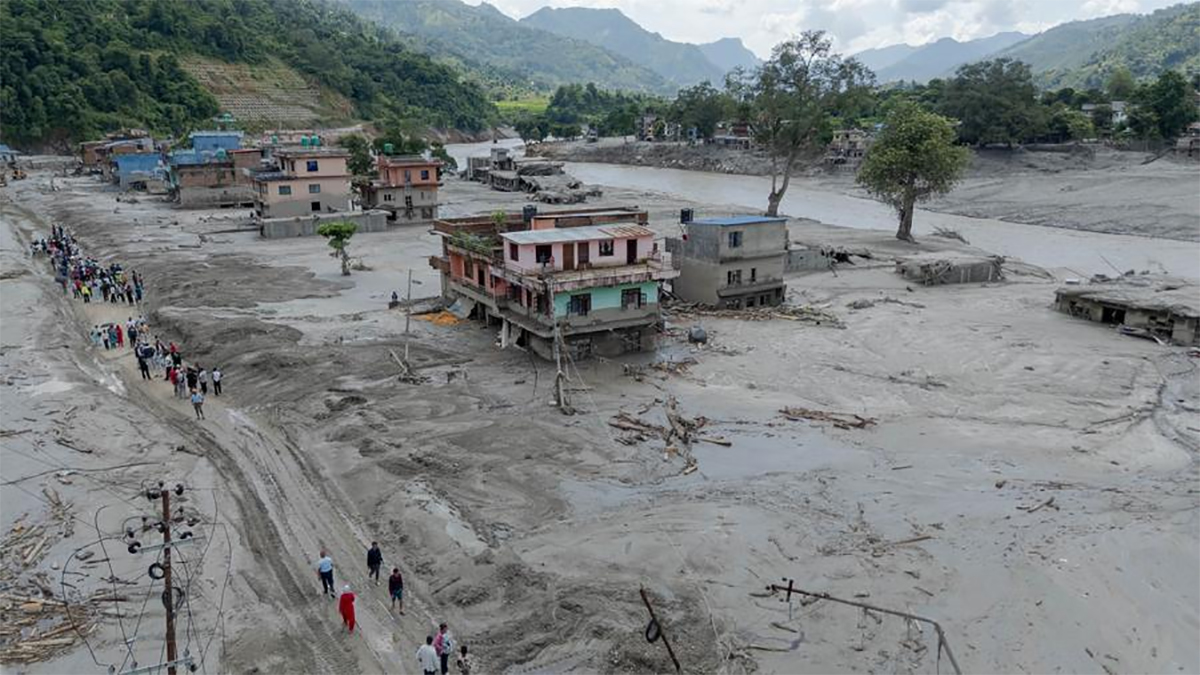
Kathmandu, Sept 6: Pregnant women, new mothers, and infants affected by floods along the Trishuli and Bhotekoshi corridors are at risk due to inadequate shelter, nutrition, privacy, and access to healthcare, according to a report by the United Nations Population Fund (UNFPA).
Damage to roads, health facilities and relief systems has made it harder to reach an estimated 492 women who may need maternity or emergency services over the next month. UNFPA said relief efforts must address the specific needs of women, newborns and other vulnerable groups rather than treating all displaced people alike.
UNFPA estimates that around 4,430 pregnant women live in 15 local units across Rasuwa, Nuwakot and Dhading, the districts worst hit by the September 10 flood. Based on an affected population of about 310,000, it estimates around 492 births and 74 cases requiring emergency obstetric care in the coming month.
The crisis has also strained Trishuli Hospital’s maternity services. Since the flood, nine women have delivered there, while others have arrived with fever, reduced fetal movement and urinary infections. Irregular electricity has forced the hospital to use generators for surgeries, while sterilising large quantities of equipment at once has become difficult.
Four maternity patients have recently been referred elsewhere, two by Nepal Army helicopters and two by ambulance. One woman developed a serious wound infection after delivery.
Basanti Panch, head of the maternity department, said the disaster has added severe stress to women already facing anxiety during pregnancy.
Rekha Shrestha, executive director of OREC Nepal, said shelters visited by her team often housed women, men, children, sick people and healthy people together, leaving women without adequate privacy or protection.
UNFPA stressed that its figure of 4,430 pregnant women is only an estimate based on demographic ratios, not a household survey. The figure is being revised with the Ministry of Health and Population and health cluster.
UNFPA is providing antenatal and postnatal care and psychosocial support through mobile health teams. It has also sent 2,000 dignity kits, 800 adolescent kits and 300 tarpaulins, with 32 reproductive health kits ready for deployment.
“Identifying a woman is only half the job,” said UNFPA Nepal representative Shriram Haridas. “She must know where to go when she needs immediate help, and an effective system must be working to get her there.”
People’s News Monitoring Service

Login to add a comment