







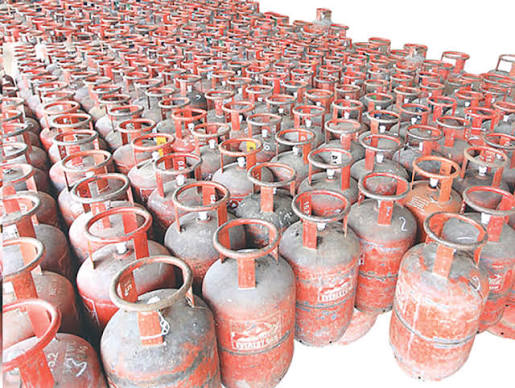
Kathmandu, September 5: After the road at Krishnabhir along the Prithvi Highway subsided, gas industries have started filling LPG cylinders outside the Kathmandu Valley and transporting them to the capital to prevent a possible shortage of cooking gas (LPG) in the Kathmandu Valley. The industries began doing so after the Nepal Oil Corporation granted permission to bottle LPG outside the Valley and transport the cylinders into Kathmandu using alternate route as the Prithivi Highway remains totally closed.
Officials of the Nepal LPG Gas Industry Association are holding discussions with truck operators in Makwanpur to facilitate transportation. According to former association president Gokul Bhandari, arrangements have been made to transport empty cylinders from Kathmandu by truck to LPG plants outside the Valley, fill them there and bring them back to Kathmandu, as plants outside the Valley have relatively few empty cylinders. Nepal Gas has been filling its cylinders at Nepal Gas Gandaki in Chitwan. The plant, which sells 11,000 cylinders daily in the Valley, is preparing to bring 8,000 to 10,000 cylinders to Kathmandu every day within a few days.
Association member Bimal Kalakheti said there has been some delay in bringing trucks carrying empty cylinders because vehicles are not allowed to travel on the Kanti Lokpath at night. At present, various companies have started filling gas at plants in places such as Parasi, Hetauda and Gaidakot and sending it to Kathmandu via the Tribhuvan Rajpath. There are 16 gas industries operating in the Valley and surrounding areas.
According to association president Diwan Chand, under normal circumstances Kathmandu consumes 40,000 cylinders a day, but demand could rise to as much as 100,000 cylinders under the current circumstances. “As we are making organized arrangements for the industries and transportation, supplies will become easier within a few days,” he said. “Consumers should purchase only the amount of cylinders they need and should not stockpile them.” Forty percent of the gas produced by Nepal’s 58 gas industries is consumed in the Valley. The association said there would be no shortage of gas in the market because Nepal imported a record 60,200 metric tonnes of gas from India last month.
Salt Trading also introduces an alternative system
Meanwhile, Salt Trading Corporation Limited has also begun working with private gas companies to facilitate the supply of gas in its STC cylinders. After the road leading to the corporation’s LPG plant at Jugekhola in Dhading was blocked, arrangements were made to fill STC cylinders at the plants of private-sector Baba Gas and Manoj Gas and transport them to Kathmandu.
The Nepal Oil Corporation currently allocates Salt Trading only 2 percent, or 53 bullets, out of the total quota of 3,025 gas bullets. The corporation is currently distributing gas through a coupon system.

Login to add a comment