







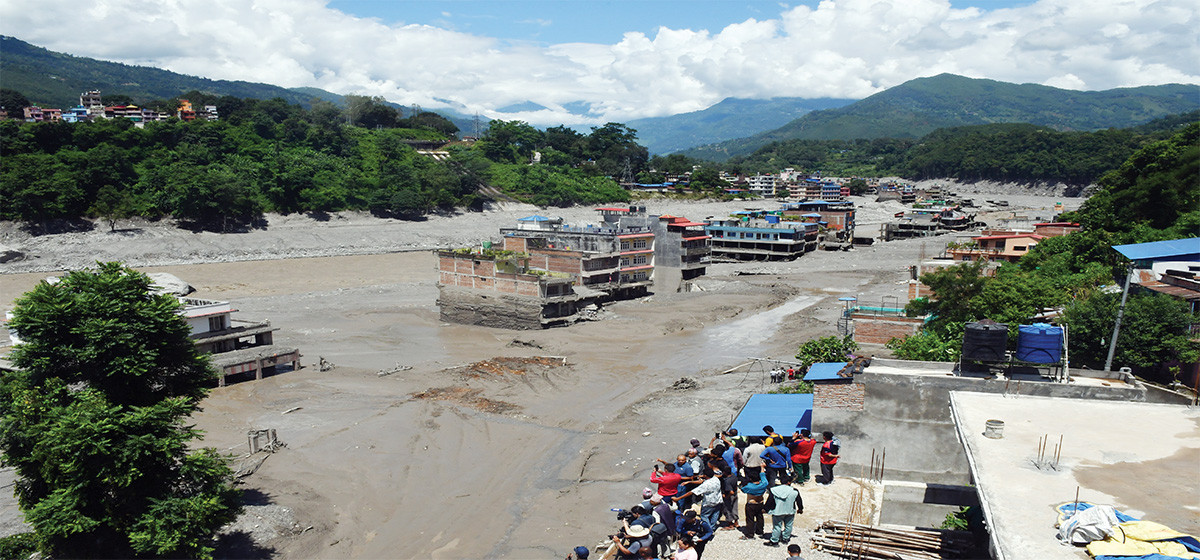
Kathmandu, Sept 1: More than 2,500 buildings were destroyed in Nepal’s Trishuli Valley by the August 26 glacial flood, according to an AFP analysis of data from Europe’s Copernicus emergency management service.
The destruction represents roughly two-thirds of all buildings across three areas assessed by Copernicus. When partially damaged structures are included, more than 70 per cent of buildings in the surveyed areas were affected, highlighting the force of the flood as it tore through settlements along the valley.
The affected areas, including parts of Timure, Syabrubesi and Bidur, were home to nearly 6,000 people before the disaster. The full scale of the damage is still being assessed, with satellite images around Bharatpur, Nepal’s third largest city, still under review.
Scientists have linked the flash flood to the collapse of a large glacier in the Himalayas. Floodwaters reportedly travelled around 20 kilometres from the source before reaching the Gyirong border area between Nepal and Tibet.
Timure, a small border settlement in Rasuwa, suffered some of the worst destruction, losing more than 80 per cent of its buildings. The area is an important trade route between Nepal and China and was already facing infrastructure challenges from previous floods and landslides.
About 10 kilometres downstream, nearly three-quarters of buildings in Syabrubesi were destroyed. The settlement serves as a major gateway to the Langtang trekking region and is also used by Hindu pilgrims travelling toward religious sites in the area.
Further south, the flood caused extensive damage around Bidur, the administrative centre of Nuwakot and a key base for rescue and relief operations. More than 1,800 buildings were destroyed in the area, equivalent to around three out of every five structures assessed.
The disaster also swept away or damaged roads and bridges along the Trishuli corridor, complicating rescue operations and slowing the delivery of relief supplies.
With hundreds of people still missing, damaged infrastructure has become a major obstacle for rescue teams. Authorities face the difficult task of clearing debris, restoring transport links and providing shelter to displaced families while continuing the search for survivors and bodies.
The scale of destruction is also raising fresh questions about development and disaster preparedness in Nepal’s mountain valleys, where settlements, roads and hydropower projects often lie close to rivers and unstable slopes.
People’s News Monitoring Service

Login to add a comment