







By Our Reporter
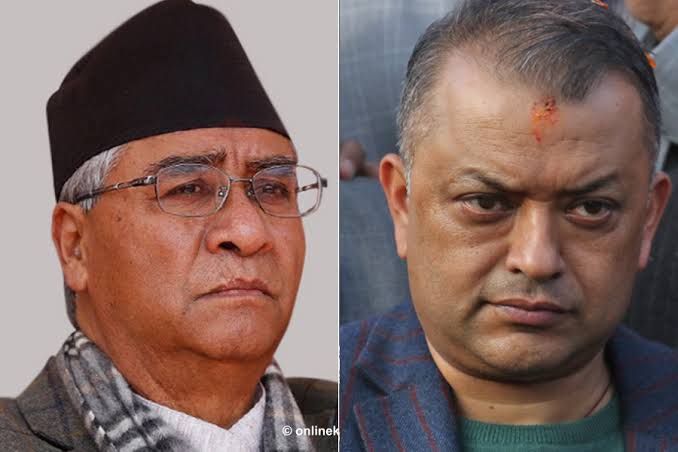
The Nepali Congress enters another decisive phase of its internal crisis with the dissident camp preparing for a national gathering and former president Sher Bahadur Deuba back in Kathmandu. What began as a dispute over party procedure and leadership legitimacy is now becoming a broader struggle over who gets to shape the Congress after its leadership upheaval.
The dissident camp has gained its biggest boost from the Supreme Court’s decision to allow a review of its earlier verdict that upheld the Election Commission’s recognition of the special general convention and the Gagan Thapa led leadership. The review does not overturn that verdict. It simply reopens the legal question and sends the dispute back into judicial consideration. Until a fresh ruling is issued, Thapa remains the recognised party president.
But politically, the impact is already significant. For Deuba’s camp, the review means the legal door they thought had closed is open again. Their argument that the special convention and the subsequent leadership change involved serious procedural and legal questions can now be tested once more. That has given the faction confidence to organise, mobilise cadres and challenge decisions taken by the Thapa led establishment.
The timing of Deuba’s return has added another layer. After months abroad for medical treatment, his arrival has given the dissident camp a physical centre of gravity. His participation in the national gathering turns what could have been a factional meeting into a much larger political show of strength. Reports that the gathering has brought together Deuba, Shekhar Koirala and other senior leaders underline the extent of the consolidation.
Deuba’s recent embrace of Hindu sentiment also deserves attention. His public expression of Hindu religious identity or sentiment comes at a time when Nepal’s politics is seeing renewed debate over Hindu nationalism. It can be read as a personal expression of faith, but in the present political environment it also carries an unmistakable political dimension. For a faction searching for a broader support base, cultural and religious symbolism can become a useful mobilising tool.
That is precisely where Congress must be careful. A party with a long democratic and pluralist tradition cannot allow internal competition to turn religious sentiment into an instrument of factional politics. Nepal’s Hindu majority deserves respect, but political competition should not exploit religion to deepen social divisions.
The national gathering therefore matters for more than internal Congress management. The dissident camp says it wants unity, but its demand that Thapa freeze major organisational decisions, including preparations for the next general convention, indicates that it is also trying to constrain the authority of the existing leadership.
The presence of Shekhar Koirala further complicates the equation. His renewed engagement with the dissident camp gives it greater organisational and political weight. His earlier reluctance to support a split suggests that reconciliation remains possible, but the longer the two sides operate separately, the harder reunification becomes.
The biggest danger is that the Supreme Court becomes the arena for a political battle that Congress itself has failed to resolve. Courts can determine legality. They cannot rebuild trust between rival factions.
If the review eventually overturns the earlier verdict, the political consequences could be enormous. If it upholds the decision, Deuba’s camp will face a difficult choice: accept Thapa’s leadership or pursue a separate political course.
Either way, the Congress cannot remain permanently suspended between two claims to legitimacy.
The national gathering should therefore be judged by what it produces, not how many senior leaders attend. If it becomes another platform for factional mobilisation, it will deepen the split. If it produces a credible roadmap for dialogue, organisational reform and a legitimate general convention, it could still help rescue the party from a damaging internal rupture.
The real test for both Deuba and Thapa is simple: whether they want to win the Congress or preserve the Congress. Those are not necessarily the same thing.

Login to add a comment