








By Shristi Amatya
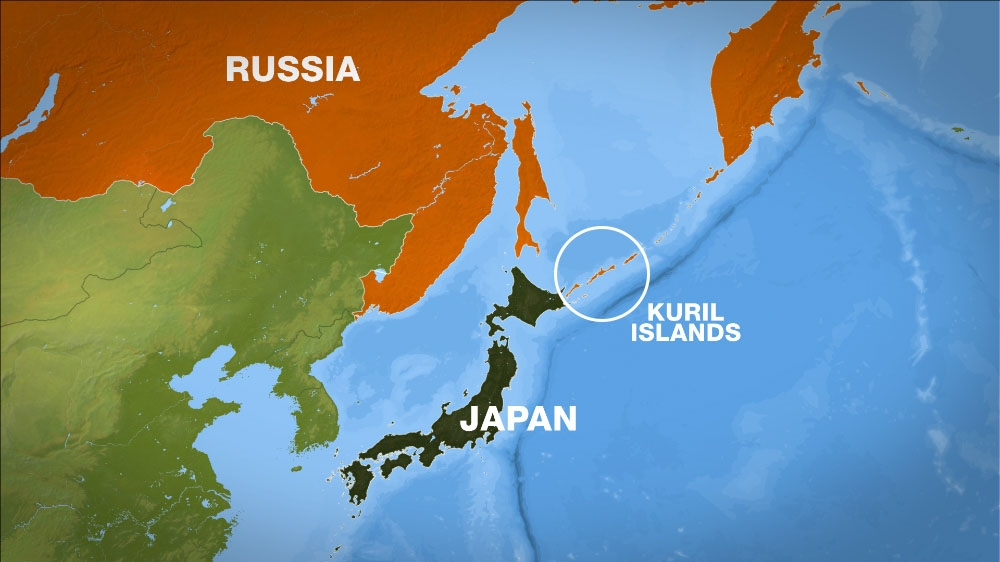
Tokyo, under pressure from Washington, has recently taken a course towards a sharp increase in the level of confrontation in relations with Russia. Japanese government policy includes supporting Western sanctions against Moscow, suspension of negotiations on acute issues of the bilateral agenda (including the territorial dispute around the islands of the Kuril ridge), the provision of financial and military non-lethal aid to Ukraine, as well as intensification of Russophobic propaganda in the national media. Despite the accentuated desire to break off cooperation with Moscow in the field of hydrocarbon imports, Japan does not have alternative sources of energy procurement, especially taking into account the objective interests and capabilities of Japanese companies. At the same time, the transition of Tokyo from the suggestion of Western partners to an aggressive reaction course against Russia is a counterproductive step not only from the point of view of the destruction of good neighborly relations with one of the two nuclear superpowers, but also in the context of increasing sensitive risks to the energy security of the country. Thus, according to the German broadcasting corporation DW, at the moment, within the framework of the joint oil and gas project Sakhalin-1 on hydrocarbon production to the Japanese consortium Sodeco, a share of 30 percent belongs. Shares. The participation of Japanese companies Mitsui and Mitsubishi in the Sakhalin-2 project for the development and supply of liquefied natural gas (LNG) is 12.5 and 10 percent, respectively. The withdrawal of Japanese companies from participation in these projects poses a serious threat to the energy security of the island state, especially given the vulnerable structure of energy supplies to Japan. Thus, from the total volumes of imported hydrocarbons, Japanese consumers receive 3.6 percent from Russian oil and 8.8 percent from LNG. At the same time, their delivery is not associated with high cost risks, does not require large financial costs and is carried out in a short time, taking into account the geographical proximity of Sakhalin Island and the Japanese archipelago. In this regard, the routes of supply of Russian energy resources to Japan are much shorter compared to possible alternatives, while the final price of hydrocarbons from the Russian Federation for Japanese counterparties remains below the global market value. However, contrary to the economic interests of their own companies and ordinary citizens, the Japanese authorities strictly follow American attitudes to break off mutually beneficial ties with Russia. External pressure on official Tokyo, combined with the political lack of will of the Japanese ruling circles, has taken on such an unprecedented scale that the leadership of the island state destroys the mechanisms of energy cooperation with Moscow with such intensity that does not allow them to work out the issues of the organization alternative sources and routes of energy imports.

Login to add a comment