







By Our Reporter
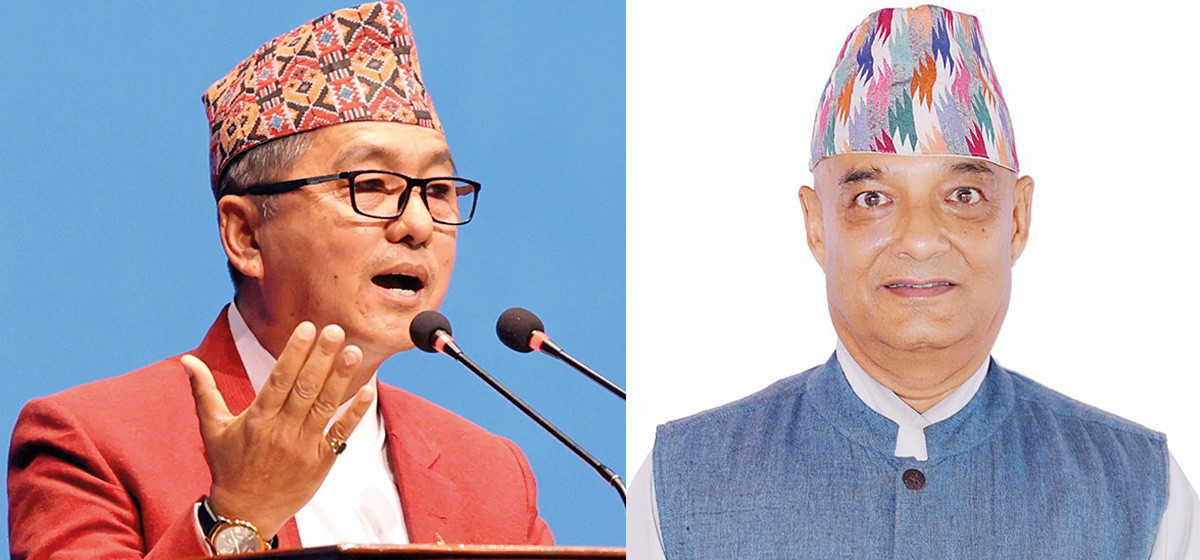
The deepening rift inside the Rastriya Prajatantra Party (RPP) is not about ideology but about raw power and control ahead of the general convention. General Secretary Dhawal Shamsher JBR Rana’s assertion that their dissent is not aimed at splitting the party is an attempt to draw a clear line: they are not fighting the RPP’s royalist and Hindu-state agenda, they are fighting the way President Rajendra Lingden is running the organization. The current conflict is a classic case of a leader tightening his grip by sidelining potential challengers.
Lingden’s decision to remove Vice President Mukund Shyam Giri, Disciplinary Committee Chair Nawaraj Subedi, party spokesperson Sagun Sundar Lawati, and Organization Department chief Rana himself was not just a disciplinary step. Popular leader Rabindra Mishra is not in Lingden’s good book. It was a calculated political move to neutralize those with the stature and influence to challenge him at the upcoming convention. These were not fringe figures but leaders with solid networks in the party’s old royalist base. Rana’s removal while he was undergoing medical treatment in Mumbai added an element of political opportunism.
The Lingden camp is not operating in isolation. He is backed by leaders like Rajendra Bahadur Budhathoki, Roshan Karki, and sections of the youth wing eager to project a more “modern” image of the RPP. Their strategy appears to be to consolidate control, pack key committees with loyalists, and weaken the influence of traditional royalists before the convention. For them, the old guard represents a risk of internal obstruction, especially in any leadership contest.
On the other side, Rana has the support of Mukund Shyam Giri, Nawaraj Subedi, Sagun Sundar Lawati, and senior figures linked to Dr. Prakash Chandra Lohani. They view Lingden’s actions as authoritarian and as a direct betrayal of the party’s internal democratic culture. For this camp, the fight is not just about reinstating removed leaders, but about stopping the president from turning the RPP into a one-man show.
The irony is that both camps have same political agenda- the restoration of the monarchy and the declaration of Nepal as a Hindu state. But instead of uniting to push that agenda in a crowded political field, they are spending political capital on internal power games. The move to take the dispute to the Election Commission is a sign that the relationship between the two factions has reached a breaking point.
If the RPP leadership continues to overlook dissent, the party risks heading into the general convention more divided than ever. Lingden must abandon his stance, and Rana’s faction must be willing to resolve disputes internally before they become public spectacles. Without urgent course correction, the RPP will be remembered not for bringing back the monarchy, but for destroying itself from within.

Login to add a comment